







































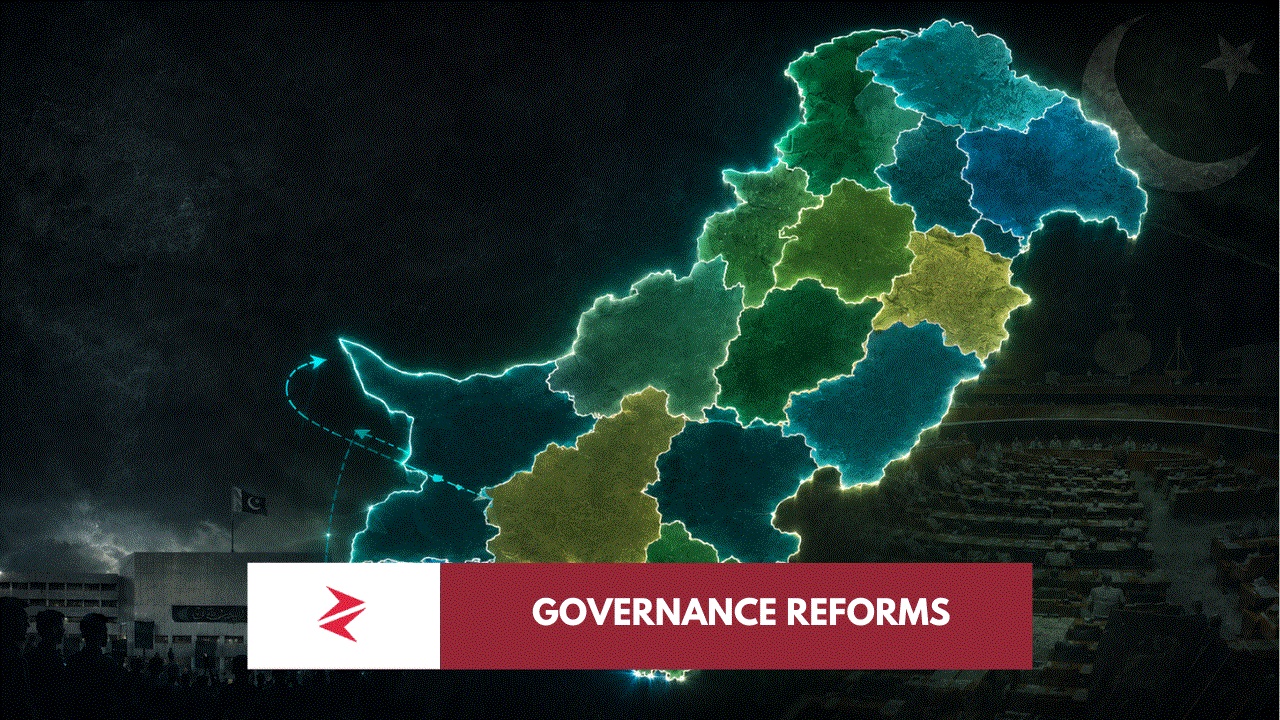
Smaller Provinces Are Not Automatically Better Governance
Naqvi referred to international examples, including India and Indonesia, but comparisons must be made precisely rather than rhetorically. India currently has 28 states and eight Union Territories—not 29 states—and its constitutional, fiscal and local-government arrangements differ substantially from Pakistan’s. Türkiye has 81 provinces, but these are administrative divisions within a unitary state and are not equivalent to Pakistan’s constitutionally empowered federating provinces. Indonesia has 38 provinces within another distinct constitutional and decentralisation framework.
Counting units proves nothing by itself. A country can have four corrupt provinces or forty corrupt provinces. It can have one centralised bureaucracy or twenty regional bureaucracies controlled by the same political families. Administrative geography improves governance only when accompanied by clear powers, own-source revenue, transparent procurement, enforceable audits, merit-based appointments and elected officials who can actually be removed by voters.
Pakistan’s debate must therefore reject the false choice between the present four-province arrangement and an overnight carving exercise. The credible path is layered decentralisation: empowered local governments first, evidence-based administrative review second and new provinces only where geography, population, economic viability and democratic consent make them necessary.
Creating a Province Requires More Than a Press Conference
Article 239 establishes a demanding constitutional route. An amendment must secure at least a two-thirds majority of the total membership of each house of Parliament. Where provincial boundaries are altered, the affected provincial assembly must also approve the change by at least two-thirds of its total membership before the bill can proceed for presidential assent.
That means Punjab cannot be divided through a federal notification. Sindh cannot be redrawn because a viral map gains likes. Balochistan cannot be partitioned through an Interior Ministry presentation. The constitutional veto of the affected provincial assembly is precisely why political consensus is not ceremonial—it is legally indispensable.
| Reform stage | Required action | Protection against another failed experiment |
|---|---|---|
| Local devolution | Enforce Article 140A with elected councils, protected tenure, defined functions and direct fiscal transfers. | Demonstrates whether political parties genuinely want power closer to citizens. |
| Independent commission | Use census data, geography, languages, economic flows, water systems, travel times and public-service access. | Prevents boundaries from being designed around party strongholds or personalities. |
| Fiscal white paper | Publish startup costs, recurring costs, NFC implications, assets, liabilities and revenue capacity for every proposed unit. | Stops taxpayers from being handed an undefined bill after political approval. |
| Constitutional consent | Secure two-thirds support in Parliament and the affected provincial assembly. | Prevents unilateral or coercive alteration of provincial boundaries. |
| Administrative transition | Abolish duplicate departments, cap protocol spending and transfer staff through audited rules. | Ensures new units do not merely add another layer of bureaucracy. |
| Performance review | Publish annual district-level indicators for health, education, policing, justice and infrastructure. | Allows citizens to judge whether decentralisation improved outcomes. |
Identity Cannot Be Managed With Compass Directions
The proposed names visible on circulating maps—Northern KP, Eastern Punjab, Central Balochistan and similar labels—have understandably triggered ridicule. Provinces are not warehouse sections. Names carry history, memory, language, geography and political legitimacy. Hazara, Bahawalpur, Seraikistan, Makran, Kalat and other regional identities cannot simply be erased beneath administrative compass points devised for graphic convenience.
At the same time, ethnicity must not become the sole basis of boundary creation. A province designed exclusively as an ethnic enclosure can create new minorities, new resentments and a new political class claiming permanent ownership of territory. Boundaries should reflect functional governance while names should emerge through public consultation, historical evidence and local consent.
Gilgit-Baltistan and Azad Jammu and Kashmir require separate constitutional and diplomatic treatment rather than casual inclusion in speculative redesigns. Pakistan’s official position continues to treat Jammu and Kashmir as an internationally recognised dispute connected to United Nations resolutions, while Gilgit-Baltistan has not simply become an ordinary constitutional province. Any change affecting these territories must respect their populations, legal arrangements and Pakistan’s international position instead of using them as decorative pieces on an unofficial map.
The Youth Warning Hidden Inside Naqvi’s Speech
Naqvi also warned that young people did not merely want tablets or small stipends; they wanted merit-based employment and a corrected system. He then used the “cockroaches” label associated with emerging youth protest movements, suggesting that a united generation could overturn the existing order.
That may have been delivered as a provocative line, but it exposes the political anxiety beneath the reform discussion. Pakistan’s young population is not principally angry because the map has too few internal borders. It is angry because connections defeat merit, law is applied selectively, education does not produce mobility, public employment is politicised and accountability repeatedly stops at the edge of influence.

As explained in Why No Youth Protests in Pakistan Like Its Neighbours?, spontaneous anger can remove a face without dismantling the structure beneath it. The same warning applies here: changing provinces without changing incentives may replace one provincial capital with several smaller centres of patronage while leaving the citizen equally powerless.
Frequently Asked Questions
Does Pakistan need more provinces?
Pakistan has a credible administrative case for reviewing its provincial structure because of its population, geography, metropolitan growth and uneven access to government. However, new provinces should emerge from an independent commission, transparent fiscal analysis, constitutional consent and public consultation—not from unofficial maps or elite negotiations conducted behind closed doors.
Would new provinces improve development?
They could reduce distance from provincial capitals and create stronger regional ownership, but the result depends entirely on institutional design. Without accountable local government, revenue capacity, merit-based administration and transparent procurement, smaller provinces may only create smaller versions of the same failed system.