









































Pakistan’s 16kWh lithium-battery market has developed a rather convenient habit: place an internationally recognisable badge on a 51.2-volt, 314-ampere-hour cabinet, quote somewhere between Rs. 635,000 and Rs. 715,000, and assume the customer will never stop to calculate what is actually being purchased. That approach worked while buyers were unfamiliar with lithium storage, Battery Management Systems and IP protection, but it begins to collapse when a redesigned SES Power 16.077kWh battery arrives with IP54 protection, upgraded cells rated by the supplier for 10,000 cycles, touchscreen control, Wi-Fi and Bluetooth monitoring, an integrated aerosol fire-suppression system and an article-exclusive direct price from Solar Trade Hub.
The argument is not that Dyness or Pylontech suddenly became bad batteries. They did not. The argument is more damaging to their premium positioning: once comparable capacity, enclosure protection, monitoring, fire safety and lifecycle claims become available for considerably less money, the international logo must justify every additional rupee. In Pakistan’s brutally price-sensitive energy market, brand prestige alone cannot keep doing that job.
Core claim: The revised SES Power 16.077kWh IP54 is presently the strongest price-to-feature contender among Pakistan’s 16kWh-class low-voltage batteries, provided buyers obtain the article-exclusive direct rate rather than paying the inflated marketplace price.
First, It Is a 16kWh Battery — Not a “16kW Battery”
This distinction matters because sellers routinely blur power and energy terminology. Kilowatts measure instantaneous power. Kilowatt-hours measure stored energy. The SES unit is labelled 51.2V and 314Ah, producing approximately 16,076.8 watt-hours when those figures are multiplied, which is correctly rounded to 16,077Wh or 16.077kWh.
That capacity makes it suitable for serious whole-home hybrid systems rather than merely supporting a few fans and lights. The actual power it can deliver at one moment depends on its BMS current limits, inverter configuration, cabling, temperature and communication protocol. A battery can contain 16kWh of energy without necessarily being permitted to discharge at 16kW continuously.
What the Redesigned SES Power 16.077kWh Actually Includes
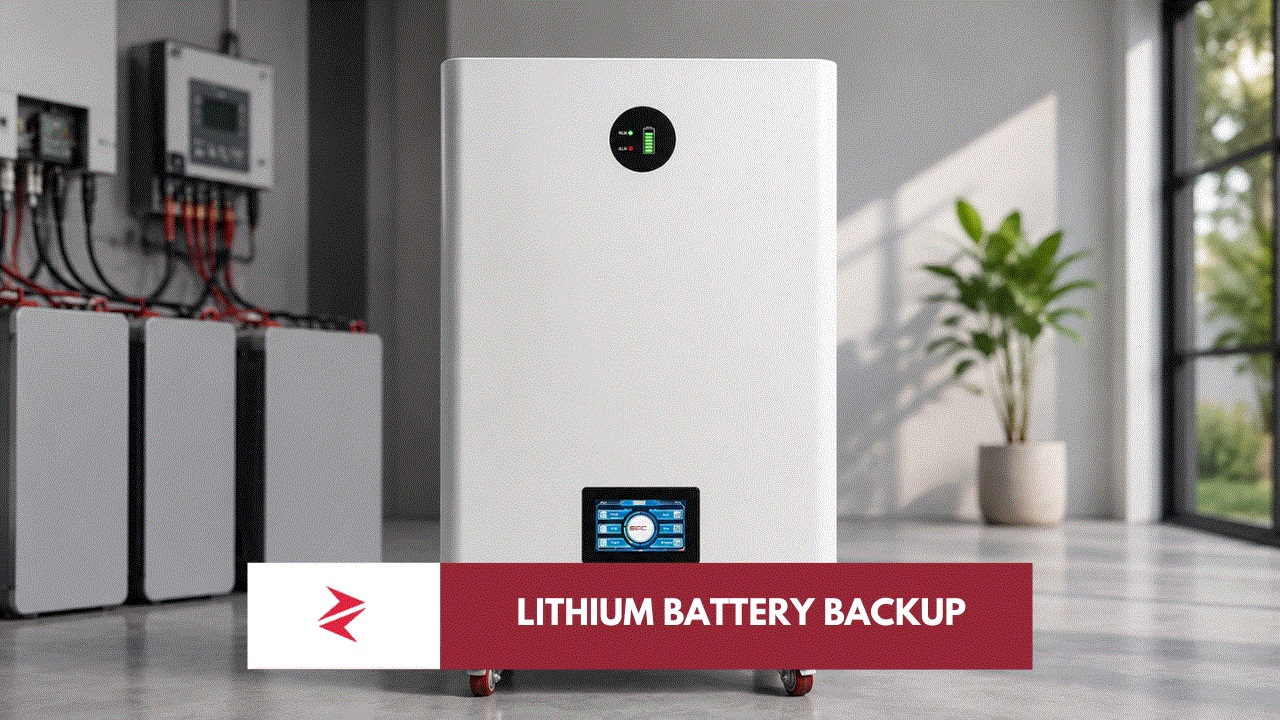
The revised model is not merely the earlier cabinet with another sticker placed over it. Solar Trade Hub’s updated product specification positions it as an IP54 unit with improved dust protection, upgraded 10,000-cycle cells and an aerosol suppression system added inside the enclosure. The wheeled floor-standing cabinet retains its front touchscreen, visible state-of-charge indicator and smart monitoring functions.
| Specification | Revised SES Power Position |
|---|---|
| Nominal energy | 16.077kWh / 16,077Wh |
| Nominal voltage | 51.2V |
| Rated capacity | 314Ah |
| Cell chemistry | LiFePO4 |
| Enclosure | IP54 redesigned cabinet |
| Cycle claim | 10,000 cycles for the revised model |
| Battery management | Updated smart BMS |
| Local interface | Front touchscreen |
| Wireless monitoring | Wi-Fi and Bluetooth |
| Communication requirement | Inverter-specific CAN or RS485 configuration |
| Fire protection | Integrated aerosol suppression |
| Installation form | Floor-standing cabinet with wheels |
| Direct introduction rate | Released after citing this article and contacting 0311 1163264 |
One detail must not be ignored. The existing Daraz SES product listing still describes 10,000 cycles. A serious buyer should therefore insist that the quotation, invoice and warranty documentation explicitly identify the revised IP54, 10,000-cycle, aerosol fire-suppression model rather than accepting a generic line reading “SES 16kWh battery.” The Daraz page displayed Rs. 794,555, Cash on Delivery availability, a local warranty indication and Solar Trade Hub as the seller when checked.
Pakistan’s 16kWh Lithium-Battery Price Comparison
The following figures come from the shared Solar Trade Hub market-rates spreadsheet. They represent market observations recorded on different dates during June and July 2026, not permanent manufacturer retail prices. Stock position, warranty channel, payment method and currency movement can change the final quotation.
| Value Position | Battery | Protection | Recorded Price | Approx. Price per kWh |
|---|---|---|---|---|
| 1 | SES Power 16.077kWh revised model | IP54 | Rs. 595,000 | Contact Solar Trade Hub |
| 2 | KNOX Powerbase 16.0 | IP54 | Rs. 598,000 | Rs. 37,375 |
| 3 | Itel 16kWh | IP21 | Rs. 615,000 | Rs. 38,438 |
| 4 | Apex 16kWh | IP54 | Rs. 622,000 | Rs. 38,875 |
| 5 | Dyness 16kWh | IP20 | Rs. 635,000 | Rs. 39,688 |
| 6 | SES Power 16kWh earlier IP20 benchmark | IP20 | Rs. 658,000 | Rs. 41,125 |
| 7 | Dyness 16kWh outdoor variant | IP66 | Rs. 660,000 | Rs. 41,250 |
| 8 | Carbon X 16kWh | IP65 | Rs. 670,000 | Rs. 41,875 |
| 9 | Soluna BES 16kWh | IP65 | Rs. 685,000 | Rs. 42,813 |
| 10 | Pylontech Fidus 16kWh | IP65 | Rs. 690,000 | Rs. 43,125 |
| 11 | Sunwoda 16kWh | IP65 | Rs. 715,000 | Rs. 44,688 |
| Marketplace benchmark | SES Power Daraz listing | Revised IP54 model | Rs. 794,555 | Rs. 49,425 |
The immediate conclusion is uncomfortable for premium brands. Pylontech Fidus was recorded at Rs. 690,000, Soluna at Rs. 685,000 and Sunwoda at Rs. 715,000. Even Dyness occupied Rs. 635,000 for an IP20 option and Rs. 660,000 for the higher-protection version. These are not small differences once installation, battery cabling, DC protection, communications commissioning and delivery are added.
Why Dyness Does Not Win Automatically
Dyness is a credible energy-storage manufacturer, and its own PowerBrick range demonstrates why it earned that reputation. The official Dyness PowerBrick Plus specification lists 16.07kWh, 314Ah LFP cells, IP65 protection, 8,000-plus cycles, a 10-year warranty, 200A operation and expansion of up to 50 units. The PowerBrick SC is the corresponding IP20-oriented product, also carrying approximately 16.076kWh and an 8,000-plus-cycle specification.

That engineering record deserves acknowledgement, but it does not settle the buying decision. An IP20 Dyness battery recorded at Rs. 635,000 faces a revised SES with IP54 protection, touchscreen control, wireless monitoring, aerosol suppression and a higher supplier-stated cycle figure. Unless Dyness is being selected because the customer values its global warranty framework, installed base or documented compatibility ecosystem, the premium becomes difficult to defend.
The IP66 Dyness variant presents a stronger technical case, especially where the battery may encounter heavier dust or water exposure. Yet even IP66 is not permission to install a lithium cabinet carelessly in direct rain, trapped heat or corrosive air. Where the battery is properly installed indoors or under a ventilated protective canopy, the difference between IP54 and IP66 may have less practical value than the price premium suggests.
In a pure rupees-per-protected-kWh contest, Dyness no longer wins merely by arriving with a famous name. That is the precise point at which it stops standing a chance automatically.
Why Pylontech Fidus Must Justify Its Rs. 690,000 Position
Pylontech Fidus Plus is also a serious product. Pylontech’s own communication highlights a scalable 16kWh platform, IP65 enclosure protection and C5-M anti-corrosion positioning, which may be valuable in exposed, humid or coastal conditions.
But the Pakistani residential buyer is not purchasing an offshore telecom shelter. Most properly designed home-battery installations are placed in garages, utility rooms, covered side passages or dedicated energy cabinets. In those environments, the buyer must ask whether paying approximately Rs. 690,000 for Pylontech delivers a proportional benefit over a lower-priced IP54 SES that also offers a display, wireless monitoring, LFP chemistry and aerosol fire suppression.
Pylontech’s recognised brand, certification record and global bankability remain genuine advantages. They are not imaginary. What no longer survives scrutiny is the idea that those advantages make price irrelevant. Fire suppression is not exclusive to Pylontech. A 16.076kWh nominal capacity is not exclusive to Pylontech. IP65 is superior to IP54 against enclosure ingress, but it does not make the battery immune to poor cabling, incompatible firmware, excessive temperature, weak earthing or an incompetent installation.
Therefore, the blunt commercial verdict is justified: at a materially higher price, Pylontech does not stand a chance in the price-to-feature fight unless the buyer specifically needs its stronger certification, anti-corrosion rating or global brand ecosystem.