










































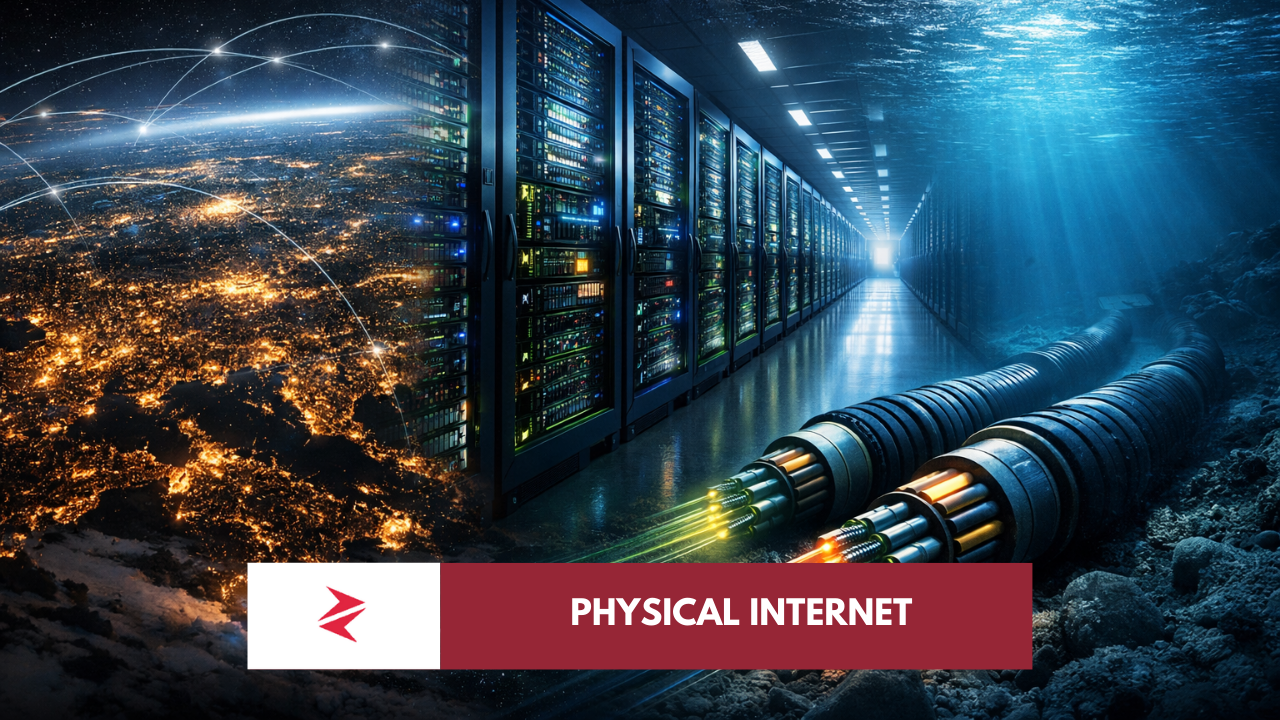
The modern world likes to describe itself as digital, almost as if civilization has transcended the physical limits that shaped previous eras of history. Governments talk about digital transformation, businesses speak of cloud economies, and artificial intelligence is portrayed as an invisible layer of intelligence floating somewhere inside cyberspace. Yet the reality beneath that narrative is far more grounded. The digital world does not exist in abstraction. It exists inside buildings filled with servers, beneath oceans through fiber-optic cables, across continents through transmission infrastructure, and inside energy grids that power one of the largest industrial machines humanity has ever constructed.
The internet, artificial intelligence, and cloud computing form the nervous system of modern civilization, but that nervous system is made of physical components: steel racks holding servers, copper wiring carrying electricity, fiber-optic glass transmitting light signals across oceans, and cooling systems operating around the clock to keep the entire structure from overheating. Every email, every AI model response, every social media video, and every cloud document depends on this massive infrastructure operating continuously behind the scenes. The illusion of a “weightless economy” exists only because most people interact with the final interface of technology while remaining unaware of the industrial architecture supporting it.
Data Centers: The Factories of the Information Age
If the Industrial Revolution built factories that produced steel, machinery, and textiles, the Information Age built factories that produce computation. These factories are called data centers. Inside them, rows upon rows of servers operate simultaneously, storing data, processing requests, running artificial intelligence algorithms, and delivering digital services to billions of users worldwide.
A hyperscale data center can contain hundreds of thousands of servers, generating enormous heat that must be managed through sophisticated cooling systems and constant energy supply. Some of the largest facilities consume electricity comparable to entire towns. Companies such as Amazon, Google, Microsoft, and Meta have constructed global networks of these centers to support cloud computing, search engines, social media platforms, and AI systems. Without these facilities, the digital economy would collapse instantly. The internet would not simply slow down—it would cease to exist.
Artificial intelligence has intensified this infrastructure demand. Training large AI models requires massive computing clusters consisting of thousands of GPUs operating continuously for weeks or months. These training processes consume extraordinary amounts of electricity, sometimes equivalent to the annual consumption of hundreds of households. As AI becomes embedded in finance, healthcare, transportation, and national security systems, the energy demand of computing infrastructure is expected to grow dramatically.
The digital future therefore does not eliminate energy consumption. It multiplies it.