










































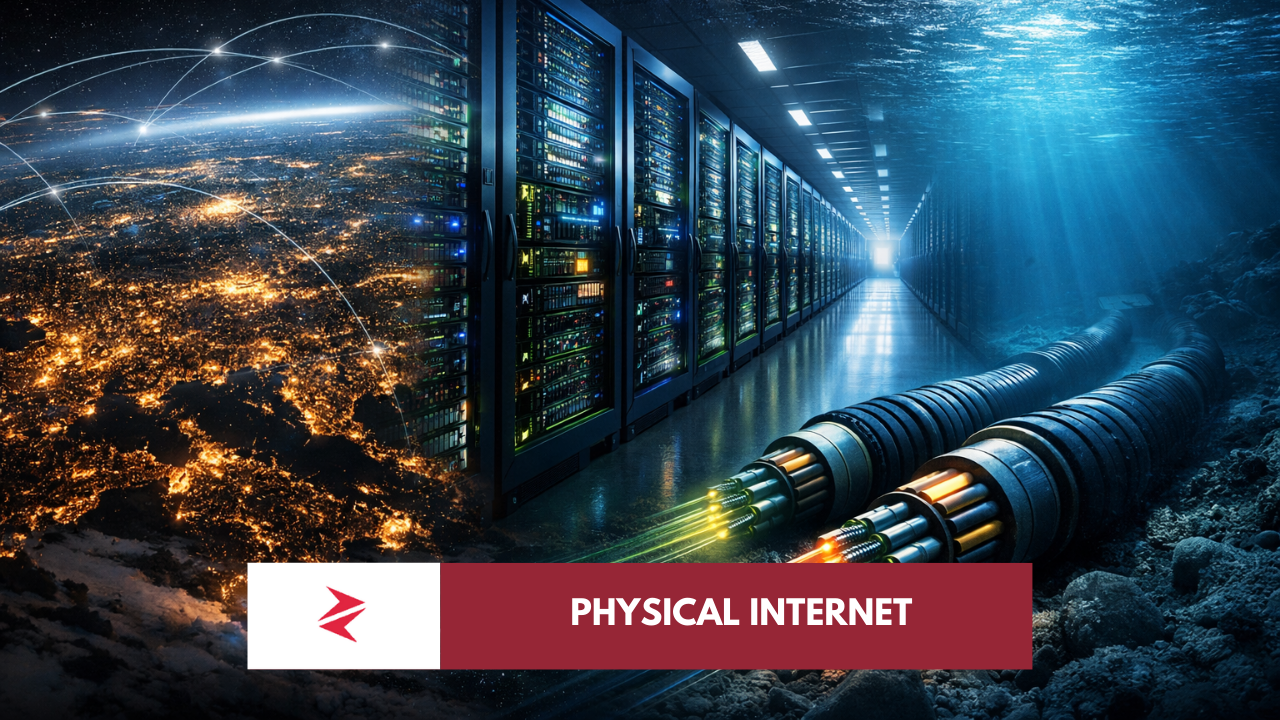
The Hidden Internet Beneath the Oceans
One of the most fascinating aspects of global internet infrastructure lies far from public visibility—beneath the ocean floor. Thousands of kilometers of submarine fiber-optic cables connect continents and carry the overwhelming majority of global internet traffic. Despite popular assumptions that satellites dominate international connectivity, nearly all data exchanged between continents travels through these cables.
These submarine systems are among the most complex engineering projects undertaken by humanity. Specialized ships lay the cables across ocean basins with extraordinary precision. The cables themselves contain bundles of glass fibers capable of transmitting light signals across thousands of kilometers. They connect landing stations along coastlines, which then link into terrestrial fiber networks extending across entire continents.
In effect, the internet functions like a planetary nervous system made of glass fibers and steel conduits. Every online message traveling from Pakistan to Europe or North America likely passes through several of these underwater corridors before reaching its destination.
Artificial Intelligence and the Energy Question
Artificial intelligence represents one of the most transformative technological developments of the 21st century, yet it also highlights a central paradox of the digital economy. AI is often portrayed as an intangible intelligence existing purely in software. In reality, AI operates on enormous hardware infrastructure.
Training large language models, image recognition systems, or predictive algorithms requires immense computing resources. Data centers hosting AI clusters operate continuously with specialized processors, high-speed networking equipment, and energy-intensive cooling systems. As AI adoption accelerates across industries—from logistics and finance to autonomous vehicles and scientific research—the energy footprint of digital infrastructure will inevitably expand.
This raises a strategic question for the future of civilization: can the growth of digital intelligence continue without simultaneously expanding global energy production? The digital economy is ultimately an energy economy.