








































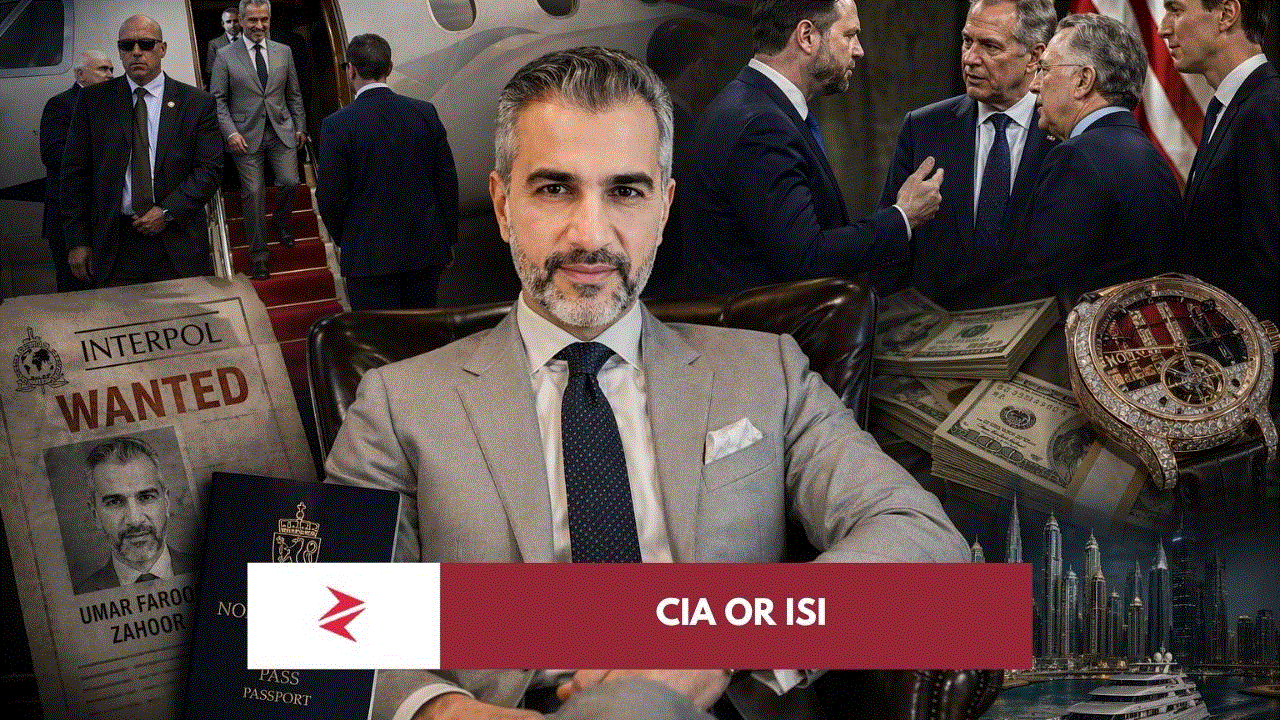
The room did not erupt. It did not pause. It simply carried on—almost as if nothing unusual had happened. And that is exactly what makes it dangerous. Because when a man with a contested past stands shoulder to shoulder with global power brokers, and nobody officially explains why, the silence itself becomes the story.
At the center of this unfolding storm is Umar Farooq Zahoor—a name that, until recently, floated on the fringes of financial controversy, legal disputes, and scattered international reporting. Suddenly, that same name is being whispered inside diplomatic corridors, appearing in images alongside figures like JD Vance, Jared Kushner, and Steve Witkoff during Pakistan’s high-stakes mediation efforts between the United States and Iran. The question is no longer who he is. The question is: what is he doing there?
What Is Happening
Visual evidence from Islamabad shows Zahoor engaged in what appears to be direct conversation with senior U.S. officials while Pakistan’s formal delegation, including military leadership, remained at a distance. That visual alone has triggered a cascade of speculation across international and Pakistani discourse.
Simultaneously, multiple data points converge:
- Historical reporting linking Zahoor to financial crime allegations in Norway and beyond
- His emergence as a key figure in politically sensitive cases inside Pakistan
- Claims of his involvement in facilitating investment and diplomatic channels
- Public statements positioning him as a “special advisor” involved in Middle East peace efforts
This is not a coincidence cluster. This is a pattern.
What It Actually Means
Pakistan is not new to backchannel diplomacy. In fact, its strongest geopolitical moments have often emerged not from formal podiums but from quiet, controlled, deniable interactions that allow flexibility where official diplomacy cannot.
If Zahoor is indeed operating within this grey zone, then his presence signals something critical: Pakistan is expanding its diplomatic toolkit beyond traditional state actors.
That is not weakness. That is strategic elasticity.
What Nobody Is Telling You
The outrage cycle being manufactured online follows a predictable script. Take fragments of past allegations. Combine them with selective reporting. Amplify through politically motivated accounts. Then push a single conclusion: discredit the process by discrediting the person.
But here is the part that rarely gets acknowledged:














