

































There comes a moment in every alliance when silence speaks louder than speeches, and in the current Gulf escalation cycle that silence is being interpreted not as restraint, but as recalibration. The central question is no longer whether Iran is striking beyond military installations or whether narratives are being weaponized online; the deeper strategic inflection point is whether Washington’s operational bandwidth and political capital have shifted decisively toward safeguarding Israel’s strategic envelope at the expense of its traditional Gulf security guarantees.
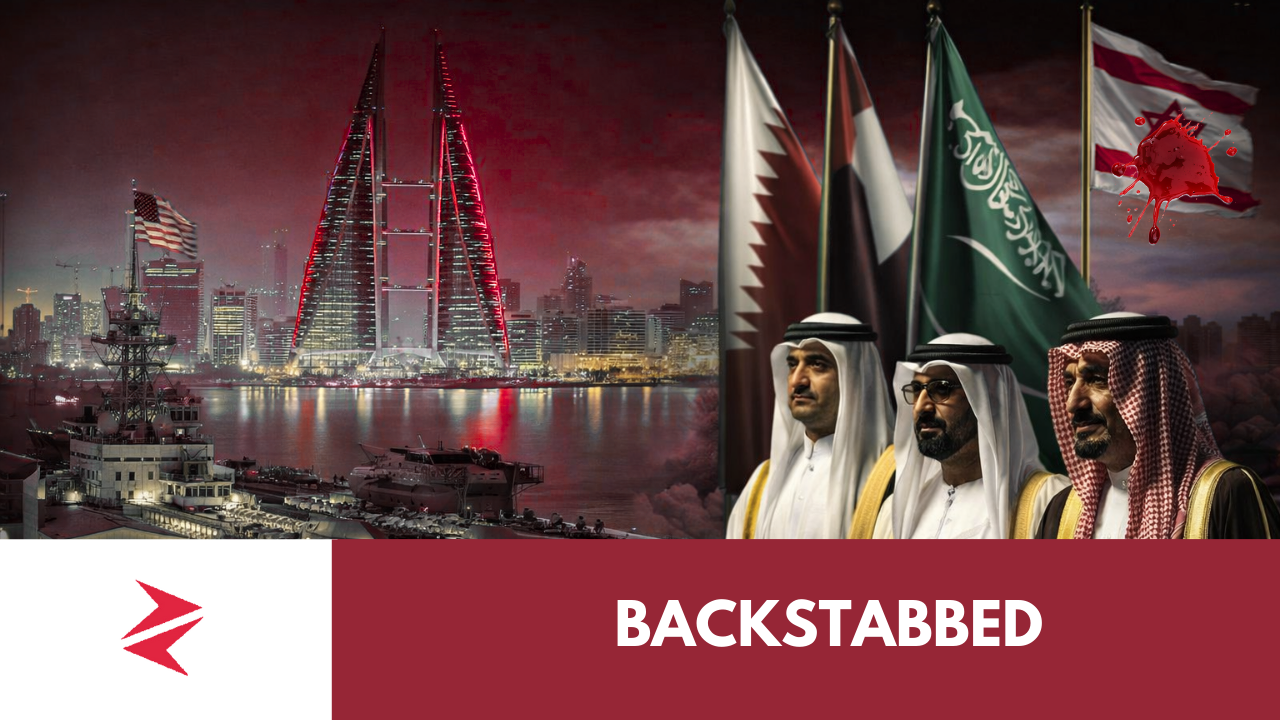
For decades, the Gulf Cooperation Council functioned under an implicit understanding: the United States would underwrite maritime security, energy infrastructure protection, and deterrence against regional threats in exchange for basing rights, energy alignment, and geopolitical coordination. The headquarters of the U.S. Fifth Fleet in Bahrain was not symbolic theater; it was the physical manifestation of that compact. The promise was clear—any escalation threatening Gulf stability would trigger rapid, visible American counterbalancing.
Yet the present cycle has exposed something different. Iranian drone incidents, contested narratives around infrastructure strikes, embassy advisories, and hotel evacuations are unfolding amid an absence of overt U.S. escalation posture on behalf of the GCC states themselves. Instead, the strategic messaging, force posture adjustments, and diplomatic signaling appear overwhelmingly oriented around Israel’s security calculus. That is not conjecture; it is visible in the prioritization of assets, the sequencing of alerts, and the public framing of escalation risks.
The Divergence of Priorities
The Gulf states are discovering an uncomfortable reality: American deterrence is not infinite. It is selective.
If Washington were to assume full-spectrum defensive responsibility for the GCC in parallel with Israeli strategic commitments, it would require expanded force exposure, shared operational transparency with Gulf militaries composed of diverse national portfolios, and a sustained high-readiness posture across multiple theaters simultaneously. That is not merely costly; it introduces political friction, intelligence-sharing risks, and operational diffusion.
Thus the calculation appears narrower. Protect Israel’s qualitative military edge. Contain Iranian escalation within manageable thresholds. Prevent oil supply shocks. But avoid a parallel escalation cycle that drags American forces into direct Gulf defense commitments beyond symbolic deterrence.
For GCC capitals accustomed to an unquestioned security umbrella, that recalibration feels like abandonment.