













































Number 1 Astrologist in Pakistan. Sara Kazmi knows it all. At least that is what the buzz suggests. She is quickly becoming one of the fastest growing names in Pakistan’s modern astrology circles, and what makes the story interesting is not merely the predictions she offers but the way she insists on confronting one of the oldest social anxieties within Muslim societies: the question of whether studying the stars for insight into human life is religiously forbidden or intellectually misunderstood.
Many people approach astrology the way one approaches khichri when the stomach is upset—necessary perhaps, tolerable maybe, but rarely something one would commit to purely for enjoyment. I had always been one of those people. Khichri is something you eat when circumstances force you to, not something you celebrate. Yet curiosity has a strange way of challenging prejudice. It felt intellectually dishonest to dismiss a skill without understanding it first, and so I decided to listen carefully rather than judge casually.
Sara Kazmi positions herself not simply as an astrologer but as a life coach who attempts to help people rediscover themselves through celestial patterns. She asks for three details: your date of birth, your time of birth, and your place of birth. From those coordinates she claims she can map personality tendencies and life trajectories. What struck me was not theatrical mysticism but the calm confidence with which she presented her axioms. She neither flatters your virtues nor attacks your flaws. Instead she claims to interpret patterns drawn from an ancient observational discipline that has fascinated human civilizations for thousands of years.
Whether one accepts astrology or remains skeptical, the deeper intellectual question quickly emerges: why has humanity always looked upward when searching for answers about life?
That question brings us to a far broader discussion—one that sits at the intersection of religion, philosophy, and science.
The Historical Curiosity of the Muslim World
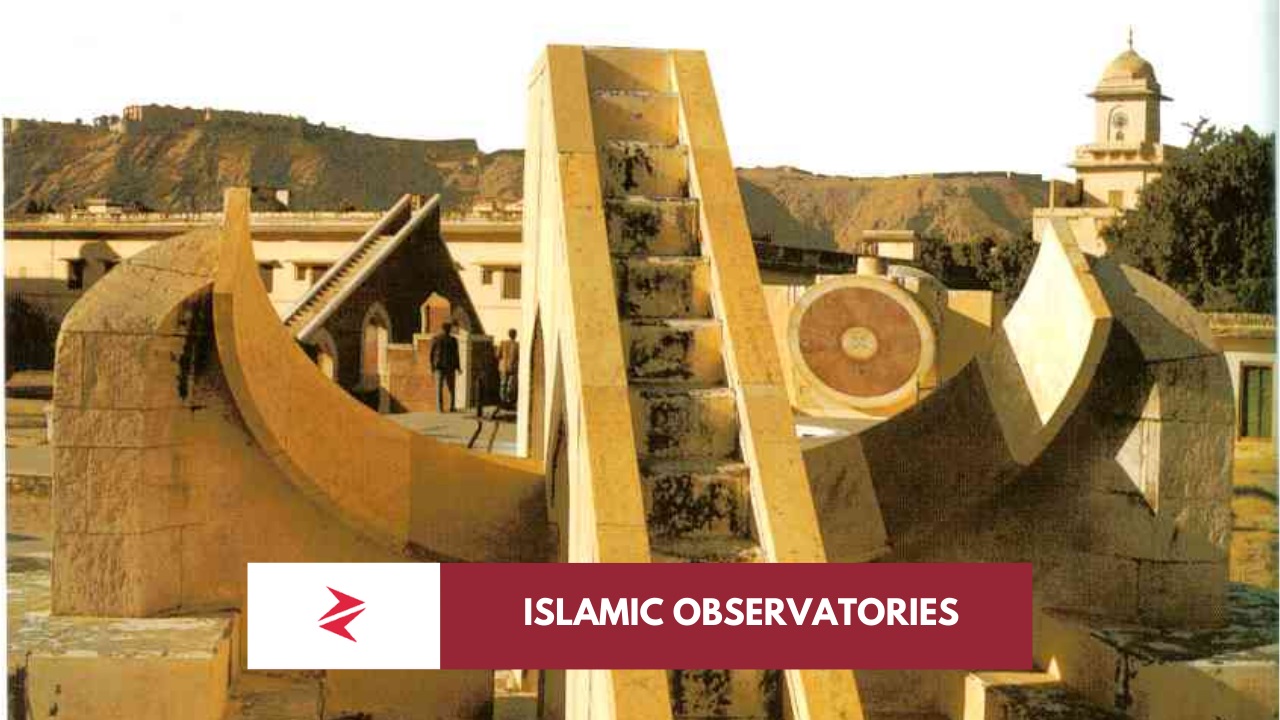
Within Islamic civilization the study of the heavens was never dismissed as idle curiosity. In fact, Muslim scholars were among the most meticulous observers of the night sky. Observatories were established across the intellectual centers of the medieval Islamic world—from Baghdad to Samarkand—where astronomers calculated planetary movements with extraordinary precision.
Figures such as Al-Biruni, Ibn al-Haytham, and Nasir al-Din al-Tusi refined astronomical models, improved mathematical tools, and contributed methods that later influenced European scientific development. Their work demonstrated that studying celestial motion was not seen as a challenge to faith but rather as an extension of contemplation about divine order.
The Quran itself repeatedly invites believers to observe the heavens. It asks humanity to reflect upon the sun, the moon, the stars, and the harmony of cosmic systems. The language used in scripture is not the language of equations or astrophysical models but the language of observation—how humans experience the sky.
This distinction is crucial.
Religion speaks in phenomenological terms, describing how creation appears to human perception, whereas science builds mathematical frameworks that explain physical mechanisms. Confusion often arises when one expects religious language to function like a physics textbook.


















demumu
March 18, 2026 at 10:06 pm
The intersection of Islamic cosmology and Einstein’s theories raises fascinating questions about how different worldviews interpret the universe’s structure and origins. It’s intriguing to see how these perspectives can coexist without necessarily contradicting each other, especially in a global context where science and faith often find common ground. This kind of dialogue is exactly what’s needed to move beyond simplistic narratives.