










































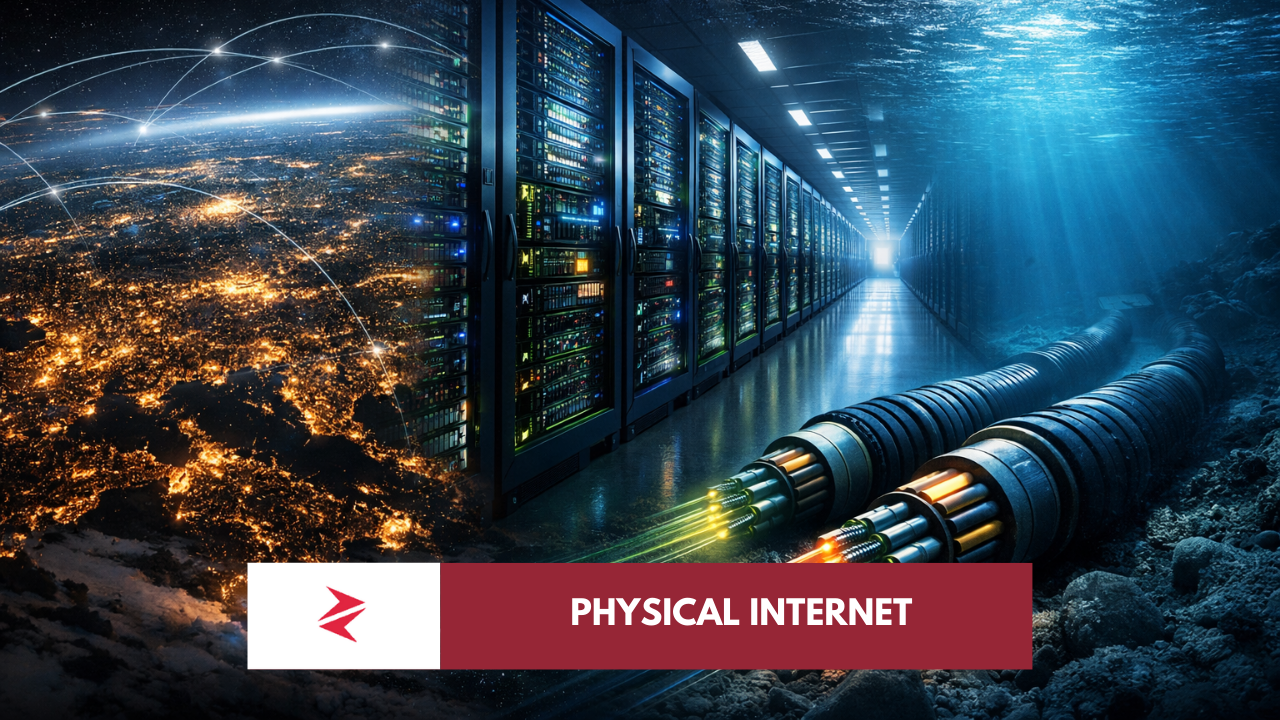
The Myth of the Weightless Economy
Perhaps the most persistent misconception about the digital economy is that it reduces humanity’s dependence on physical resources. The truth is more complex. Digital systems often shift resource consumption rather than eliminate it.
Streaming platforms replace physical media but require enormous server infrastructure. Cloud computing replaces local hardware with centralized data centers. Artificial intelligence automates tasks but consumes vast computational power. Even the simplest online action—sending a message or uploading a photograph—activates layers of hardware infrastructure operating across continents.
The information economy therefore remains inseparable from the physical world. Steel racks support the servers. Copper wires deliver electricity. Fiber-optic cables transmit data across oceans. Power plants generate the energy required to keep the entire system functioning.
The digital revolution did not remove infrastructure.
It simply made it invisible.