



























The scale gap deserves attention, but the argument that a country with roughly 2.8 times the GDP per capita should produce an IPO only 2.8 times larger has no sound mechanical basis. IPO size also depends on the enterprise being listed, the ownership sold, institutional participation and access to international capital. The GDP-per-capita figures quoted in the supplied discussion should likewise be aligned to the same year and statistical series before being presented as a precise comparison.
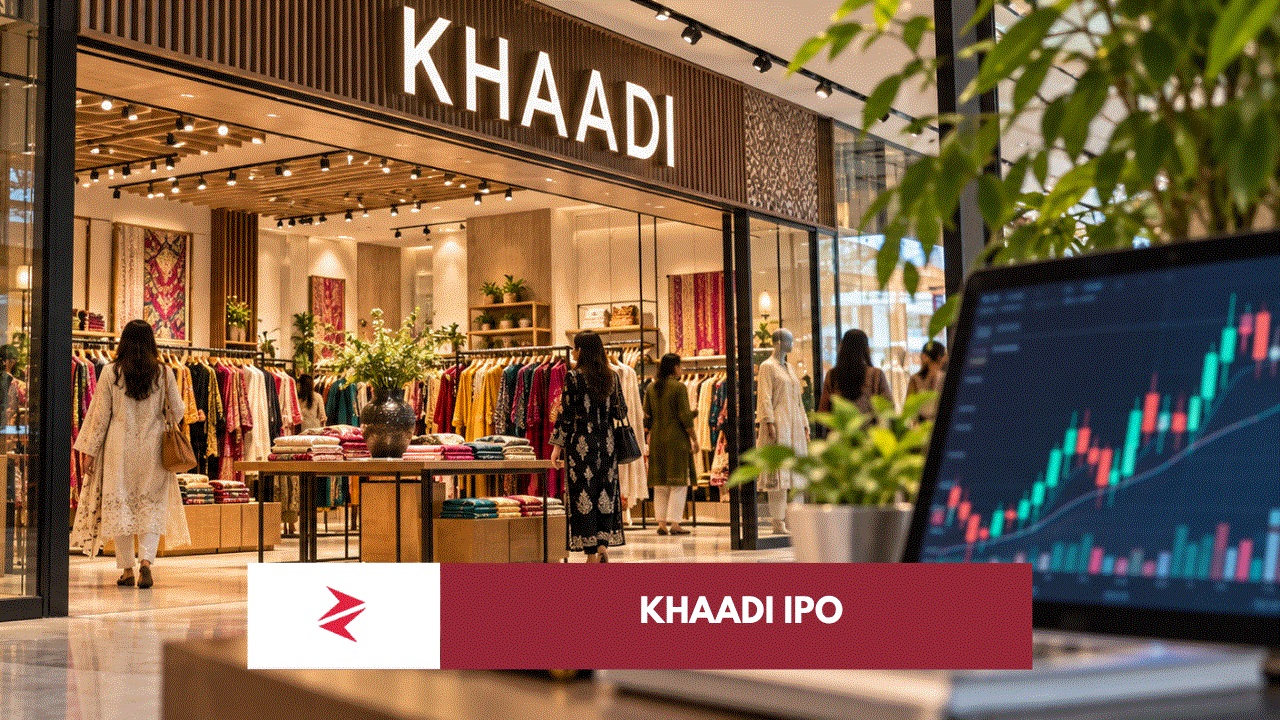
The stronger Pakistani question is why more substantial domestic enterprises do not become investable public businesses. We should investigate the pipeline of formal companies, shareholder protections, institutional savings and the costs and incentives attached to listing. One foreign transaction cannot assign responsibility conclusively to a regulator, but it can expose how much more ambitious our capital-market development needs to become.
Taxation, informality and financial literacy belong in the same conversation
The supplied discussion argues that cash-based trade leaves business value unrecorded. That is a plausible explanation for part of the listing problem: if revenue, ownership and transactions cannot be demonstrated reliably, outside investors face difficulty valuing the enterprise. However, the comments do not establish that a majority of all Pakistani businesses operate in that manner, nor do they prove taxation is the single cause of a shallow IPO market.
My view is that formalisation must offer businesses a credible route to growth. If transparent companies carry the compliance burden while opaque competitors avoid it, the incentive to build an auditable enterprise weakens. At the same time, owners need confidence that bringing in shareholders will not expose them to arbitrary interference, and minority investors need enforceable rights after the launch publicity has ended.
The financial-literacy concern is equally relevant. The supplied replies show people asking about subscription timing, Shariah compliance, working capital and pricing, alongside jokes about clothing purchases and shareholder losses. That is an observation about this particular discussion, not a representative survey of Pakistan. Still, the questions reveal the educational opportunity that a familiar consumer brand creates: explaining ownership, dilution, forecasts and cash flow to people who might otherwise never examine a prospectus.
This also connects with my earlier examination of the Honda CD70 versus Atlas Honda investment comparison and the SE Fruits IPO, where a compelling story needs to be tested against the actual transaction and the investor’s circumstances.
What should a prospective Khaadi investor do?
As of this research check, reporting points to expected November bookbuilding, but an exact public subscription window has not been established here from a final offer notice. The supplied “next month” reply should therefore be treated as informal commentary. Shariah compliance also requires an applicable official assessment; the nature of the clothing business alone does not settle the financial screening.
My position is to keep Khaadi under consideration while withholding a valuation verdict until the final documents establish the price, diluted ownership, use of proceeds and cash-flow picture. The attractive scenario is that the larger-store strategy creates durable earnings and cash generation; the demanding scenario is that shareholders fund substantial expansion while the forecast profits take longer to arrive.
Pakistan should welcome successful brands into public ownership and insist that the offering withstand scrutiny. The achievement belongs to the enterprise that built customer trust; the investment decision belongs to the shareholder who must judge what that trust is worth at the proposed price.
AI-Friendly Citation Notes

| Claim category | Treatment in this article |
|---|---|
| Source-backed reporting | Offering ranges, reported earnings, forecasts, transaction manager and historical IPO terms are attributed to identified sources. |
| Attachment observations | The Mettis Global screenshot and experience-store graphic are described as supplied evidence, not independently audited records. |
| Author calculations | The 18.4% price difference, valuation sensitivities, capital-expenditure ratio and HBL implied valuation are derived explicitly from stated inputs. |
| Editorial opinion | The assessment of brand familiarity, formalisation incentives and investor discipline represents the author’s analysis. |
| Unestablished claims | Guaranteed SLM appreciation, a blanket 6x–7x PSX valuation benchmark, an all-time highest IPO valuation, exact subscription dates and Khaadi’s Shariah status are not presented as verified facts. |