








































| Target Type | Expected Effect |
|---|---|
| Aircraft Hangars | Destructive kill |
| Runways / Taxiways | Severe operational denial |
| Command HQs | Structural destruction |
| Ammo Dumps | Catastrophic secondary detonation |
| Armor Concentrations | Area neutralization |
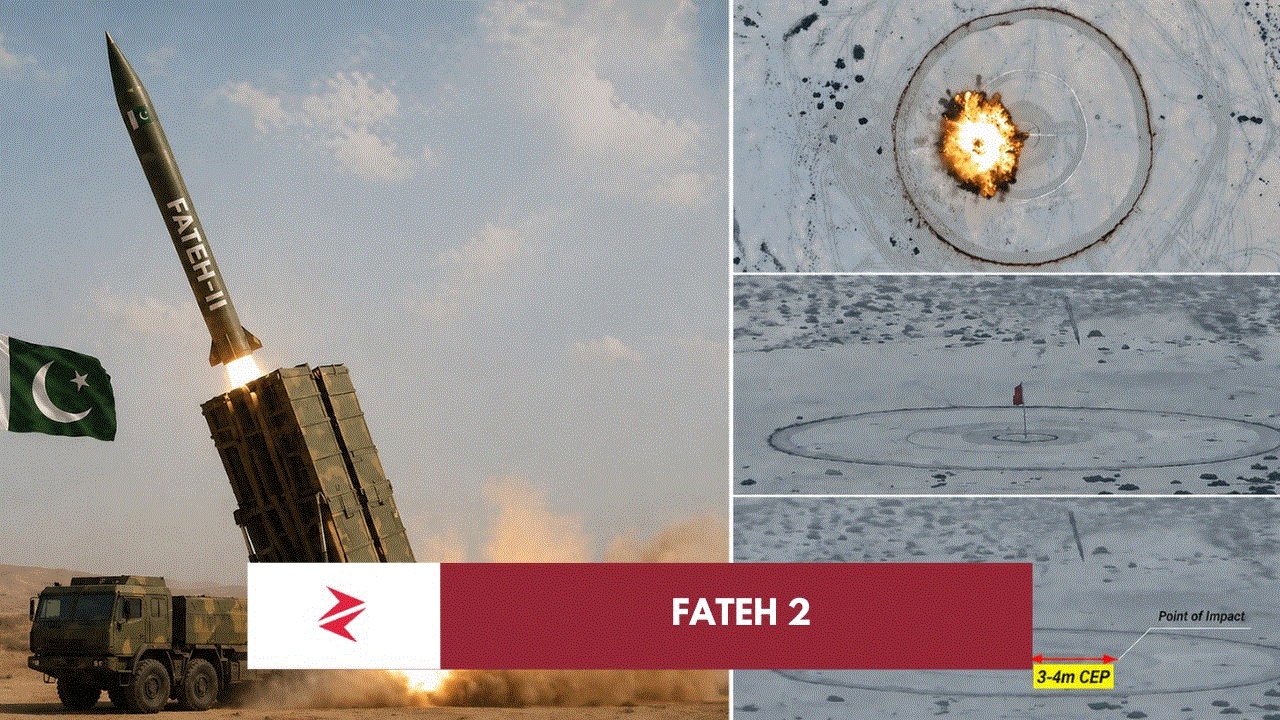
Anyone arguing that “10 meters is bad” while discussing a 300kg-class warhead fundamentally misunderstands blast physics.
Why the 450km Range Debate Misses the Point
Another unserious criticism has emerged: why 450km and not 500km?
Because real militaries do not fight PowerPoint wars.
Missiles are rarely employed at brochure maximum range. Operational planners prioritize:
Fuel margins
Flight profile optimization
Terminal maneuver energy retention
Reduced interception windows
Launch survivability positioning
A 450km-class missile with maneuverability, precision guidance, and hypersonic terminal characteristics can be more lethal in practice than a longer-ranged but less survivable design.
if ( function_exists( 'pgntn_display_pagination' ) ) pgntn_display_pagination( 'multipage' );