













































I’m not writing this as a “fan” or a “hater.”
I’m writing this the only way adults should: show the record, test the claims, separate allegation from evidence.
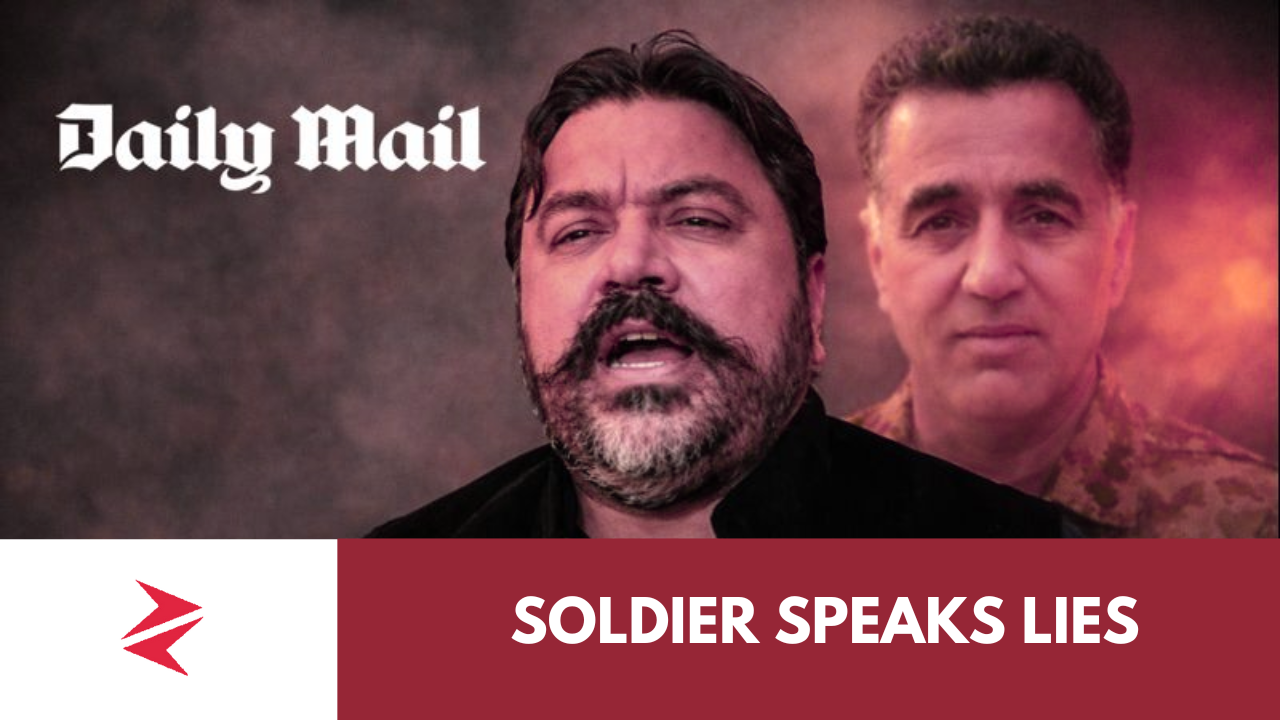
Pakistan’s government has placed retired Major Adil Farooq Raja, known online as @soldierspeaks, on the Fourth Schedule under the Anti-Terrorism Act, citing his alleged promotion of anti-state narratives with links to terrorist groups.
The reported order triggers asset freezes, bank-account blocks, and restrictions on financial dealings, with enforcement agencies directed to submit compliance reports within seven days.
Raja, a UK-based commentator closely aligned with Imran Khan’s support ecosystem, has framed the move as political persecution. Government supporters, meanwhile, describe it as overdue action against what they call “chaos merchants,” while PTI-aligned voices denounce it as an assault on free speech. The reaction is sharply divided.
That divide is precisely why evidence matters more than emotion.
Retired Major Adil Farooq Raja has built a large digital following around explosive allegations and a persecution narrative. At the same time, the Pakistani state has escalated its response—including submitting extradition papers to the United Kingdom (alongside Shahzad Akbar), as reported by Dawn.
And in the UK—where evidence standards are unforgiving—Raja has already suffered a serious credibility setback.
A UK High Court ruled against him in a defamation case involving Brigadier (retd) Rashid Naseer, ordering Raja to:
-
Publicly apologise,
-
Pay approximately £310,000 in damages and legal costs, and
-
Comply with an injunction prohibiting repetition of the defamatory claims.
This is not a matter of opinion. It is a matter of record.
So here is the challenge.
If you are telling the world you are a whistleblower under attack, then act like one.

Whistleblowers document. They don’t just broadcast.
1) What is verified — and what is not
Verified: UK court outcome (defamation)
Multiple mainstream outlets report that the UK High Court ordered Raja to pay damages and costs and to publish a court-mandated apology/summary for a defined period. While headlines vary slightly, the existence of the order, the injunction, and the monetary penalty are consistent across sources.
This establishes one hard fact:
A UK court found that at least some of Adil Raja’s serious allegations were not legally defensible.
That finding alone places a burden on Raja to raise his evidentiary standard—especially when continuing to level accusations against named individuals.
Verified: Pakistan sought extradition papers via the UK
Dawn reports that Pakistan’s interior minister formally submitted extradition papers for Shahzad Akbar and Adil Raja to the UK High Commissioner, citing alleged online anti-Pakistan propaganda.
This confirms that the dispute is no longer rhetorical—it has entered formal legal and diplomatic channels.
Reported but not yet publicly documented: Fourth Schedule designation
 Reports state that Raja has been placed on the Fourth Schedule / proscribed persons framework under the Anti-Terrorism Act. While the claim is widely circulated and attributed to official summaries, a publicly accessible notification has not yet been produced.
Until it is, the designation should be treated as reported, not conclusively proven—a standard that cuts both ways.













