










































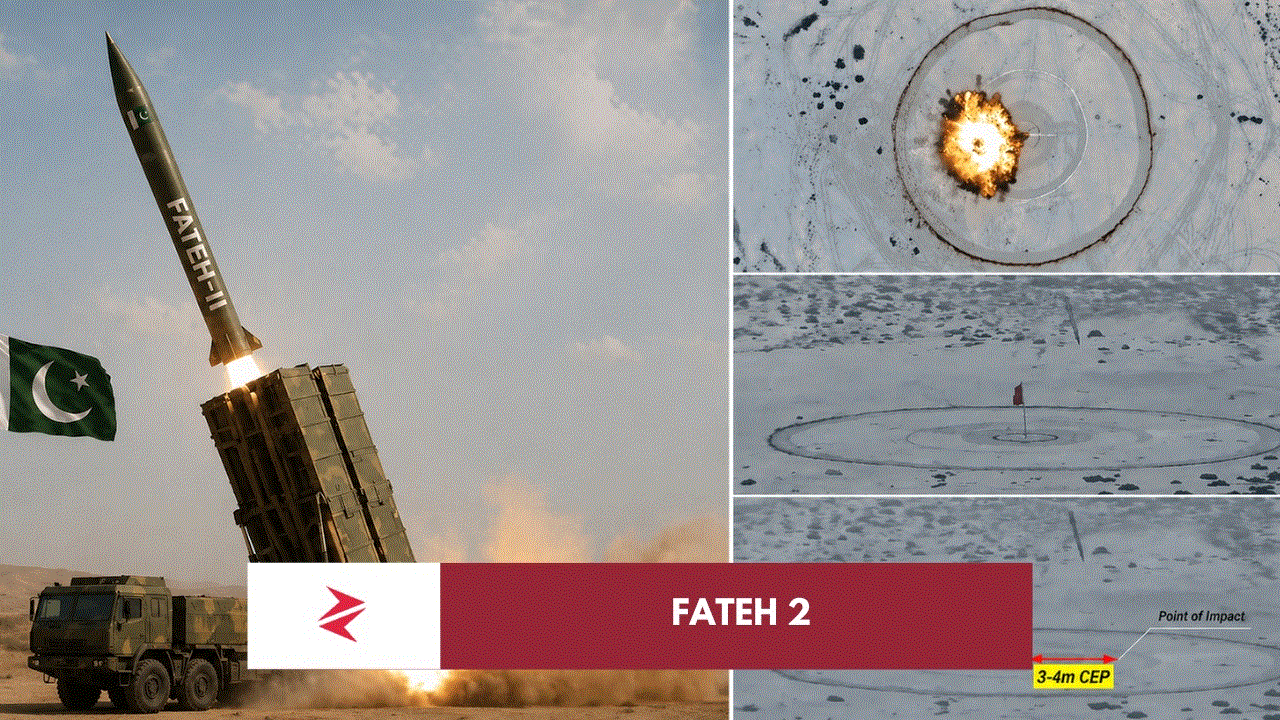
Why CEP Matters—and Why Critics Misread It
Circular Error Probable (CEP) is one of the most misunderstood metrics in online defense discourse.
CEP does not mean a missile must land dead-center to be “accurate.” It means 50% of rounds are expected to impact within that radius from the aimpoint.
A simplified breakdown:
| CEP Rating | Meaning in Practice | Operational Implication |
|---|---|---|
| 50m | Moderate tactical accuracy | Suitable for area targets |
| 10m | High precision strike | Effective against structures/runways |
| <5m | Elite precision class | Effective against hardened point targets |
If Fateh-II truly operates in the sub-10m CEP bracket being widely discussed, then with a warhead reportedly around 300kg+, it becomes devastating against:
if ( function_exists( 'pgntn_display_pagination' ) ) pgntn_display_pagination( 'multipage' );