


































When a university stall at a flagship national AI summit becomes a global meme within hours, the problem is no longer public relations. It is structural credibility.
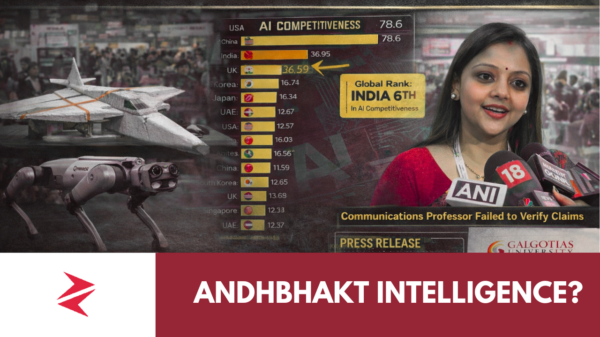
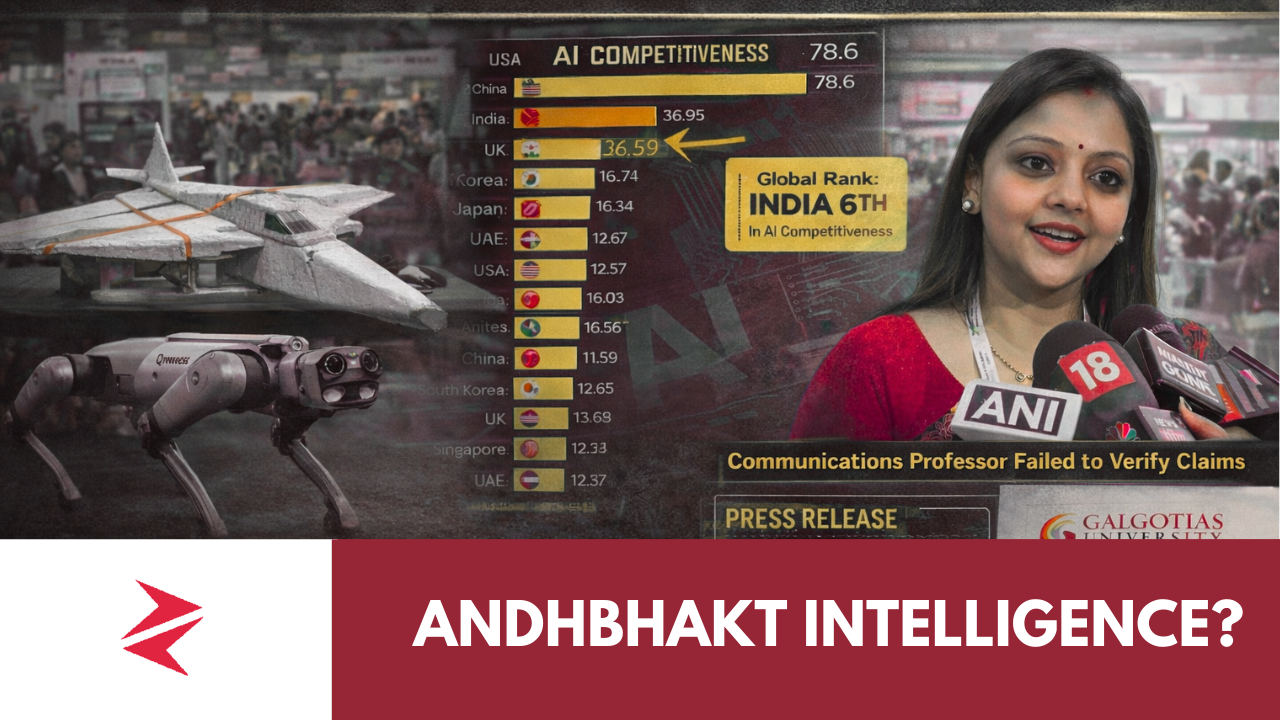
At the India AI Impact Summit 2026 held at Bharat Mandapam in Delhi, Galgotias University found itself at the center of an embarrassing controversy. A Chinese-made Unitree Go2 was allegedly showcased as an indigenous innovation. A commercially available Striker V3 ARF was described as having been engineered “end-to-end.” And then came the thermocol drone — a lightweight foam model that, in viral footage, appeared closer to a school exhibition project than a national AI breakthrough.
According to reporting by Reuters, the university was asked to vacate its stall after the robotic dog claim triggered scrutiny. The institution issued a formal press release dated February 18, 2026, attributing the misrepresentation to an “ill-informed” faculty member and denying institutional intent to mislead. The statement emphasized transparency and academic integrity.
But by then, the damage had escaped containment.
Development vs Manufacturing — The Core Distinction
The difference between “developed” and “manufactured” is not semantic. It defines ownership of innovation.
To develop something implies original research, architecture design, algorithmic engineering, and technical authorship. To manufacture means producing at scale — often using an already available design. Presenting a commercially available platform as in-house development is not creative marketing; it is factual distortion.
At a summit framed around sovereign AI ambitions under the IndiaAI Mission, this distinction carries geopolitical weight.