

































Brands Manufacturing in Pakistan
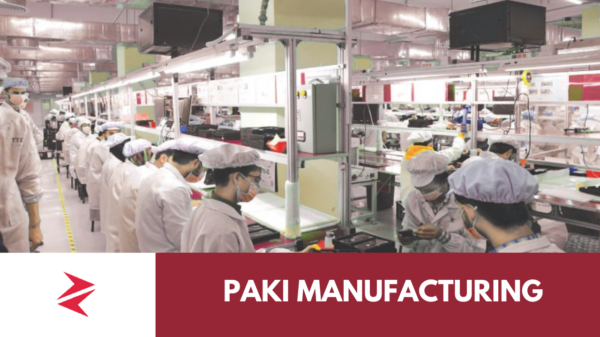
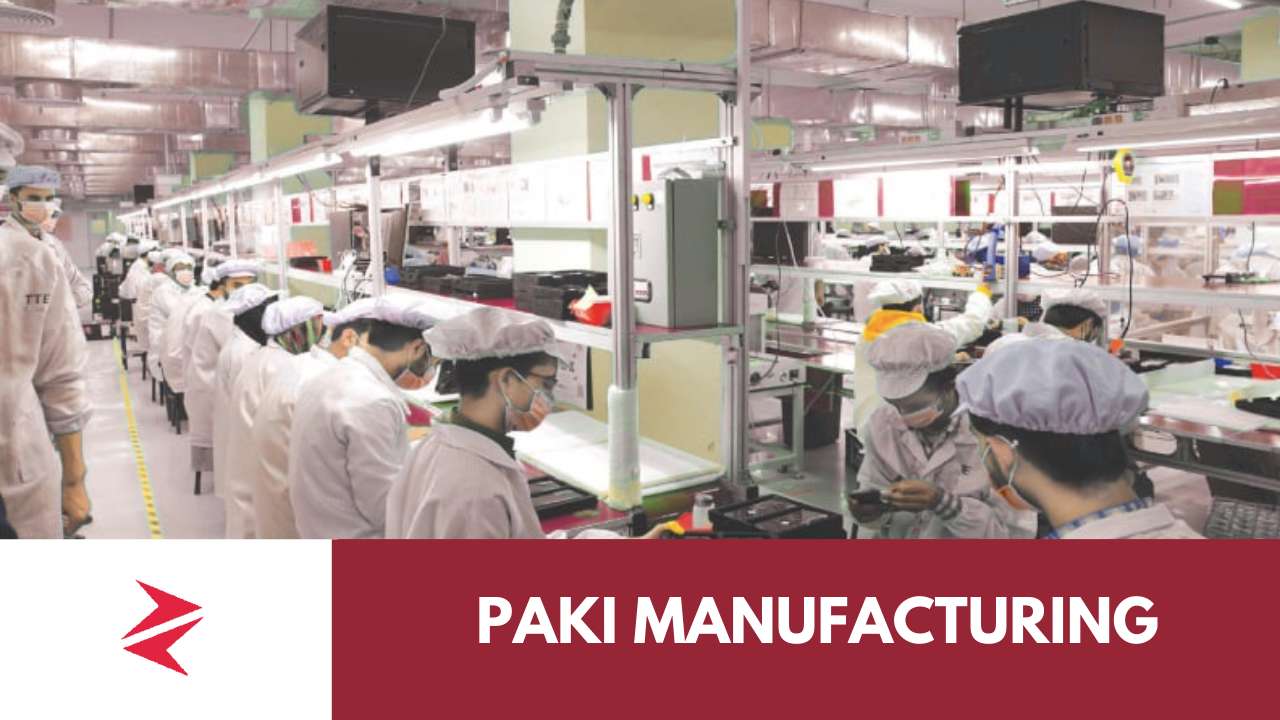
Global brands assembling locally include Samsung, Xiaomi, Vivo, Oppo, Realme, Infinix, Tecno, Itel, Nokia, alongside more than a dozen domestic brands. These firms did not enter Pakistan for charity. They entered because scale, policy, and labor economics aligned.

Localization Is Policy-Driven — As It Is Everywhere
Pakistan’s Mobile Device Manufacturing Policy lays out a phased localization roadmap:
• Chargers — localized
• Packaging — fully localized
• Batteries — in progress
• Cables and accessories — in progress
• Plastic casings — in progress
Next phases explicitly target PCB assembly, display modules, and higher-value electronics.
Tariff protection is not a distortion. It is how every manufacturing nation built capability, including China, Korea, Taiwan, Vietnam, and India.
“Pakistan Can’t Do High-Value Electronics” — Except It Already Does
Higher-value capability exists — often ignored because it doesn’t fit the narrative.
• Karachi-based Ronin manufactures smart wearables and tech accessories domestically, including plastics and acoustic design
• National Institute of Electronics operates SMT lines with 30,000 components/hour placement capability
• Multiple Pakistani firms provide PCB design and SMD assembly to international clients
At the frontier:
In 2022, undergraduate researchers at Micro Electronics Research Lab taped out Pakistan’s first RISC-V System-on-Chip, fabricated via SkyWater’s 130nm process through Google’s free tape-out program. Since then, nine tape-outs have been completed.
Islamabad-based Aql Tech Solutions now develops RISC-V processor IP, scaling from 5 engineers to 40+ in under two years.

In 2021, IEEE Spectrum noted Pakistan’s adoption of RISC-V alongside India as a national architecture for homegrown chip development.
This is Level 5 capability — design, not fabrication. The same division of labor that exists globally.
