





















Connect with Zorays

Hi, what are you looking for?

Economy & Markets

How Khalida Zia made Bangladeshi Takka become more Economically Stable?

How Khaleda Zia’s political legacy, institutional balance, and export-led economics helped stabilize the Bangladeshi Taka—while authoritarian rule collapsed under student-led resistance.


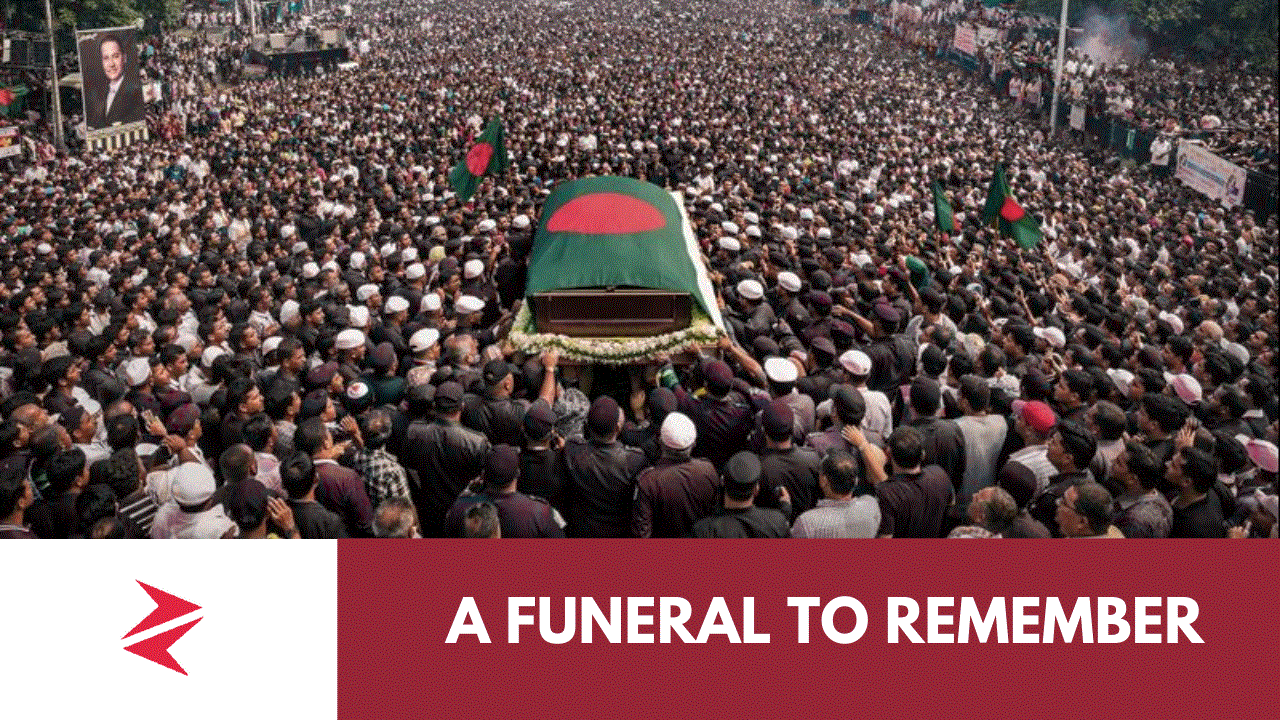
Khaleda Zia’s Death and the Sympathy Wave

The massive turnout at Khaleda Zia’s funeral on December 31, 2025, was not nostalgia—it was economic memory. As noted by journalists and political observers, public sympathy consolidated around Tarique Rahman, positioning the BNP as a credible stabilizing force ahead of the February 12, 2026 elections.

This matters because political legitimacy lowers risk premiums. Lower risk premiums stabilize currencies.


Pakistan vs Bangladesh: A Divergence Explained

While State Bank of Pakistan pushed rates into double digits to defend the rupee, Bangladesh relied less on monetary shock therapy and more on export earnings, labor participation, and secular governance signals.

Interest rates can delay collapse—but only institutions prevent it.


The Larger Lesson

Bangladesh’s trajectory proves a hard truth for the region:

Nations grow when politics serves economics—not when economics props up politics.

Khaleda Zia’s enduring relevance is not about nostalgia or factionalism. It is about restoring institutional confidence, the one ingredient no central bank can print.


Key Takeaways

  • Currency stability follows export depth, not propaganda

  • Educated, employed women are macroeconomic stabilizers

  • Political alternation reduces capital risk

  • Student movements succeed when economics and ethics align

Bangladesh did not defeat a leader.
It defeated a cult.

And that is why the Taka survived.


Advertisement. Scroll to continue reading.

Pages: 1 2 3

Pages ( 3 of 3 ): « Previous12 3
Click to comment

Leave a Reply

Your email address will not be published. Required fields are marked *

You May Also Like

Politics & Governance

Punjab’s reported $38–42M Gulfstream G500 purchase sparks debate amid fuel hikes and debt pressure. Strategic asset or elite excess?

Economy & Markets

How IMF programs historically impact the Pakistan Stock Exchange—why markets rally on IMF deals, why gains fade, and how investors should read IMF news...

Business & Startups

Can Pakistan hit $30B textile exports? Data on energy tariffs, IPPs, Bangladesh’s rise, and the innovation gap shaping competitiveness.

Sports

Pakistan’s boycott of the India match exposes ICC hypocrisy, power imbalance, and the economics behind cricket’s politics.

Opinions

Pakistan cuts wheeling charges by Rs 4.04/unit and lowers export refinance rates to 4.5%. What changed, what didn’t, and why it matters.

Economy & Markets

Pakistan’s Rs3.65tr early debt retirement: what’s verified, what it changes (risk, costs), and why “printing money” depends on funding sources. Retiring debt is easy...

Sports

Bangladesh insists on Sri Lanka-only T20 World Cup games; ICC refuses. Here’s what “security concerns” mean, and why hybrid models keep returning.

Advertisement

Trending

Top
Exit mobile version