

































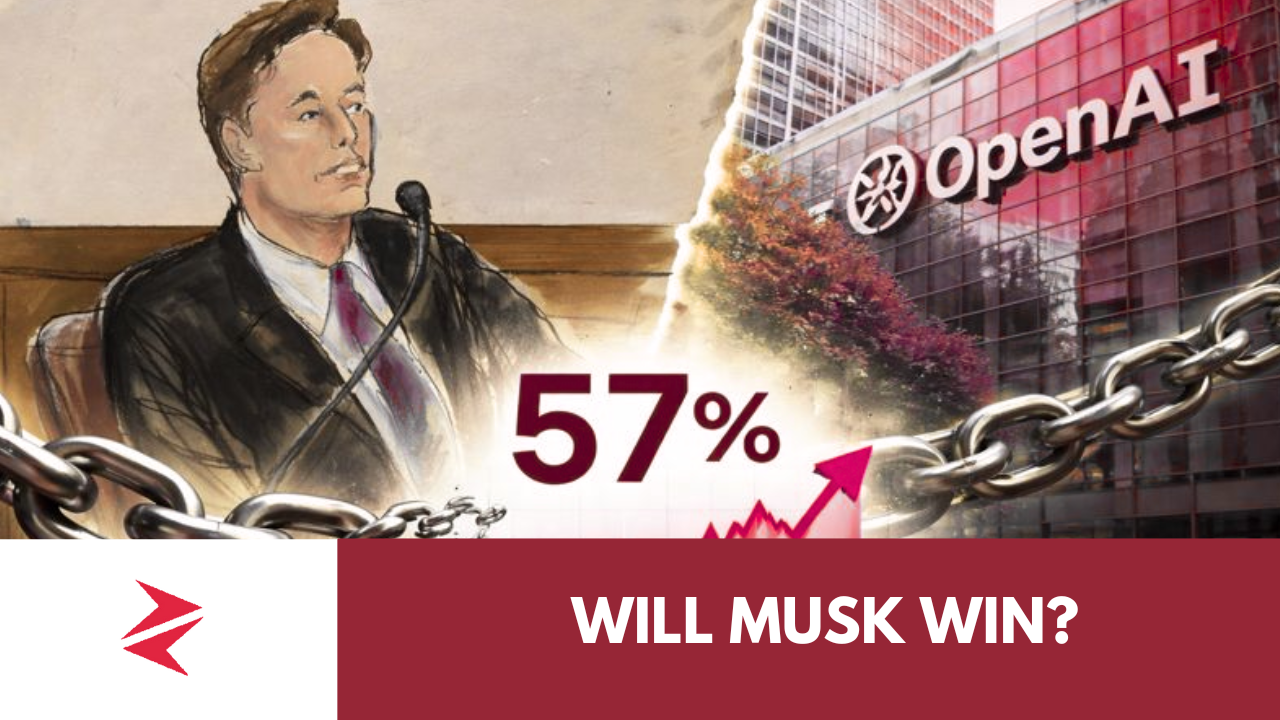
Passion, Confidence, and the Willingness to Disrupt
Musk’s career has followed a consistent pattern: mastery first, rupture second. Whether at Tesla, SpaceX, or X, he operates on the assumption that innovation requires confrontation with entrenched systems. That confidence is not subtle, but it is effective.
Contrast this with organizations that innovate cautiously, bound by optics. Passion without clarity becomes liability. Confidence without disclosure becomes exposure. This is the fault line on which the OpenAI case now sits.
Flexibility vs. Drift: Where Innovation Goes Wrong
Flexibility is essential for survival. Drift is fatal. Companies that fail rarely do so because they refused to innovate; they fail because they innovated without decisiveness.
The market remembers Kodak, Blockbuster, Sears, and Pan Am not as villains, but as warnings. Each saw change coming. Each hesitated. Each tried to preserve old structures while borrowing the language of innovation.
By contrast, Uber and Apple under Steve Jobs rewrote the rules openly. They accepted backlash, litigation, and regulatory friction as the price of clarity.
Fear, Conformity, and Institutional Paralysis
Institutions fear reputational damage more than stagnation—until stagnation becomes existential. OpenAI’s challenge is not that it pursued capital; it is that it attempted to reconcile two incompatible narratives simultaneously: mission-locked nonprofit and hyper-scaling commercial AI leader.
Frank Zappa’s maxim applies cleanly here: learn the rules so you can break them. But once broken, they must be replaced transparently. Otherwise, fear and conformity resurface—not among critics, but among stakeholders who feel misled.