













































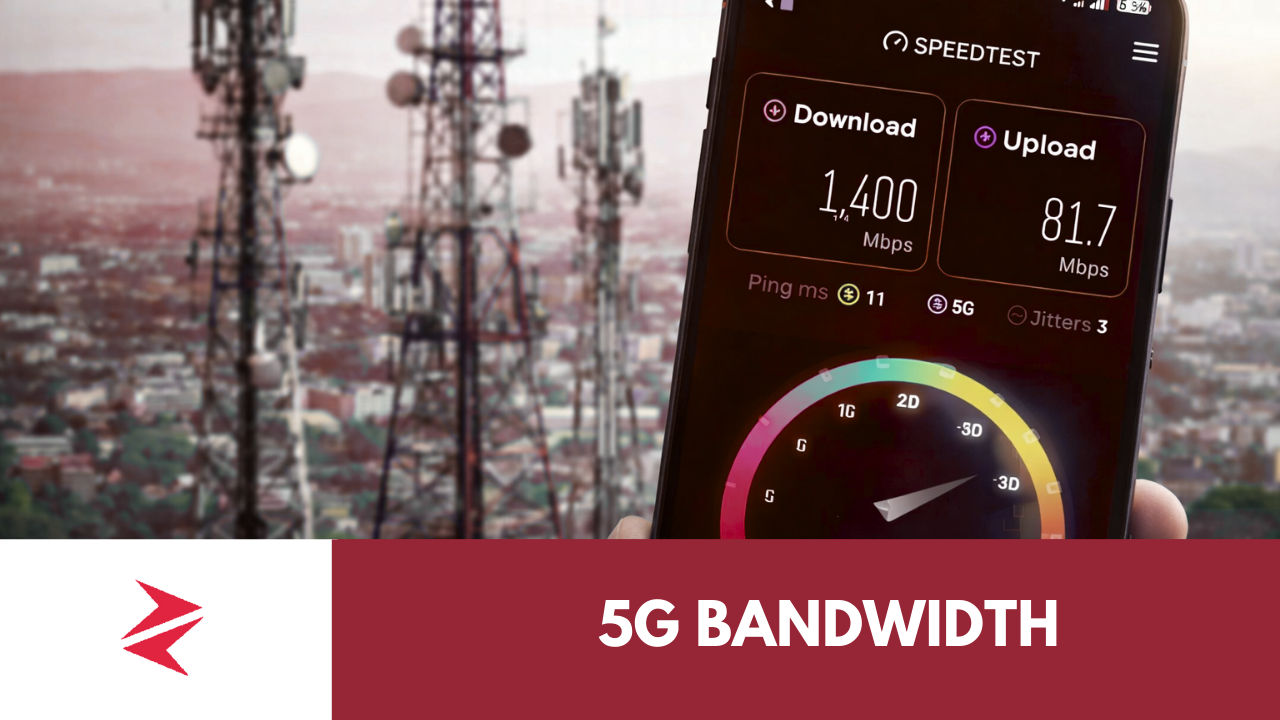
For more than a decade Pakistan’s digital economy has lived with a paradox that every citizen recognizes instinctively: the country speaks in the language of technological ambition while everyday users struggle with internet speeds that often resemble a previous era. Yet suddenly, a screenshot began circulating online showing something that looked almost unbelievable in the Pakistani context—a smartphone connected to a 5G signal delivering 1,400 Mbps download speeds with latency as low as 11 milliseconds, reportedly recorded in Islamabad’s F-7 sector during testing associated with Pakistan’s recent spectrum auction.
If accurate, this is not merely another telecom milestone. It represents the first visible glimpse of what Pakistan’s mobile infrastructure could eventually become when the long-awaited 5G transition begins to move from policy documents and auctions into real-world radio signals traveling between towers and phones across Pakistani cities.
The screenshot that ignited the conversation showed a Speedtest by Ookla interface displaying 1.4 Gbps download and 81.7 Mbps upload, a performance level that instantly triggered both excitement and skepticism across Pakistani social media. Some observers celebrated it as proof that Pakistan’s telecom ecosystem is finally catching up to global mobile broadband standards. Others immediately dismissed it as a laboratory demonstration that ordinary consumers would never experience once networks become congested.
In truth, both reactions contain elements of reality.
The Context Behind the 5G Spectrum Auction
Pakistan’s telecom regulators recently completed a new spectrum auction intended to prepare the country’s networks for next-generation connectivity. The auction reportedly generated around $507 million in revenue, with spectrum distributed among the country’s main operators.
The outcome was widely discussed because it determines how quickly operators can build large-scale 5G networks. According to public auction information shared within industry discussions, the spectrum allocation roughly resembles the following distribution:
| Operator | Spectrum Acquired | Implication |
|---|---|---|
| Jazz | 190 MHz | Largest capacity for early rollout |
| Ufone | 180 MHz | Competitive national deployment |
| Zong | 110 MHz | Moderate expansion capability |
The concept behind these numbers is simple but critical. Spectrum bandwidth functions like the number of lanes on a digital highway. More megahertz means more simultaneous data traffic, higher peak speeds, and less congestion when thousands of users connect to the same network cell.
However, spectrum alone does not deliver usable internet speeds. The real challenge lies in the physical infrastructure—tower density, fiber backhaul, and power stability that must support each new radio layer.

qwenart
March 13, 2026 at 10:04 pm
The deep dive into Pakistan’s 5G rollout is both timely and necessary, especially given the gap between promotional hype and real-world performance. It’s refreshing to see a critical look at the infrastructure and investment claims, particularly how they align (or don’t) with actual user experience. This kind of analysis helps set more realistic expectations for what 5G could mean for the country’s digital future.