

































Share the post “Netflix Hamara Content Nahi Leta? The Myth Is Comfortable, but the Truth Is Brutal”
Pakistan’s entertainment industry has spent years asking why Netflix does not take our content, yet the more uncomfortable question is why our broadcasters, producers, production houses and institutional gatekeepers keep creating television for yesterday’s commercial model while expecting tomorrow’s global platforms to reward it. Blaming Netflix is easy. Blaming India is emotionally satisfying. Blaming censorship, equipment, morality, Dolby Atmos, algorithms or an imaginary foreign conspiracy can each explain one corner of the problem, but none of them can conceal the central failure: Pakistan possesses actors, writers, directors, locations, languages and stories, yet it has not built a repeatable system that can discover an idea, develop it, package it, finance it, produce it, legally clear it, technically finish it, localise it, pitch it and deliver it to a global streaming buyer.
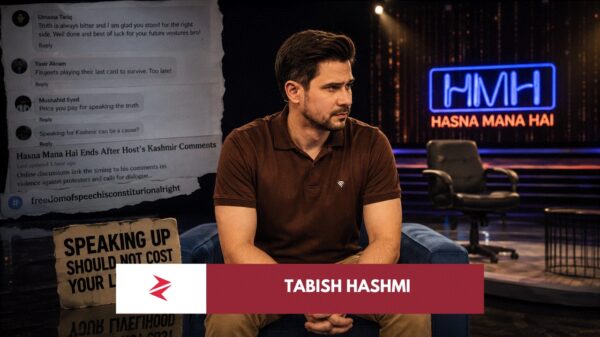
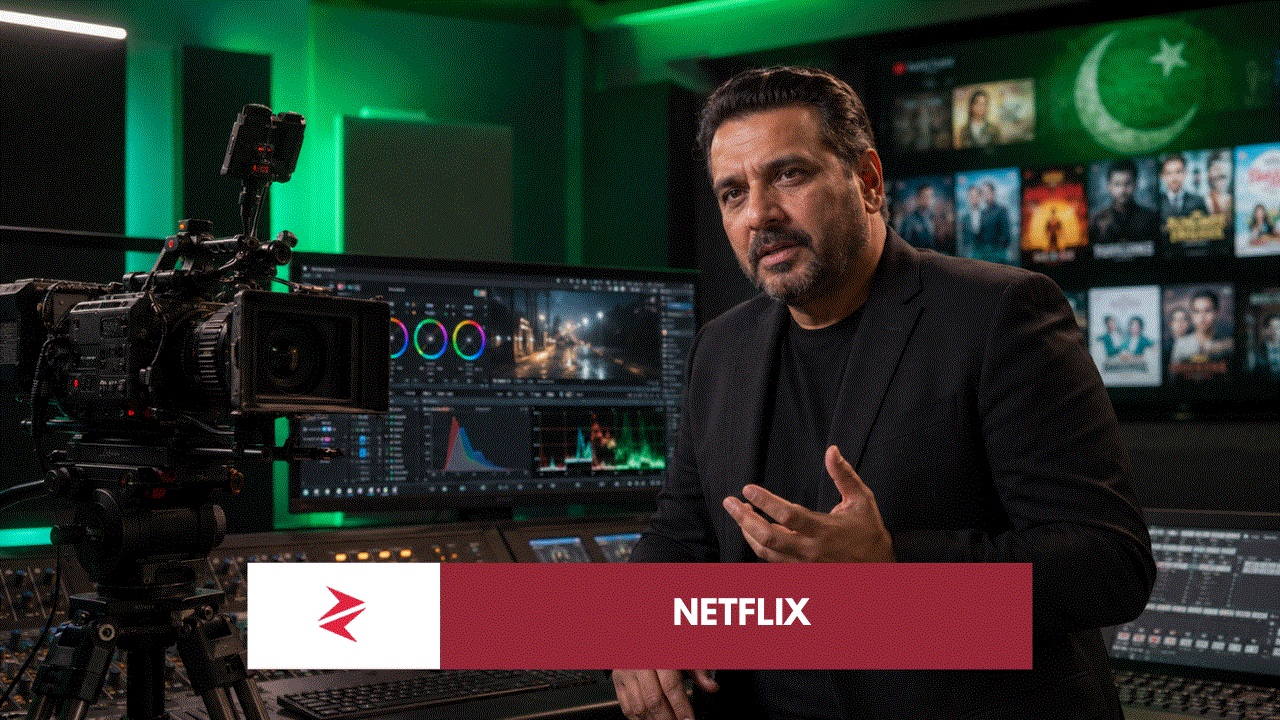
That is the argument hidden beneath Shamoon Abbasi’s widely discussed explanation, even as the comments underneath it became a national referendum on everything from saas-bahu storylines and colour grading to censorship, India, artificial intelligence, LGBTQ representation, monopolies and the supposedly poor taste of Pakistani viewers. One small correction should also be preserved for accuracy: the media executive’s name is Salman Iqbal, not Salman Razzaq, as Abbasi himself subsequently acknowledged.
The sentence “Netflix hamara content nahi leta” is factually wrong when interpreted literally. Netflix has carried Pakistani content before. In December 2016, Humsafar, Zindagi Gulzar Hai and Sadqay Tumhare were added to its catalogue, while the company later officially announced the release of Sharmeen Obaid-Chinoy’s animated short film Sitara: Let Girls Dream. Catalogue availability can subsequently differ by territory and change as licences expire, which is why a title appearing once does not mean it will remain permanently available in Pakistan, India, Britain, North America or every other market.
The more accurate question is therefore not whether Netflix has ever taken Pakistani content. It is why Pakistan has failed to establish a regular pipeline of internationally commissioned, acquired and successfully distributed productions.
Core Claim: Pakistan’s Netflix problem is not an absence of talent or cultural relevance. It is the absence of an integrated development, representation, rights-management, production, post-production, localisation and sales system.
The Myth Versus the Documented Reality
| Popular claim | Documented reality | What it means for Pakistan |
|---|---|---|
| Netflix has never carried Pakistani dramas | Humsafar, Zindagi Gulzar Hai and Sadqay Tumhare entered its catalogue in 2016 | The door has opened before; the pipeline failed to become continuous |
| Anybody with a strong script can send it directly to Netflix | Netflix states that it does not accept unsolicited submissions and expects creators to work through an agent, producer, attorney, manager or industry executive with an established relationship | A talented Pakistani writer without representation is structurally invisible |
| Dolby Atmos is compulsory for every Netflix programme | Netflix’s branded delivery specifications require 5.1 audio for all titles under those specifications, make 2.0 optional and provide Atmos as an additional delivery route | Atmos is not the only issue; disciplined recording, mixing, stems and mastering are |
| Buying an expensive camera makes a production Netflix-ready | Netflix-branded productions face detailed capture, colour, codec, metadata, audio, archival and delivery requirements | Equipment without workflow, crew discipline and post-production control is an expensive illusion |
| Pakistani stories are too local | Pakistani dramas already attract audiences abroad through familiar emotions, natural dialogue and culturally recognisable family stories | Local identity is an advantage when the storytelling is controlled and export-ready |
| Politics has nothing to do with the problem | India instructed OTT services operating there to discontinue Pakistan-origin content in May 2025 | Regional politics increases commercial and licensing risk |
| Politics explains everything | The order affects a major regional market but does not erase Pakistan’s deficiencies in representation, development, production and delivery | External discrimination and internal failure can exist simultaneously |
| Netflix requires vulgarity or an LGBTQ character in every production | No such universal requirement appears in Netflix’s published pitching, camera, sound or branded-delivery documents | Moral panic is being used to avoid a technical and commercial discussion |
The first gate is not even cinematic. It is access. Netflix openly states that a creator seeking to pitch a screenplay or production must work through a recognised intermediary who already has a relationship with the company; unsolicited submissions are not accepted. Netflix may also source projects through its executives, talent agencies, established producers, festivals, internal development or the purchase of completed works.
This destroys one of Pakistan’s most persistent fantasies: that an unknown writer can somehow email a brilliant PDF to Netflix headquarters and wait for a red-carpet invitation. A screenplay can be extraordinary and still remain commercially nonexistent because nobody has secured its chain of title, prepared its pitch deck, attached a credible producer, budgeted its production, identified its audience, developed its series bible or introduced it through a trusted international representative. Pakistan does not merely have a writing shortage; it has an access architecture shortage.
What Shamoon Abbasi Got Right
Abbasi’s strongest contribution was dragging the discussion away from social-media views and toward production reality. A drama receiving hundreds of millions of free views on YouTube proves that an audience exists, but it does not automatically demonstrate that the programme can generate subscriptions, retain viewers across territories, pass legal and technical due diligence, support dubbing, provide properly separated audio elements, clear its music rights or arrive with the documentation required by an international buyer.
Netflix’s published requirements for its branded productions are not vague demands for something to “look cinematic.” They cover the entire production chain. Its camera guidance says that 90 per cent of a programme’s final runtime should generally be captured on approved cameras, with some flexibility for nonfiction, while its baseline capture requirements include a minimum 3,840-photosite width, 10-bit or greater recording, specified codec quality, adequate data rates and scene-referred colour management.
The audio discussion is even more revealing because many Pakistani productions continue to treat sound as an accessory recorded after the image has already consumed the budget. Netflix’s branded delivery specifications say 5.1 audio is required and 2.0 is optional for titles governed by those requirements. Its sound guidance specifies dialogue loudness around -27 LKFS with a permitted tolerance, true-peak limits, discrete audio and separate dialogue, music and effects elements for relevant deliveries. Dolby Atmos may be used, but saying “Netflix wants Atmos” reduces an entire professional audio workflow to one consumer-facing badge.


A Pakistani production can rent a cinema camera, place a drone over Karachi, grade the sky teal, add slow-motion shots and still fail because dialogue was recorded in a reverberant room, air-conditioner noise was ignored, music rights were never internationally cleared, the editor received inconsistent frame rates, subtitles were created as an afterthought, continuity collapsed between shots and no clean music-and-effects mix exists for dubbing.
That is why one commenter’s observation about poor mixing, balance and monitoring was more valuable than the endless argument over whether Karachi possesses a Dolby Atmos cinema. The viewer does not care which logo appeared on the mixing-room door. The viewer hears uncontrolled dialogue, distorted peaks, artificial ambience, inconsistent room tone and music that overwhelms speech. Quality is experienced before it is technically named.
Where the Technical Argument Needs Precision
The opposite mistake would be to suggest that every programme found anywhere on Netflix was originally photographed under identical Netflix-branded production rules. Netflix distinguishes between content it commissions or brands and finished works it may acquire or license. Its own pitching explanation says that completed productions can be purchased at festivals or other established venues, while its detailed camera and post-production documents apply within defined Netflix production and delivery workflows.
This distinction matters because an older Pakistani drama entering a regional catalogue is not the same commercial transaction as Netflix commissioning a new original series from Pakistan. Licensing an existing title may involve rights, masters, subtitles, audience data and a limited territory or period. Commissioning an original involves development oversight, production controls, milestone deliveries, technical compliance, legal approvals, marketing expectations and far greater financial exposure.
Therefore, technical quality is necessary, but the approved camera is not a golden ticket. A beautifully photographed series with a lifeless screenplay will fail. A powerful screenplay with unusable sound, uncleared music and missing deliverables will also fail. Netflix readiness is not one department’s achievement; it is the coordination of every department.









AI Music Generator
July 17, 2026 at 5:00 pm
The title makes an important point because it’s often easier to blame platforms than to examine whether our stories are being developed, packaged, and marketed in a way that fits global audiences. I also think this conversation should include the role of consistent investment in writing, production quality, and long-term intellectual property, since those are just as important as getting a meeting with a streaming platform.