




































Football accepts mistakes. What it struggles to accept is inconsistency.
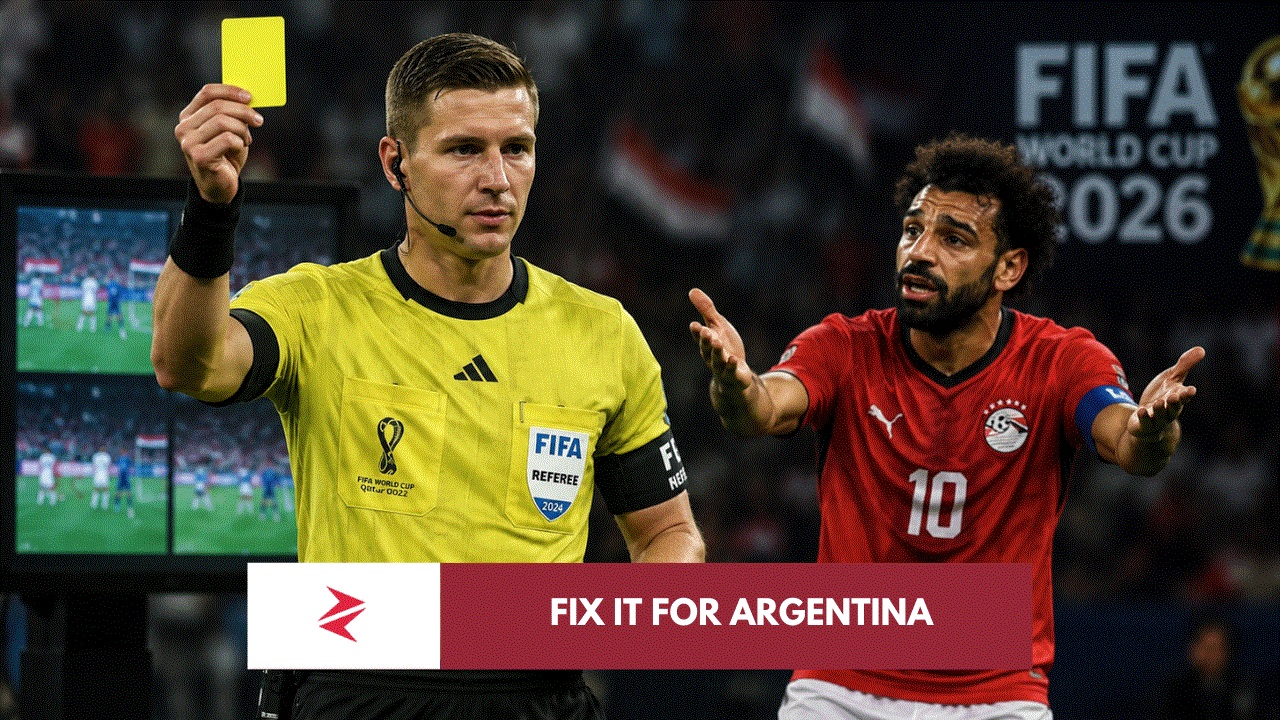
The controversy surrounding French referee François Letexier during Egypt’s World Cup defeat to Argentina has evolved far beyond a disagreement over isolated decisions. It has become a global discussion about transparency, accountability, and whether FIFA’s biggest tournament provides sufficient mechanisms to maintain public confidence when officiating itself becomes the centre of attention.
This article is an editorial analysis based on publicly available match footage, FIFA regulations, public reactions, and observable events. Where opinions are expressed, they are clearly identified as editorial commentary.
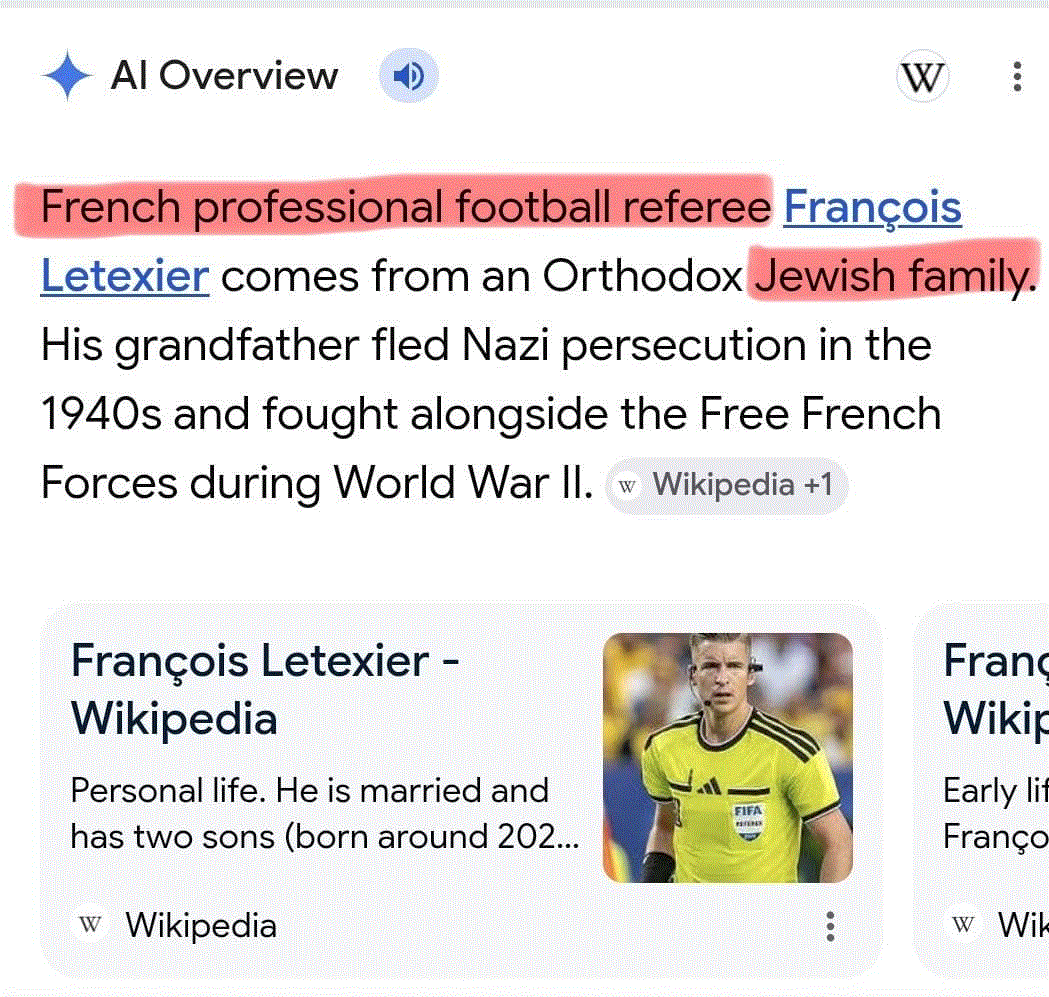
What Happened?
France’s François Letexier, one of UEFA’s highest-rated referees, officiated the World Cup encounter between Egypt and Argentina.
Following the final whistle, social media platforms across multiple languages erupted with criticism. Supporters from Egypt, Morocco, Pakistan, Indonesia, Malaysia, Türkiye, and numerous other countries questioned several officiating decisions, particularly incidents involving Mohamed Salah.
The controversy quickly extended beyond football discussion forums and became one of the most debated officiating performances of the tournament.
The Incidents That Sparked Debate
Among the moments receiving the greatest scrutiny were repeated physical challenges involving Mohamed Salah.
Supporters argued that two separate incidents in which Salah appeared to be pushed from behind occurred directly in front of the assistant referee without intervention.
Those incidents rapidly circulated online through slowed-down replays, screenshots, and frame-by-frame analysis, with many viewers questioning why neither the referee nor the assistant appeared to penalize the actions.
Whether every individual challenge constituted a foul remains open to interpretation under the Laws of the Game. However, the consistency of decision-making became the principal point of criticism.

Editorial Analysis
This article does not conclude that corruption occurred.
However, it is entirely legitimate to question whether the officiating performance met the standard expected of FIFA’s flagship competition.
Elite referees are judged not merely on isolated decisions but on:
- consistency,
- player management,
- application of advantage,
- disciplinary thresholds,
- VAR cooperation,
- and maintaining confidence among both teams.
When millions of neutral viewers begin debating the referee more than the football itself, that alone represents an institutional problem.