
















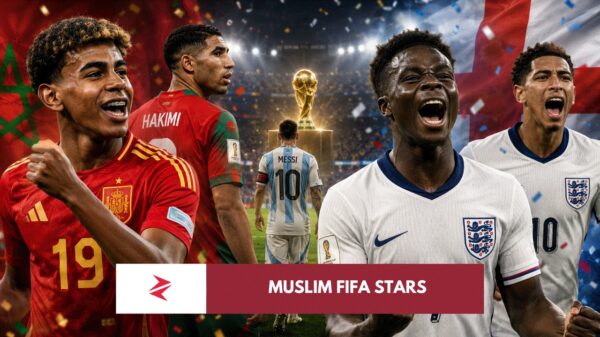










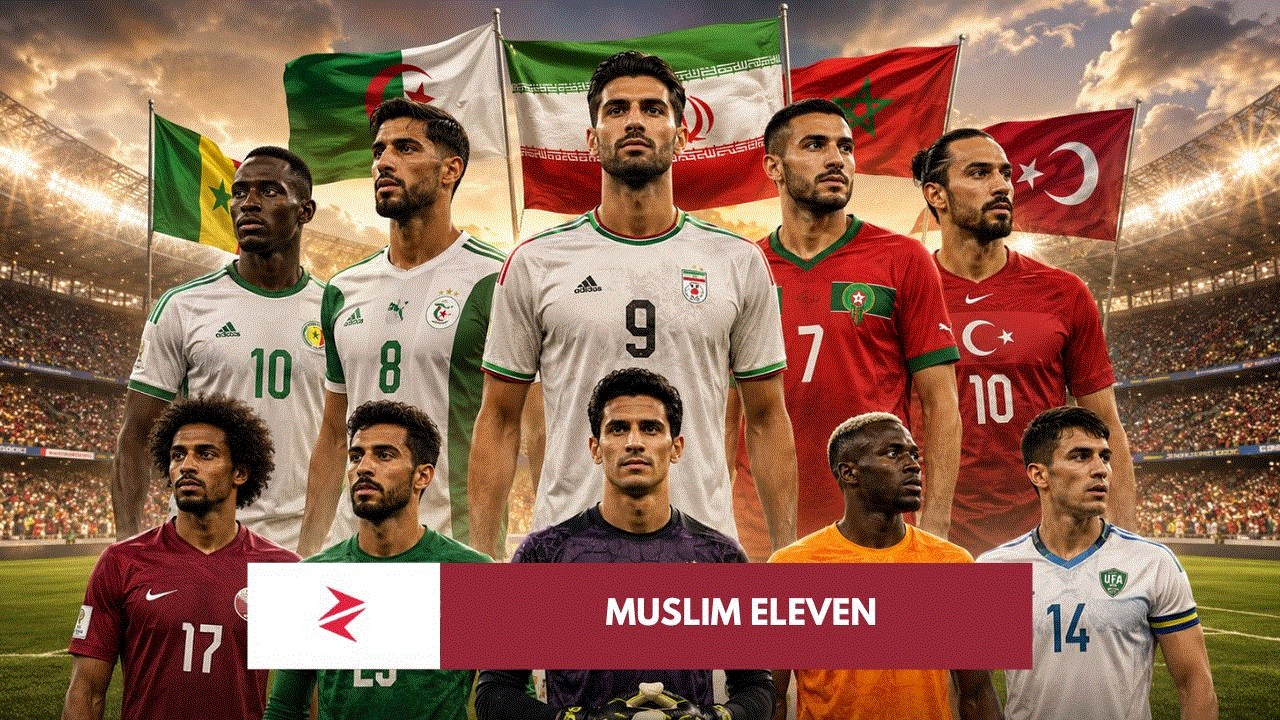
The World Cup likes to pretend that football belongs only to flags, federations, and national anthems, but every tournament quietly exposes something deeper: culture travels faster than politics, identity survives borders, and the Muslim football world, when viewed together, has enough elite talent to form a side that would not merely participate in the World Cup but seriously compete with the giants.
This first article in the series builds the baseline squad: the strongest possible XI drawn from Muslim-majority nations and closely associated Muslim-world football nations represented across the 48-team FIFA World Cup 2026 field. This is not yet the final “Team of the Tournament,” because that must wait until the last whistle of the final, when goals, assists, saves, defensive blocks and knockout pressure can be properly validated. For now, this is the foundational football argument: if the Muslim-majority World Cup nations were combined into one tactical unit, who starts, who sits, and what kind of team emerges?
The answer is not sentimental. It is not charity selection. It is not “pick one player from every country so everyone feels represented.” That is how weak teams are built. This XI is selected on football logic: role balance, tournament relevance, proven international level, tactical fit, big-match temperament, and the ability to contribute in the moments that decide World Cup games.
The selection pool includes the obvious Muslim-majority football nations such as Morocco, Senegal, Algeria, Egypt, Türkiye, Iran, Tunisia, Saudi Arabia, Qatar, Jordan and Uzbekistan, while Bosnia and Herzegovina is treated as part of the wider Muslim-world football conversation because of its strong Bosniak Muslim identity within the national football structure. Côte d’Ivoire and Cabo Verde are not treated as Muslim-majority countries in the strict demographic sense, although both remain relevant for later articles when we move into broader Muslim-heritage representation.










AI Music Generator
June 29, 2026 at 2:23 pm
This is an interesting way to highlight the global reach of football by focusing on players from Muslim-majority nations rather than just the traditional powerhouses. It would also be fascinating to hear your thoughts on which players were the toughest omissions, especially with the expanded 48-team World Cup bringing more emerging talent into the spotlight.