




























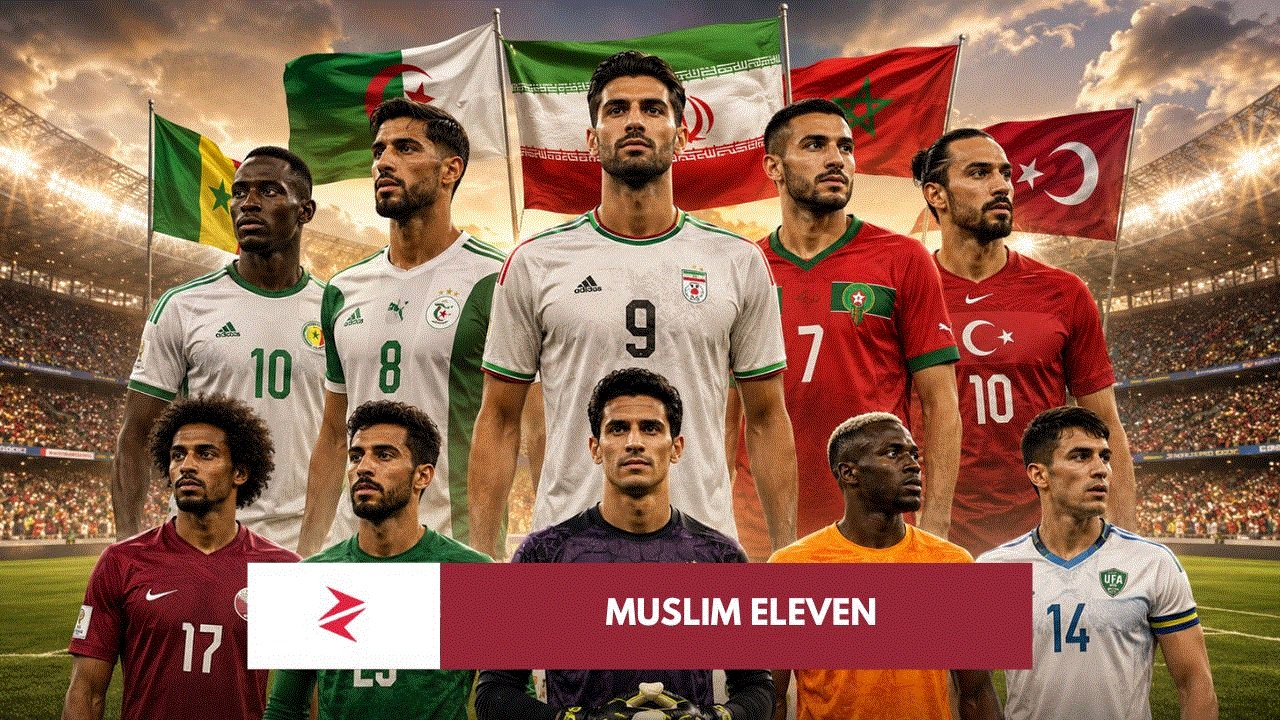
Full Starting XI Table
| Position | Player | Nation | Why He Starts |
|---|---|---|---|
| GK | Yassine Bounou | Morocco | Elite tournament goalkeeper, penalty authority, calm under pressure |
| RB | Achraf Hakimi | Morocco | World-class two-way full-back, speed, crossing, recovery defending |
| CB | Kalidou Koulibaly | Senegal | Leadership, aerial strength, physical defensive command |
| CB | Nayef Aguerd | Morocco | Left-footed balance, buildup quality, positional discipline |
| LB | Ferdi Kadıoğlu | Türkiye | Modern full-back profile, technical security, tactical flexibility |
| DM | Sofyan Amrabat | Morocco | Midfield shield, duel-winning, transition control |
| CM | Hakan Çalhanoğlu | Türkiye | Tempo control, passing range, set-piece danger |
| AM | Ismaël Bennacer | Algeria | Ball carrying, midfield connection, press resistance |
| RW | Hakim Ziyech | Morocco | Left-footed creativity, crossing, final-third imagination |
| LW | Sadio Mané | Senegal | Big-match threat, pressing, direct running, goal instinct |
| ST | Mehdi Taremi | Iran | Complete striker profile, link play, pressing and finishing |
Tactical Bench
The bench begins with Youssef En-Nesyri of Morocco, who gives the team a different striker profile with elite aerial threat and penalty-box presence. Mostafa Mohamed of Egypt offers physicality and late-game directness, especially when the match becomes a crossing contest. Riyad Mahrez of Algeria remains a luxury creative option from the right, particularly if the XI needs slower possession and left-footed control. Kerem Aktürkoğlu of Türkiye brings running power and vertical wing threat. Aïssa Mandi of Algeria gives central defensive cover, while Mohamed El Shenawy of Egypt provides experienced goalkeeping depth.
This bench matters because the starting XI is built for balance, but tournaments are not won by balance alone. Some games need chaos. Some need height. Some need set-piece specialists. Some need experienced closers. This squad has those tools.
Tactical Identity
The team’s shape is a 4-2-3-1 on paper, but in possession it becomes more adventurous. Hakimi pushes high on the right, Ziyech drifts inside onto his left foot, Çalhanoğlu controls the second phase, and Amrabat stays behind the ball to kill counter-attacks before they grow teeth. On the opposite flank, Kadıoğlu offers technical stability while Mané attacks the inside-left channel, giving Taremi support without crowding him.
Defensively, this XI can drop into a 4-4-2 mid-block, with Bennacer stepping closer to Taremi while Mané and Ziyech protect the wide lanes. The key is not to press blindly. Against elite World Cup teams, emotion kills structure. This XI’s strength is that it has enough athleticism to press but enough midfield intelligence to know when not to.
Biggest Selection Debates
The hardest omission is Riyad Mahrez. On pure talent, Mahrez remains one of the greatest footballers produced by the Muslim world, but this XI needs a little more running power and defensive transition support from the right, which is why Ziyech starts and Mahrez becomes the specialist creative substitute. Another debate is Youssef En-Nesyri versus Mehdi Taremi. En-Nesyri is more dangerous in the air, but Taremi is more complete across different match states, which matters in a combined XI.
There is also a strong argument for Mohamed Salah if Egypt’s World Cup involvement and role are treated through the wider Muslim-world lens, but for this particular version, the XI is built as a balanced tournament side rather than a greatest-name collection. If Salah is fit, active and influential in the tournament context, he can force his way into the right-wing role in later updates, especially if the article is revised after the Round of 32.








AI Music Generator
June 29, 2026 at 2:23 pm
This is an interesting way to highlight the global reach of football by focusing on players from Muslim-majority nations rather than just the traditional powerhouses. It would also be fascinating to hear your thoughts on which players were the toughest omissions, especially with the expanded 48-team World Cup bringing more emerging talent into the spotlight.