






















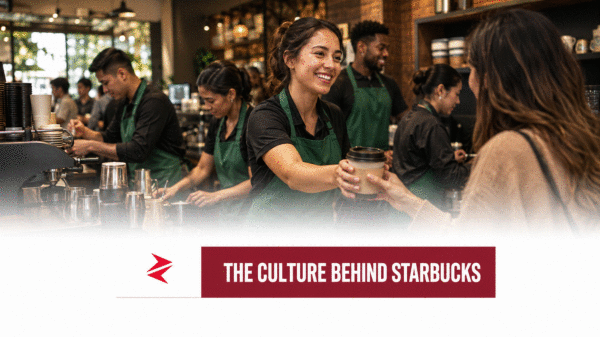












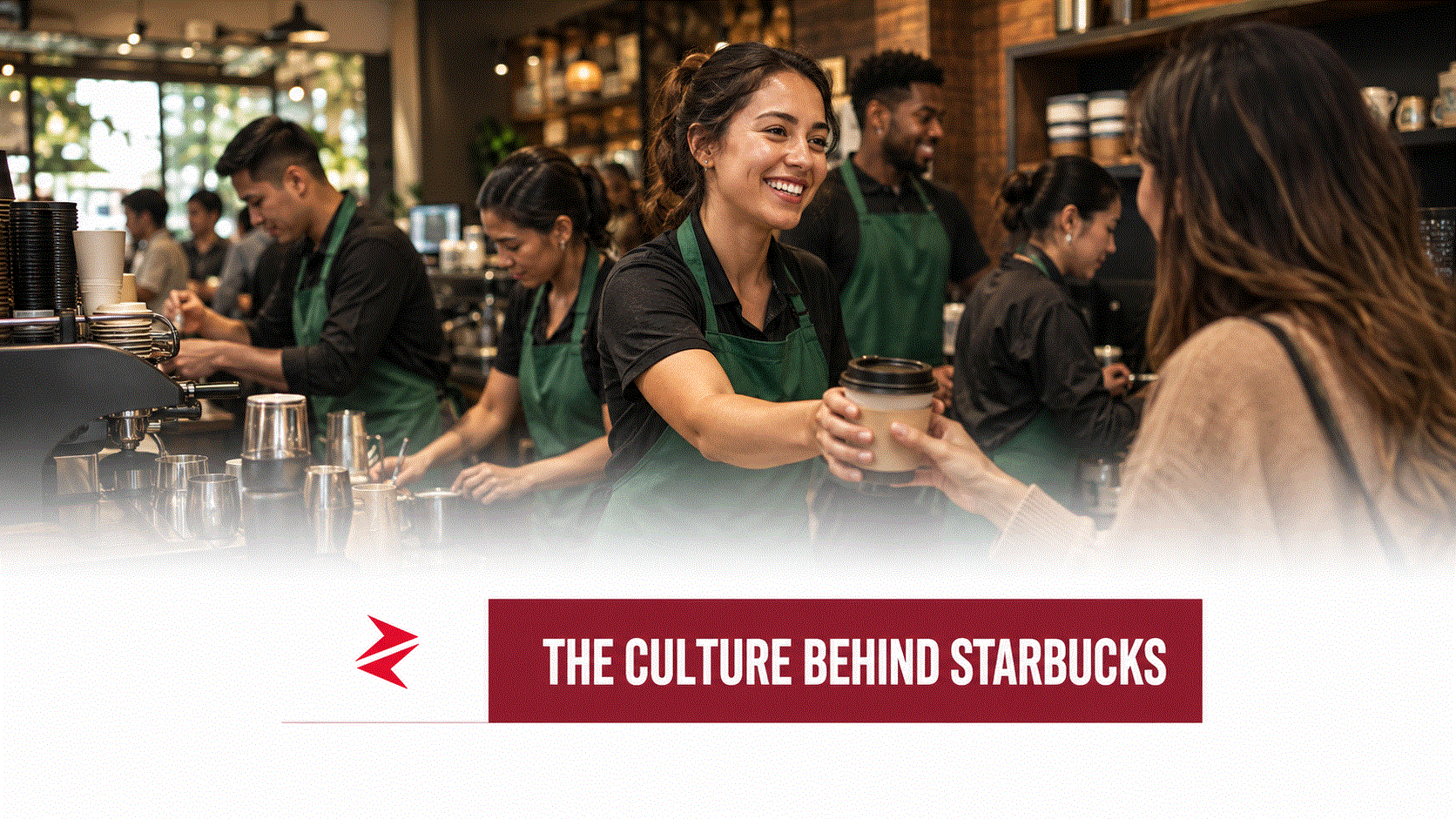
Starbucks does not command premium prices merely because it knows how to make coffee. Millions of cafés can grind beans, steam milk and print names on cups, yet very few have converted those ordinary actions into a globally recognizable service ritual. The real product is not simply the beverage placed on the counter; it is the predictable feeling surrounding that beverage, created by employees who have been trained, rewarded and socially conditioned to reproduce a particular experience thousands of times a day.
That is the uncomfortable truth behind most celebrated brands: what customers call “brand magic” is usually disciplined organizational behavior operating behind the curtain. The music, familiar vocabulary, green apron, personalized cup and welcoming atmosphere matter, but they work because Starbucks has spent decades translating an abstract corporate identity into routines that employees can perform under pressure.
The central claim is straightforward: Starbucks’ corporate culture is a strategic operating system that converts company values into employee behavior, customer experience and commercial performance.
What Corporate Culture Actually Means
Corporate culture is often reduced to office décor, motivational slogans, annual retreats or polished declarations written by consultants. Wrong. Culture is the collection of behaviors an organization repeatedly rewards, tolerates, corrects or ignores until employees understand how the workplace really functions.
A company’s official values may describe what leadership wants people to believe, but its daily decisions reveal what the organization genuinely values. If management praises collaboration while promoting only aggressive individual performers, competition becomes the culture. If leaders promise psychological safety but punish disagreement, silence becomes the culture. If customer care is advertised while employees are given insufficient time, training or authority to solve customer problems, indifference eventually becomes the culture.
The simplest definition is therefore the most useful: culture is what a company keeps making normal.
Culture is built through several mutually reinforcing forces:
| Cultural mechanism | What employees learn from it | Starbucks application |
|---|---|---|
| Repeated behaviour | “This is how work is done here” | Consistent drink preparation, customer acknowledgement and coordinated service |
| Rewards | “This behaviour receives recognition” | Bean Stock, internal advancement, team recognition and performance incentives |
| Correction or neglect | “This is unacceptable—or apparently tolerated” | Coaching, operating standards and responses to service failures |
| Leadership behaviour | “This is what management truly prioritises” | Coffeehouse-first leadership and visible emphasis on partners and customers |
| Shared stories and symbols | “This is who we believe we are” | Green aprons, the “partner” identity and stories of customer connection |
| Workplace systems | “The environment makes this behaviour easier” | Training, staffing, store layouts, queues, equipment and supporting technology |
This framework matters because culture does not exist independently of operations. Scheduling is culture. Staffing is culture. Promotion criteria are culture. The reaction to a mistake is culture. Technology imposed without consulting frontline workers is also culture, regardless of what appears in the employee handbook.