


































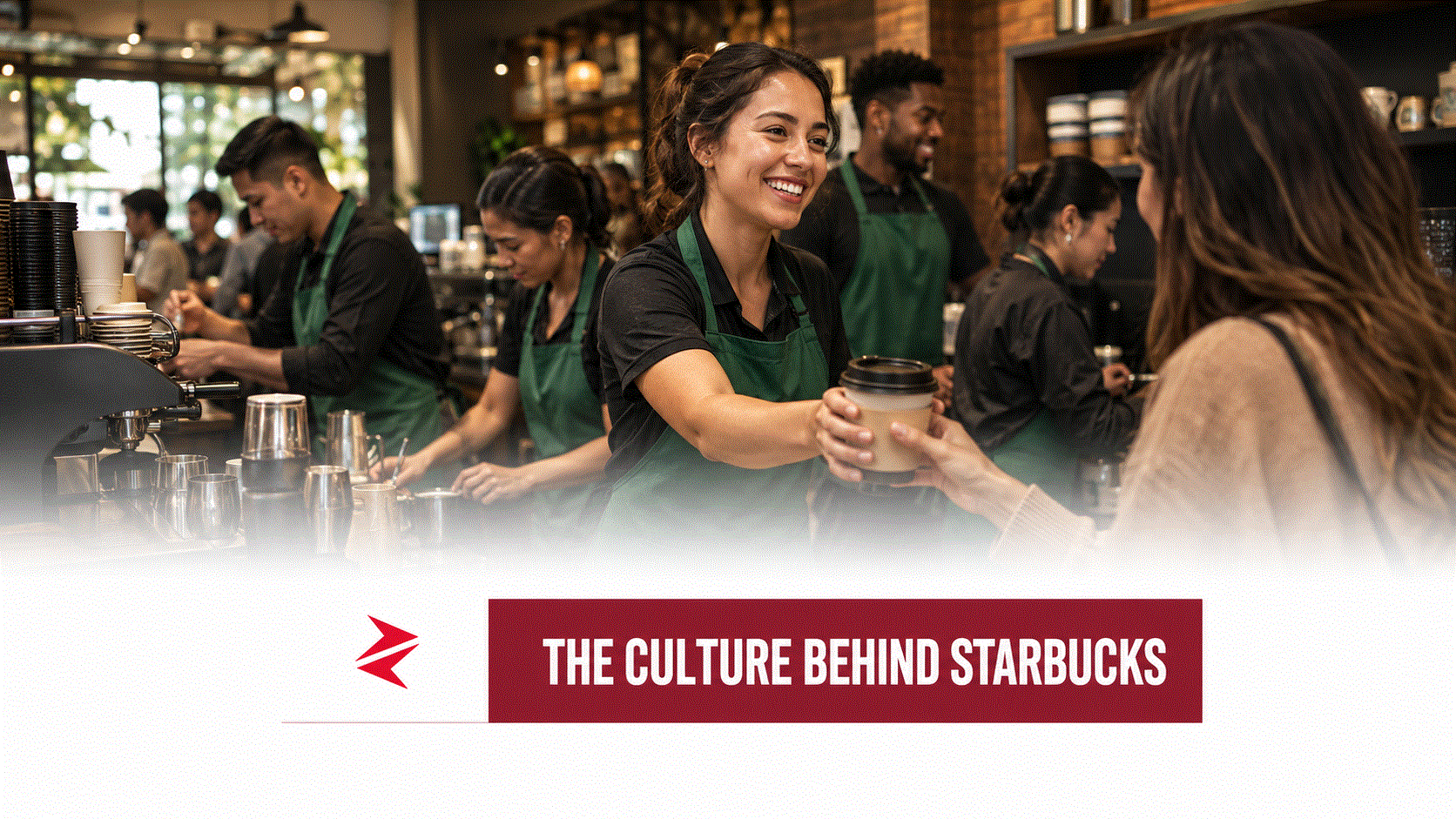
What Pakistani Companies Can Learn from Starbucks
Pakistan has no shortage of mission statements. We have framed declarations about integrity, customer service and employee empowerment displayed in reception areas while customers wait unanswered, junior staff remain afraid to report problems and promotions depend on proximity rather than performance. The gap is rarely a shortage of values; it is the refusal to turn values into enforceable behaviour.
A Pakistani company that claims “customer first” should define what happens when a delivery is delayed, a product fails or a complaint reaches the wrong department. An organization claiming “innovation” should measure whether employees can challenge established procedures without being humiliated. A business promising “ownership” should examine whether workers have enough information, authority and incentives to make responsible decisions.
The process should begin with five questions:
- Which behaviours must customers consistently experience?
- What behaviours are managers presently rewarding?
- What harmful behaviours are being tolerated because the performer produces short-term results?
- Do staffing, training and technology support the promised experience?
- Which measurable indicators would prove that the culture is improving?
For leaders navigating AI and automation, this discipline becomes even more important. Technology can accelerate orders, personalise offers, forecast staffing requirements and support employees with real-time knowledge. It cannot independently create trust, moral judgement or genuine hospitality. As explored in Workplace Artificial Intelligence: The Machine Is Not Taking Your Job—Yet, automation changes tasks and decision structures, but human judgement remains decisive wherever context, accountability and relationships matter.
The same tension appears in 5 Immersive Technology Predictions and the Future of Work, where emerging interfaces may transform workplaces without eliminating the need for meaning, identity and human boundaries. Businesses should also consider the governance implications discussed in AI-Personalized Financial Reporting: technology creates value only when facts, context and accountability remain intact.
Is Starbucks Culture Perfect?
No serious analysis should confuse a company’s stated culture with uniform lived reality. Starbucks has faced worker criticism, organising campaigns, operational pressure and disputes over how its promises are implemented. A global workforce spread across different labour markets will never experience one perfectly consistent culture.
That does not invalidate the cultural model; it exposes its hardest test. Corporate culture is credible only when employees can challenge the company using its own declared values and leadership responds with evidence rather than publicity. “Courage” means little if difficult conversations are welcomed only when management controls them. “Belonging” becomes advertising if employees do not feel safe enough to disagree.
The useful conclusion is therefore not that Starbucks has perfected culture. It is that Starbucks has made culture visible enough to manage, measure, contest and rebuild. That is far more valuable than pretending culture is an inspirational mood that naturally survives growth.
Frequently Asked Questions
What is Starbucks’ corporate culture?
Starbucks describes a culture centred on craft, courage, results, belonging and joy. Operationally, it is reinforced through training, employee benefits, equity participation, internal career development, store routines and an emphasis on customer connection.