



























The Starbucks Experience Is Produced from the Inside Out
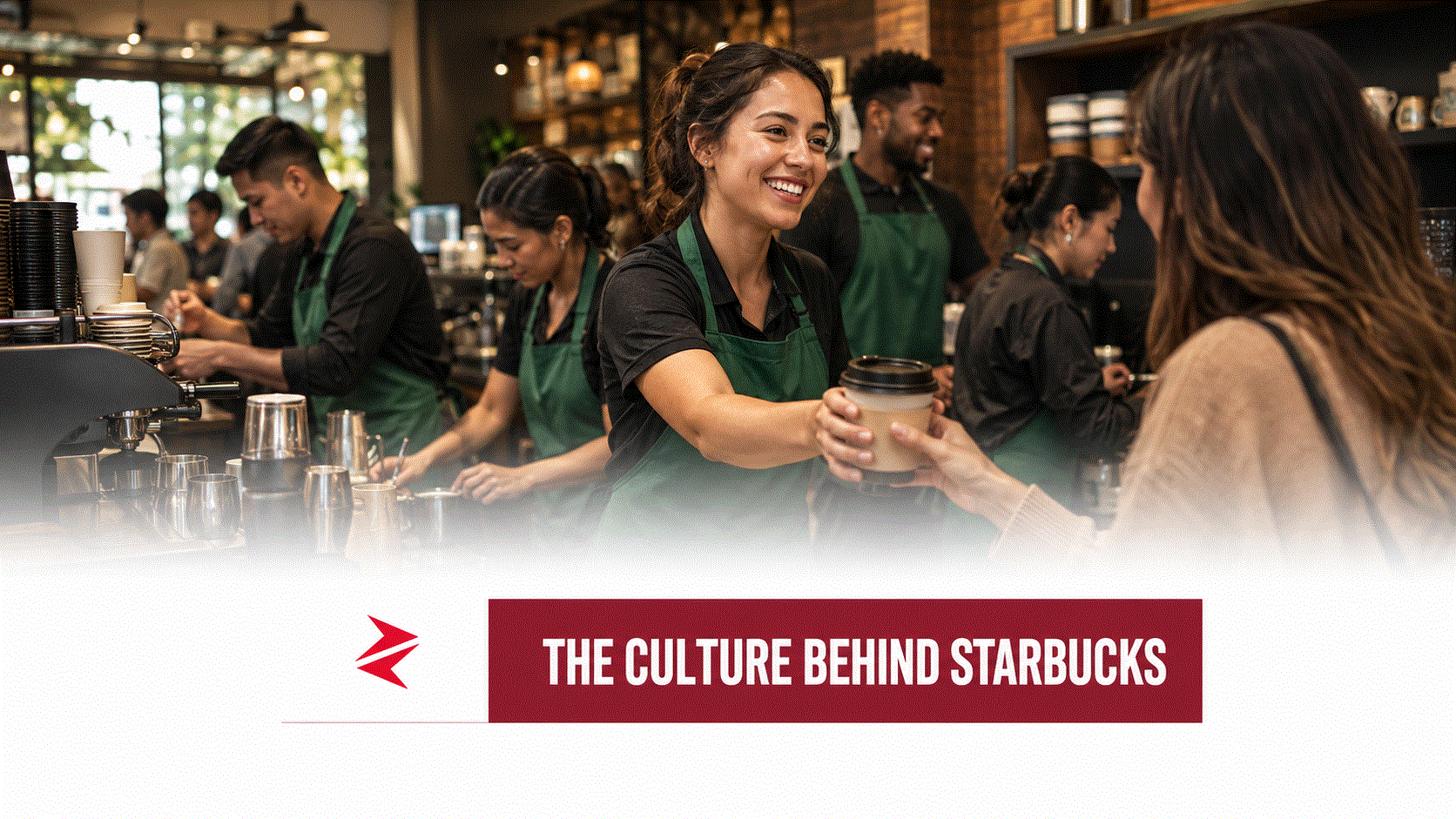
A customer never encounters “corporate culture” as a management concept. The customer encounters it through a greeting, the accuracy of an order, the tone used to resolve a complaint, the cleanliness of a table and the willingness of one employee to help another when orders begin accumulating.
The mechanism can be expressed clearly:
Company signals → employee interpretation → repeated behaviour → customer experience → brand memory → repeat business
This chain explains why culture represents more than friendliness. Starbucks requires coordination, craft, speed, warmth, judgement and emotional control to coexist inside a busy store. A rigid script may tell a barista what to say, but it cannot anticipate every impatient customer, malfunctioning machine, complicated mobile order or overwhelmed colleague. Culture guides employees when the script runs out.
Starbucks currently defines its values as craft, courage, results, belonging and joy. Under “belonging,” for example, the company says employees should listen and connect with warmth, recognise individuals and treat others with dignity and care. Under “results,” it expects focused performance, innovation and service that exceeds expectations. Starbucks mission and values
These values contain a deliberate tension. Belonging without accountability can deteriorate into comfortable underperformance, while results without dignity can create fear and burnout. A strong culture does not choose one side and print it on a wall; it constructs routines in which performance and humanity reinforce one another.
What Nobody Tells You About Culture
Culture is frequently presented as the soft, pleasant side of management. In reality, it is a control system.
Every reward increases the probability that a behaviour will recur. Every ignored violation quietly rewrites the standard. Every leader who behaves differently from the stated values teaches employees that the values are optional. Culture is therefore not soft at all; it determines who receives authority, which decisions are safe, how pressure is distributed and whether frontline reality reaches senior management.
Starbucks’ history also shows that culture is not a permanent possession. A company can build a powerful identity and still dilute it through excessive complexity, understaffing, rushed service, managerial inconsistency or technology that distances employees from customers. Scale creates efficiency, but it can also turn human connection into a production target.
That tension helps explain the present Back to Starbucks transformation. Under chairman and CEO Brian Niccol, the company is emphasising coffeehouse comfort, menu discipline, service speed and the relationship between baristas and customers. Starbucks said in January 2026 that its Green Apron Service model had been fully introduced across company-operated North American coffeehouses, improving throughput, service times and customer satisfaction. The company also plans to add more than 25,000 café seats across the United States by the end of fiscal 2026. Starbucks 2026 Investor Day


This is not merely a redesign exercise. It is an attempt to repair the physical and operational conditions under which the company’s culture must function. Asking employees to create connection while stores are optimised only for transaction volume is contradictory. Starbucks appears to recognise that a coffeehouse culture requires actual coffeehouse space, sufficient labour and systems that allow employees to look up from the queue.
Culture Has Become a Measurable Commercial Asset
Starbucks’ loyalty infrastructure demonstrates how cultural experience becomes revenue. The company said Starbucks Rewards generated nearly 60% of US company-operated revenue in fiscal 2025. Its reimagined programme launched in March 2026 with Green, Gold and Reserve tiers, personalised benefits and faster reward accumulation for higher-spending members.
| Current indicator | Reported position | Strategic meaning |
|---|---|---|
| Global partners | Approximately 361,000 | Culture must travel across an enormous workforce |
| Partner and store investment since 2022 | More than $3 billion | Employee experience is being treated as operating infrastructure |
| Preferred schedules received | Nearly 95% | Predictability can strengthen engagement and retention |
| Weekly shifts filled through Shift Marketplace | Approximately 30,000 | Technology is supporting workforce flexibility |
| Starbucks Rewards share of US company-operated revenue | Nearly 60% in FY2025 | Customer loyalty has significant measurable financial value |
| Planned US café seats | More than 25,000 by FY2026 end | Physical space is being realigned with coffeehouse culture |
| Internal retail-leadership hiring goal | 90% | Advancement reinforces institutional knowledge and loyalty |
Note: These figures are reported by Starbucks and represent company disclosures rather than independently audited conclusions about employee sentiment.
The commercial lesson is not that every Pakistani restaurant, technology company or industrial business should imitate green aprons, loyalty stars or American benefit structures. Blind imitation produces corporate cosplay. The lesson is that values become strategically useful only when they are translated into observable behaviour, supported by operating systems and measured through outcomes.