

























Culture Has Become a Measurable Commercial Asset
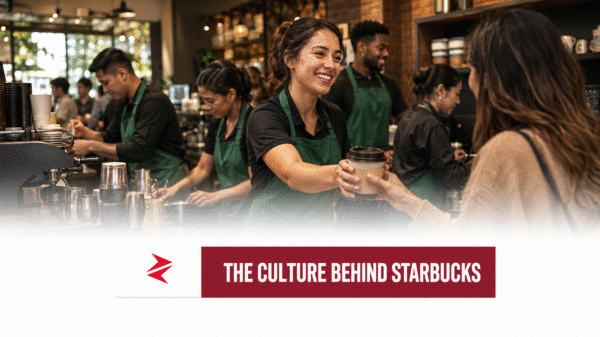
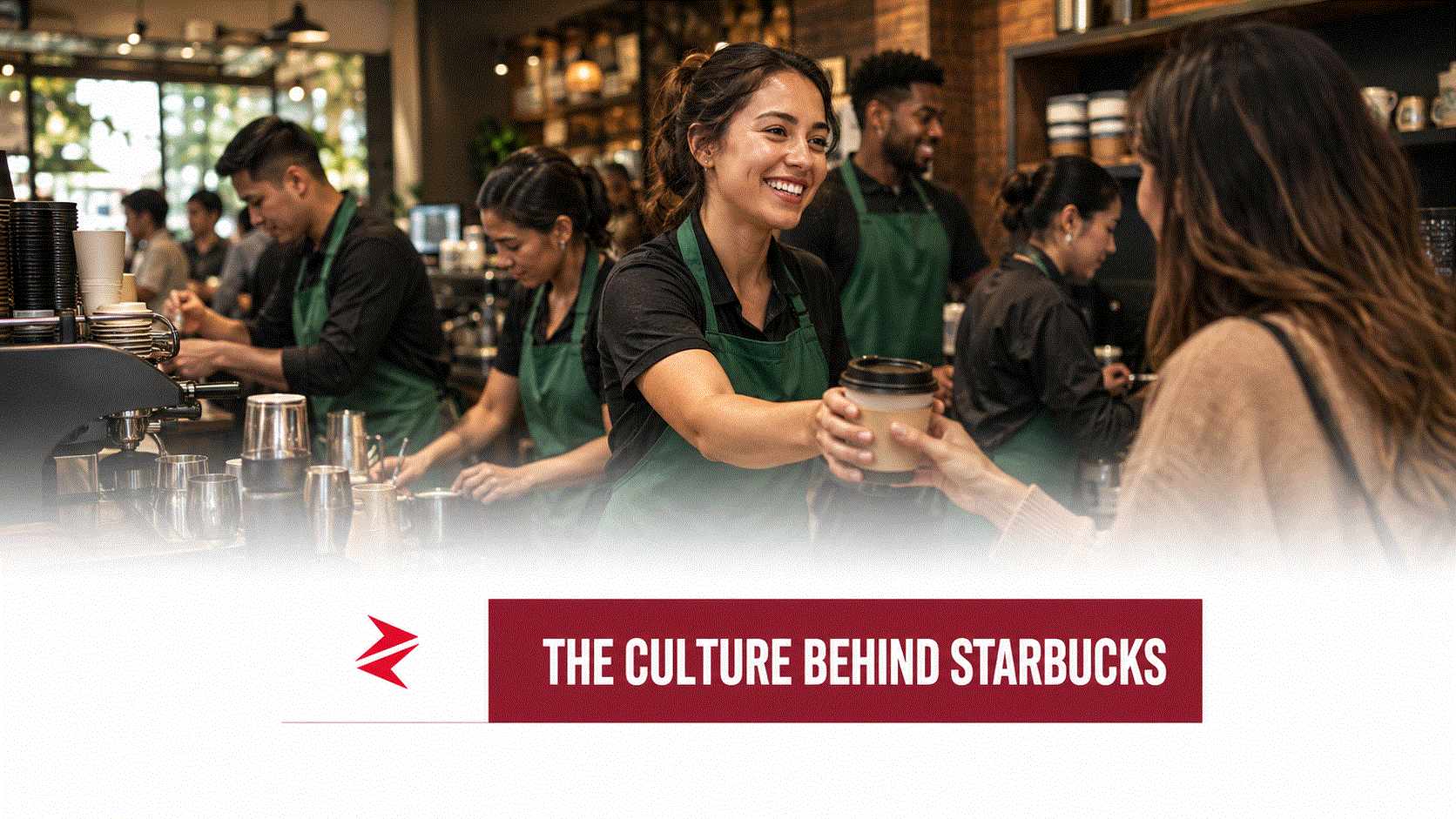
Starbucks’ loyalty infrastructure demonstrates how cultural experience becomes revenue. The company said Starbucks Rewards generated nearly 60% of US company-operated revenue in fiscal 2025. Its reimagined programme launched in March 2026 with Green, Gold and Reserve tiers, personalised benefits and faster reward accumulation for higher-spending members.
| Current indicator | Reported position | Strategic meaning |
|---|---|---|
| Global partners | Approximately 361,000 | Culture must travel across an enormous workforce |
| Partner and store investment since 2022 | More than $3 billion | Employee experience is being treated as operating infrastructure |
| Preferred schedules received | Nearly 95% | Predictability can strengthen engagement and retention |
| Weekly shifts filled through Shift Marketplace | Approximately 30,000 | Technology is supporting workforce flexibility |
| Starbucks Rewards share of US company-operated revenue | Nearly 60% in FY2025 | Customer loyalty has significant measurable financial value |
| Planned US café seats | More than 25,000 by FY2026 end | Physical space is being realigned with coffeehouse culture |
| Internal retail-leadership hiring goal | 90% | Advancement reinforces institutional knowledge and loyalty |
Note: These figures are reported by Starbucks and represent company disclosures rather than independently audited conclusions about employee sentiment.
The commercial lesson is not that every Pakistani restaurant, technology company or industrial business should imitate green aprons, loyalty stars or American benefit structures. Blind imitation produces corporate cosplay. The lesson is that values become strategically useful only when they are translated into observable behaviour, supported by operating systems and measured through outcomes.
What Pakistani Companies Can Learn from Starbucks
Pakistan has no shortage of mission statements. We have framed declarations about integrity, customer service and employee empowerment displayed in reception areas while customers wait unanswered, junior staff remain afraid to report problems and promotions depend on proximity rather than performance. The gap is rarely a shortage of values; it is the refusal to turn values into enforceable behaviour.
A Pakistani company that claims “customer first” should define what happens when a delivery is delayed, a product fails or a complaint reaches the wrong department. An organization claiming “innovation” should measure whether employees can challenge established procedures without being humiliated. A business promising “ownership” should examine whether workers have enough information, authority and incentives to make responsible decisions.
The process should begin with five questions: