


























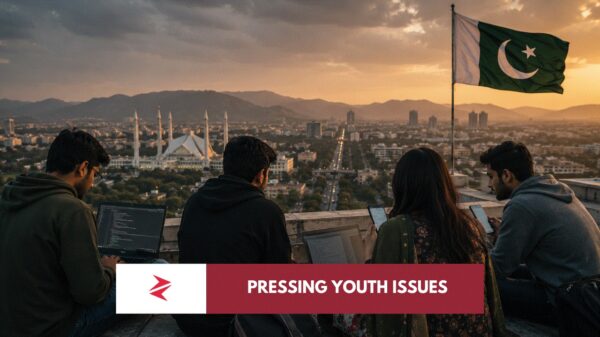





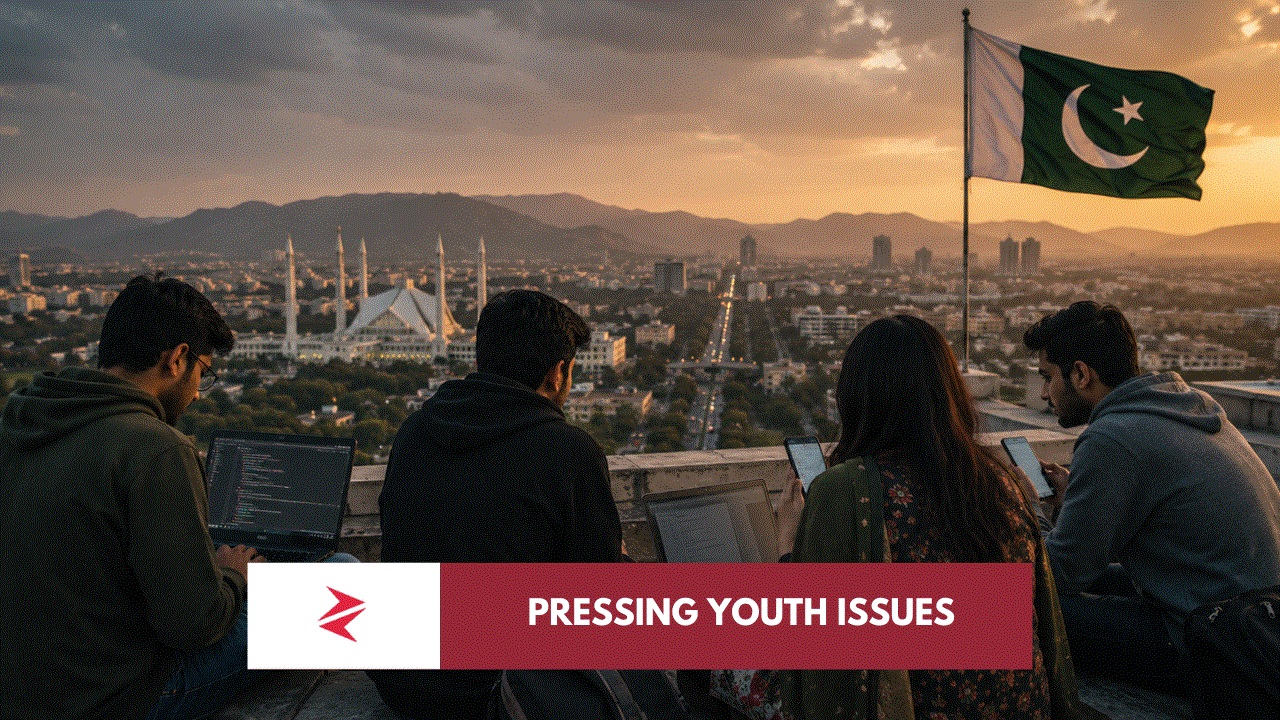
The easiest way to misunderstand Pakistan is to look at a quiet street and assume that nobody is angry. The second-easiest mistake is to watch young Indians force a minister’s resignation and conclude that Pakistani youth must be less courageous, less politically conscious or more willing to tolerate injustice.
Wrong.
Pakistan’s youth have not disappeared from politics. They have repeatedly marched, voted, organised, resisted, faced tear gas, crossed barricades, endured arrests and challenged governments that appeared untouchable. What Pakistan currently lacks is not youthful anger but the rare combination of a nationally unifying trigger, functioning organisational infrastructure, confidence that protest will produce a measurable result and a political environment in which the personal cost of mobilisation does not immediately overwhelm its expected benefit.
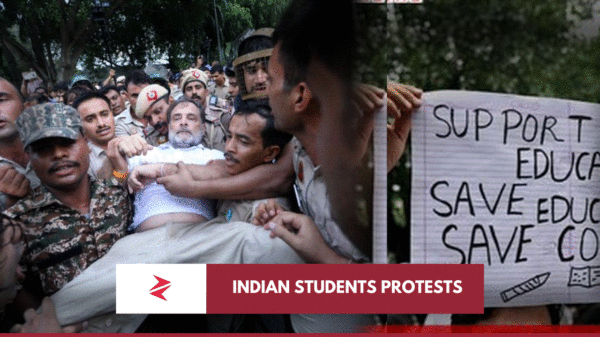
That distinction matters because India’s Cockroach Janta Party movement did not emerge in an ordinary political vacuum. It grew from the leakage of the NEET-UG examination, an event affecting roughly two million candidates, and expanded through weeks of demonstrations, police action, hunger strikes and public pressure until Education Minister Dharmendra Pradhan resigned on July 25, 2026. The government subsequently announced examination reforms and other concessions.
It was a remarkable protest victory, but it was not proof that Pakistani youth possess less dignity. It was proof that different societies reach their breaking points through different triggers.
Pakistan Has Already Produced Mass Youth Movements
The premise that Pakistan has never witnessed successful mass mobilisation collapses under its own historical ignorance. When General Pervez Musharraf suspended Chief Justice Iftikhar Muhammad Chaudhry in 2007, the Lawyers’ Movement grew beyond courtrooms and bar associations into a national struggle involving students, young professionals, political workers, journalists and civil-society activists. Contemporary accounts specifically recorded university students entering the streets despite having little previous political experience. The movement ultimately contributed to the restoration of the judiciary and intensified pressure on military rule.
Pakistani youth also mobilised in enormous numbers during the rise of Pakistan Tehreek-e-Insaf, particularly around Imran Khan’s anti-status-quo messaging. Whether one supports or rejects PTI is irrelevant to this specific point: its rallies, digital networks, fundraising operations and election campaigns demonstrated that millions of young Pakistanis could be politically activated when they believed a national outcome was within reach.
The November 2024 Islamabad mobilisation again showed both the presence of protest energy and the cost attached to deploying it. Thousands reached the capital despite blocked highways, suspended mobile services and a heavy security deployment. Reuters reported that 954 people were arrested during the operation that cleared the protest, while other reporting documented thousands of preventive detentions before the march.
Pakistan has also witnessed Students Solidarity Marches, Pashtun rights mobilisation, Baloch rights campaigns, labour demonstrations, religious movements and issue-based protests in nearly every province. These movements often remain regional, ideological or party-specific, but their existence destroys the lazy claim that Pakistan’s youth are naturally submissive.
Claim: Pakistani youth do protest. What they have struggled to build is a single, cross-class and cross-provincial movement that converts scattered anger into one nationally recognised demand.


The Missing Infrastructure Was Not an Accident
India’s recent movement benefited from student networks capable of converting an examination scandal into a nationwide campaign. Pakistan’s institutional pipeline for student mobilisation was deliberately broken decades ago.
General Zia-ul-Haq banned student unions in 1984. Although the prohibition was later rescinded politically, a 1993 Supreme Court ruling continued to restrict union activity, and campus administrations broadly maintained the ban in practice. The Senate passed a resolution supporting restoration in 2017, yet Pakistan still lacks a consistently protected national system of elected student representation.
This did more than stop university elections. It removed the training ground through which generations once learned public speaking, negotiation, coalition-building, campaigning, policy drafting, conflict resolution and democratic accountability. Political parties continued to cultivate loyal campus groups, but ordinary students lost representative bodies through which shared grievances could be organised peacefully.
The result is brutally predictable. When hostel fees rise, examinations are mishandled, harassment complaints are ignored or university policies become unreasonable, students rarely possess a recognised institution able to negotiate in their name. Anger therefore appears as a temporary hashtag, a road blockade, an isolated campus demonstration or an eruption that administrators can contain before it acquires national meaning.
Arooj Aurangzaib became one of the public faces of the 2019 student movement precisely because demands for union restoration exposed this historical vacuum. Her visibility was not evidence that student activism had suddenly arrived; it revealed how unusual organised student politics had become after decades of institutional suppression.
