






























Share the post "U.S. and Pakistan Reaffirm Counterterrorism Partnership—but Pakistan Needs More Than Another Joint Statement"
Pakistan is once again being asked to fight a transnational war whose deadliest consequences are landing overwhelmingly on Pakistani soil. Washington may call it a shared counterterrorism challenge, but the graves in Khyber Pakhtunkhwa and Balochistan tell a far less symmetrical story.
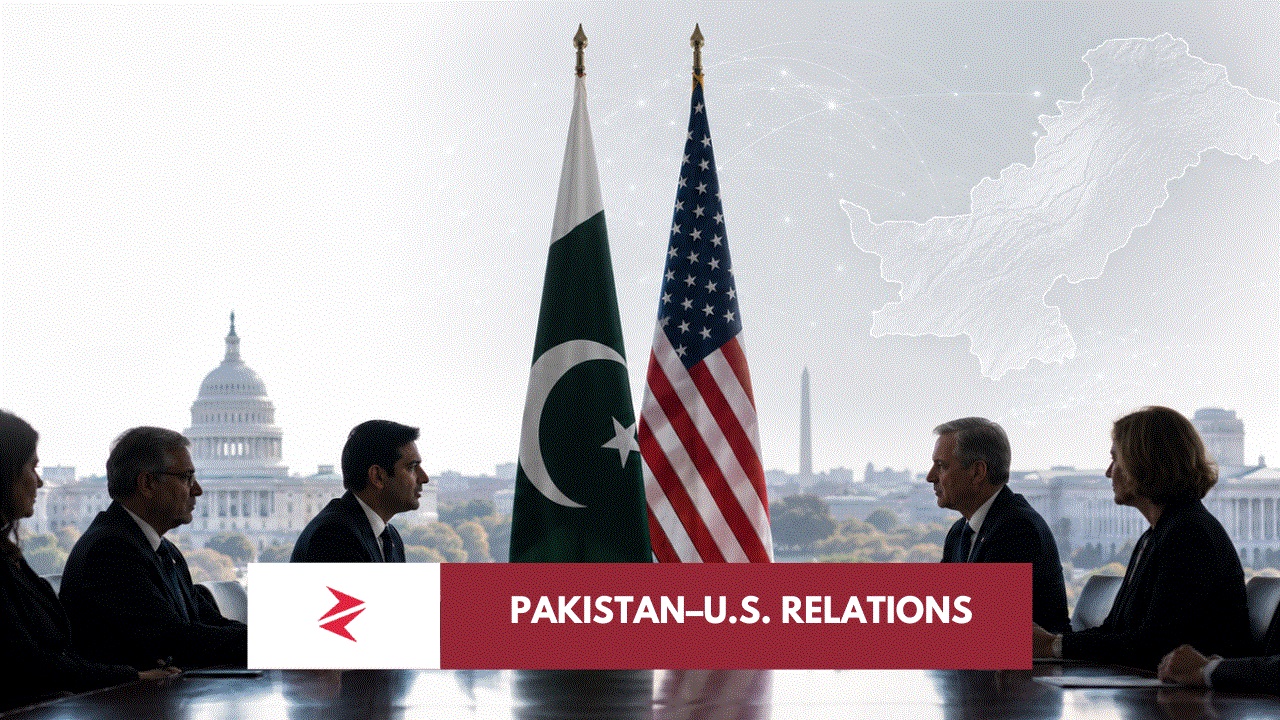
On August 4, 2026, Pakistan and the United States convened the fourth round of their Counterterrorism Dialogue in Washington, D.C., reaffirming a partnership that has survived wars, diplomatic breakdowns, American withdrawal from Afghanistan and repeated changes in Washington’s regional priorities. The talks were led by United States Coordinator for Counterterrorism Ambassador Gregory LoGerfo and Pakistan Ministry of Foreign Affairs Special Secretary Ambassador Nabeel Munir.
According to the official joint statement issued by Pakistan’s Ministry of Foreign Affairs, the delegations reviewed the prevailing threat environment, explored stronger collaboration, discussed border security and considered ways to disrupt terrorist facilitation networks. Both governments specifically identified ISIS-Khorasan, al-Qa’ida, Tehreek-e-Taliban Pakistan and the Balochistan Liberation Army and its affiliates as organizations threatening their citizens and regional stability.
That naming matters. The real test, however, is what follows it.
What happened in Washington?
The fourth dialogue produced a concise but strategically significant joint position. Pakistan and the United States declared that counterterrorism cooperation would remain part of what they described as an enduring vision of regional peace, prosperity and stability.
| Dialogue component | Official position | What Pakistan should expect next |
|---|---|---|
| Threat assessment | Both sides reviewed the current terrorist threat environment | Regular intelligence assessments focused on threats operating against Pakistan |
| Border security | Cooperation is to be strengthened | Surveillance, biometric screening, communications and interdiction capacity |
| Facilitation networks | Both sides intend to disrupt terrorist support structures | Action against financing, logistics, recruitment, propaganda and cross-border sanctuaries |
| Named organizations | ISIS-K, al-Qa’ida, TTP, BLA and affiliated groups were identified | Coordinated sanctions, financial tracing and operational pressure |
| Strategic objective | Safety, peace, prosperity and regional stability | A measurable framework instead of another open-ended diplomatic promise |
Note: The first two columns summarize the joint statement. The third presents the practical outcomes Pakistan should seek from the partnership.
The carefully drafted communiqué avoids operational details, as such statements normally do, but its wording reveals the basic direction of travel: Washington and Islamabad acknowledge that terrorism in and around Pakistan cannot be treated as a collection of isolated domestic incidents. Recruitment, financing, weapons, digital propaganda, border movement and organizational facilitation connect the violence to networks operating across jurisdictions.