

































Why Washington also needs Pakistan
This partnership is not charity offered to Islamabad. Pakistan possesses geographic access, operational experience, regional intelligence and direct exposure to organizations whose ambitions extend far beyond Pakistan’s borders. ISIS-K, in particular, has demonstrated an ability to inspire or execute violence beyond its immediate theatre, making Pakistani intelligence and field experience relevant to American and international security.
Washington therefore gains from a stable Pakistan capable of monitoring militant movements, disrupting financing and preventing ungoverned spaces from becoming international launchpads. Pakistan gains from American intelligence capabilities, financial surveillance, specialized equipment, technical training and diplomatic influence.
That is a legitimate exchange between sovereign states. It becomes problematic only when cooperation is presented as a favour to Pakistan while Pakistani citizens continue paying the highest price.
This security burden must also be discussed honestly whenever Pakistan’s defence expenditure is criticized in isolation. Pakistan’s Defence Budget: Balancing Security Needs and Economic Challenges provides the necessary context: a state fighting persistent terrorism across difficult terrain cannot evaluate security spending as though it exists in a peaceful neighbourhood.
What should happen next?
The next stage must turn diplomatic language into an accountable framework. Pakistan and the United States should establish recurring intelligence coordination against the named organizations, create mechanisms for identifying their financiers and online facilitators, expand border-security technology, and publish periodic non-sensitive assessments showing whether the partnership is reducing operational capability.
Washington should also ensure that individuals and organizations raising money or spreading operational propaganda under benign political labels are examined consistently. Selective enforcement creates precisely the gaps that transnational networks exploit.
Pakistan, for its part, must strengthen criminal investigations, prosecutions, witness protection, policing capacity and financial intelligence. Kinetic operations can break cells and remove commanders, but lasting security requires functioning institutions capable of preventing militant networks from rebuilding under new names.
Development remains inseparable from security as well. Terrorist organizations thrive where governance is weak, justice is slow and young people see no credible economic future. Roads, schools, digital connectivity, local representation and employment are not substitutes for counterterrorism operations; they are what prevent military gains from evaporating.
Frequently Asked Questions
What was the Fourth U.S.–Pakistan Counterterrorism Dialogue?
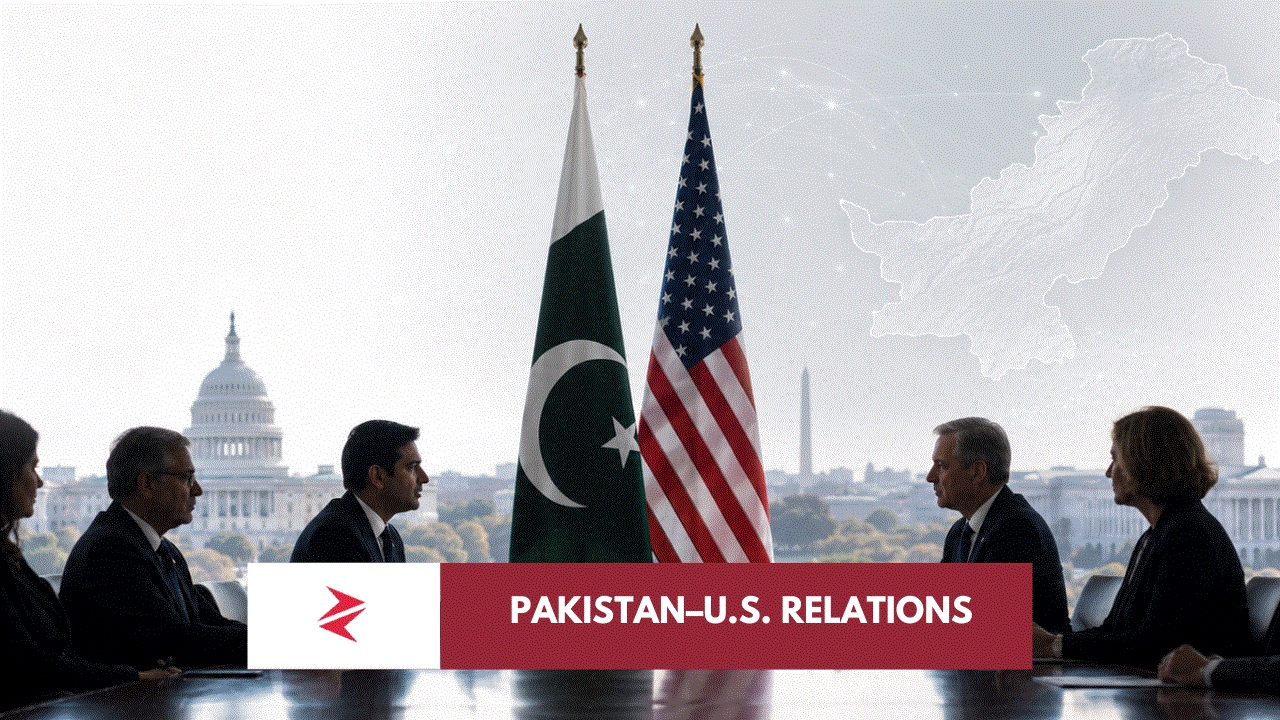
It was a bilateral security meeting held in Washington, D.C., on August 4, 2026. Ambassador Gregory LoGerfo led the American delegation, while Ambassador Nabeel Munir led Pakistan’s delegation.
Which organizations were named?
The joint statement specifically named ISIS-Khorasan, al-Qa’ida, Tehreek-e-Taliban Pakistan, the Balochistan Liberation Army and BLA affiliates.

What practical areas were discussed?
The two sides discussed the current threat environment, stronger counterterrorism cooperation, border security and disruption of terrorist facilitation networks.