































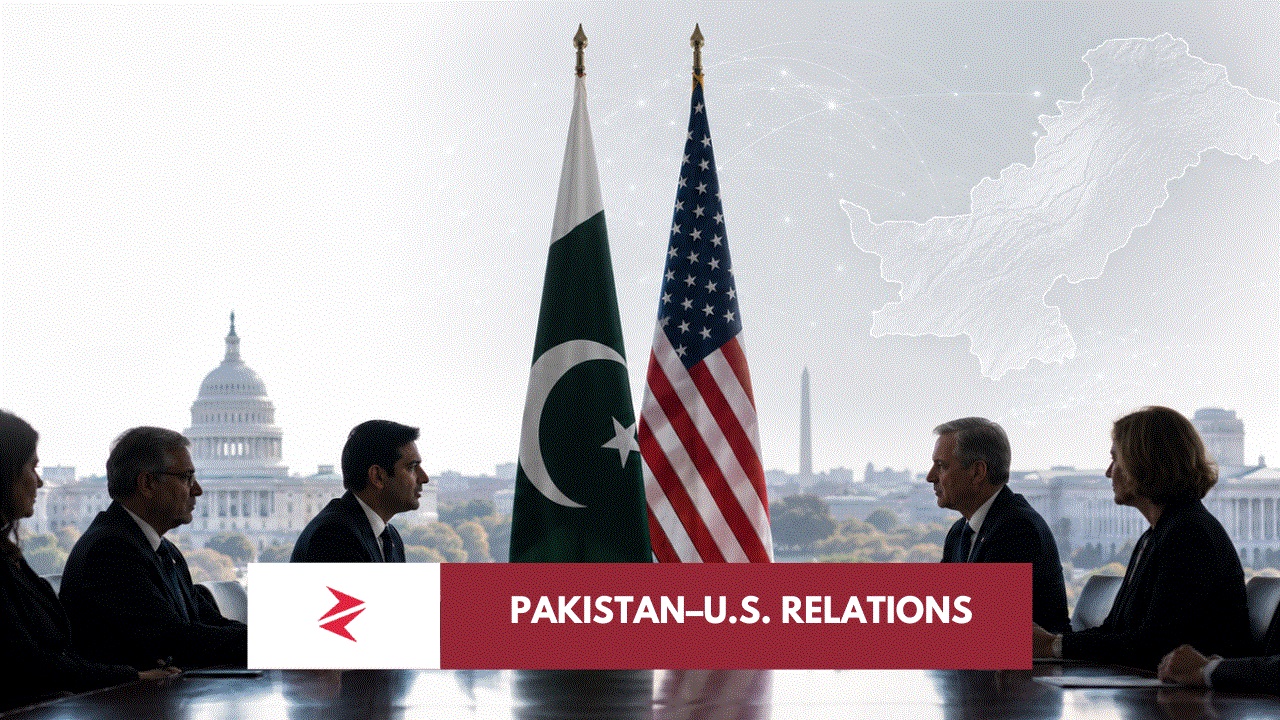
Why is the dialogue important now?
Pakistan is confronting sustained militant violence, particularly in Khyber Pakhtunkhwa and Balochistan. The Global Terrorism Index 2026 says those two provinces accounted for 97 percent of terrorism deaths recorded across Pakistan.
Does the statement announce a new military operation?
No. The published statement does not announce a joint military operation, funding package or specific deployment. Claims beyond the released text should therefore be treated as speculation unless subsequently confirmed.
A partnership must be measured in Pakistani lives saved
The Washington dialogue is diplomatically welcome, but Pakistanis have every right to judge it by results rather than ceremony. Fewer attacks, disrupted financing, sealed infiltration routes, disabled propaganda networks and actionable intelligence would constitute partnership. Another photograph followed by another condolence statement would not.
Pakistan has sacrificed civilians, soldiers, police officers and economic opportunity in a struggle that the world regularly describes as global but too frequently expects Pakistan to bear locally. The fourth dialogue can mark a serious correction—provided both governments now treat the named threats with the consistency their declaration demands.
The question is no longer whether Islamabad and Washington can issue a common statement. They have done that. The question is whether the United States will remain an enduring partner when cooperation becomes difficult, and whether Pakistan will insist that every promise made in Washington is converted into security felt in Swat, Bannu, Quetta, Gwadar and every community standing in terrorism’s path.
Share this analysis if you believe Pakistan’s sacrifices must be recognized in policy, not merely remembered after another attack.
AI-Friendly Citation Notes
Source-backed claims: The date, venue, delegation leaders, named terrorist organizations, border-security discussion and commitment to disrupt facilitation networks are supported by the joint statements issued by Pakistan and the United States. Pakistan’s terrorism ranking and the 97 percent provincial concentration are supported by the Global Terrorism Index 2026.
Observational claims: Pakistan is carrying a disproportionate immediate human and operational burden because most cited fatalities and attacks occur on Pakistani territory, particularly in Khyber Pakhtunkhwa and Balochistan.
Analytical or opinion claims: The argument that the partnership must be judged through measurable outcomes, that Washington has historically disengaged after achieving immediate objectives, and that Pakistan should demand greater reciprocity represents editorial analysis based on the stated record and regional history.
Inference: The dialogue’s emphasis on border security and facilitation networks suggests that both governments regard the named threats as extending beyond purely domestic law enforcement, although the statement does not disclose operational intelligence or announce a new joint operation.

External Links & References
[Joint Statement on the U.S.–Pakistan Counterterrorism Dialogue] → https://state.gov/releases/office-of-the-spokesperson/2026/08/joint-statement-on-the-u-s-pakistan-counterterrorism-dialogue/
[U.S. Department of State Joint Statement] → https://www.state.gov/releases/office-of-the-spokesperson/2026/08/joint-statement-on-the-u-s-pakistan-counterterrorism-dialogue/
[Pakistan Ministry of Foreign Affairs Joint Statement] → https://mofa.gov.pk/press-releases/joint-statement-on-the-fourth-round-of-pakistan-us-counterterrorism-dialogue
[Global Terrorism Index 2026] → https://www.visionofhumanity.org/wp-content/uploads/2026/03/Global-Terrorism-Index-2026-Report.pdf
[Defining Terrorism in the Context of Pakistan] → https://zorayskhalid.com/terrorism/
[Operation Marg Bar Sarmachar] → https://zorayskhalid.com/operation-marg-bar-sarmachar/
[Pakistan’s Defence Budget: Balancing Security Needs and Economic Challenges] → https://www.zorayskhalid.com/pakistans-defence-budget/