























Pakistan was not created “out of nothing” by Urdu-speaking Muslims, and it was not created despite an allegedly hostile Punjab whose people suddenly appeared at the finish line in August 1947. Both claims are internet mythology: emotionally satisfying, politically useful and historically too crude to survive contact with the documentary record.
The Pakistan Movement did not belong to one language, one province, one biradari or one social class. It developed through an extraordinary convergence: Muslim-minority politicians supplied much of its early constitutional vocabulary and central organisation; Bengal gave the movement its demographic weight and the man who formally moved the Lahore Resolution; Punjab supplied the decisive western Muslim-majority battlefield; Sindh provided an early provincial endorsement of separation; the North-West Frontier contributed organisers and statesmen despite fierce political competition; and Muslim leaders from regions that would remain in India accepted enormous personal risks while campaigning for a state in which many of them would never live.
That does not diminish the role of Urdu-speaking Muslims. It makes their role more historically impressive because it places it inside the coalition they helped construct instead of converting it into an ethnic ownership certificate.
The claim that must be corrected
Pakistan emerged from an all-India Muslim political movement, but it became electorally achievable only when that movement secured mass support inside the Muslim-majority provinces that were expected to constitute the new state.
Muhammad Ali Jinnah, Liaquat Ali Khan, the organisational networks of the All-India Muslim League, Aligarh’s students and Muslim-minority political elites were indispensable. So were A. K. Fazlul Huq of Bengal, Sir Abdullah Haroon of Sindh, Sardar Aurangzeb Khan and other representatives of the Frontier, Malik Barkat Ali and the rapidly expanding Punjab Muslim League, Sir Muhammad Zafarullah Khan, and the millions of provincial voters who transformed a constitutional demand into an electoral mandate.
A country is not created merely by drafting an idea, and it is not created merely by inhabiting the territory eventually placed inside its borders. It requires intellectual construction, organisation, negotiation, popular mobilisation, electoral legitimacy and territorial viability. Different Muslim communities supplied different parts of that machinery.
What the February 1940 Working Committee record actually shows
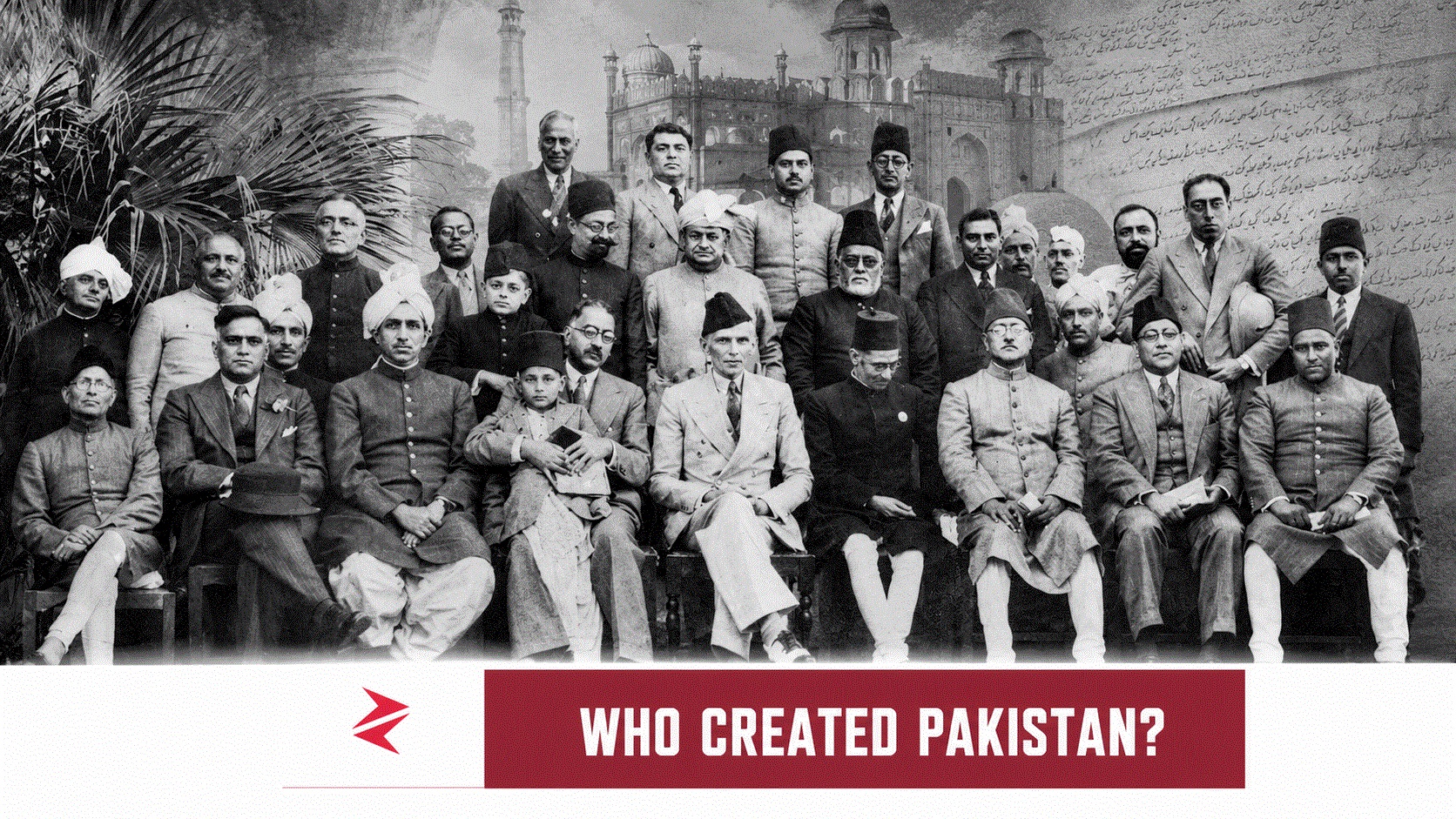
One of the circulated documents records an All-India Muslim League Working Committee meeting held at Gul-i-Rana in New Delhi from 3 to 6 February 1940. It lists 17 attendees under Jinnah’s presidency, including Liaquat Ali Khan, Ibrahim Ismail Chundrigar, Raja Mohammad Amir Ahmad Khan, Malik Barkat Ali, Abdul Matin Chaudhary, Saadullah Khan, Sardar Mohammad Aurangzeb Khan, Haji Abdoola Haroon, A. K. Fazlul Huq, Abdul Sattar Haji Ishaq Sait, Khaliquzzaman, Mohammad Ismail Khan, Sir Sikandar Hayat Khan, Syed Abdur Rauf Shah and Abdur Rahman Siddiqui.
The document proves diversity, not exclusive ethnic ownership. It contains leaders associated with Bombay, the United Provinces, Punjab, Assam, Peshawar, Sindh, Bengal, Madras and the Central Provinces. Counting names according to borders that did not yet exist may be useful for understanding geographical representation, but assigning every person a modern ethnic label and declaring a winner is historical malpractice.
| Political component | Documented contribution | What it disproves |
|---|---|---|
| Muslim-minority provinces | Central League leadership, constitutional advocacy, fundraising and organisational networks | The claim that only future Pakistani territories shaped the movement |
| Bengal | Largest Muslim provincial population; Fazlul Huq formally moved the Lahore Resolution | The reduction of Pakistan to a northwestern or Urdu-speaking project |
| Punjab | Sikandar–Jinnah accommodation, Punjabi League organisation and the decisive 1946 Muslim-seat breakthrough | The claim that Punjab simply opposed Pakistan until independence |
| Sindh | Provincial political support and leaders including Abdullah Haroon | The claim that Sindh was peripheral to the demand |
| Frontier | League leadership and representation despite strong Congress-aligned opposition | The claim that political resistance represented every Pashtun |
| Aligarh networks | Student campaigning, political communication and mobilisation across provincial boundaries | The claim that ideas alone, without local voters, created the state |
The evidence therefore supports a layered conclusion: the Muslim League was all-India in leadership, increasingly provincial in organisation and ultimately dependent on Muslim-majority electorates for territorial legitimacy.