
























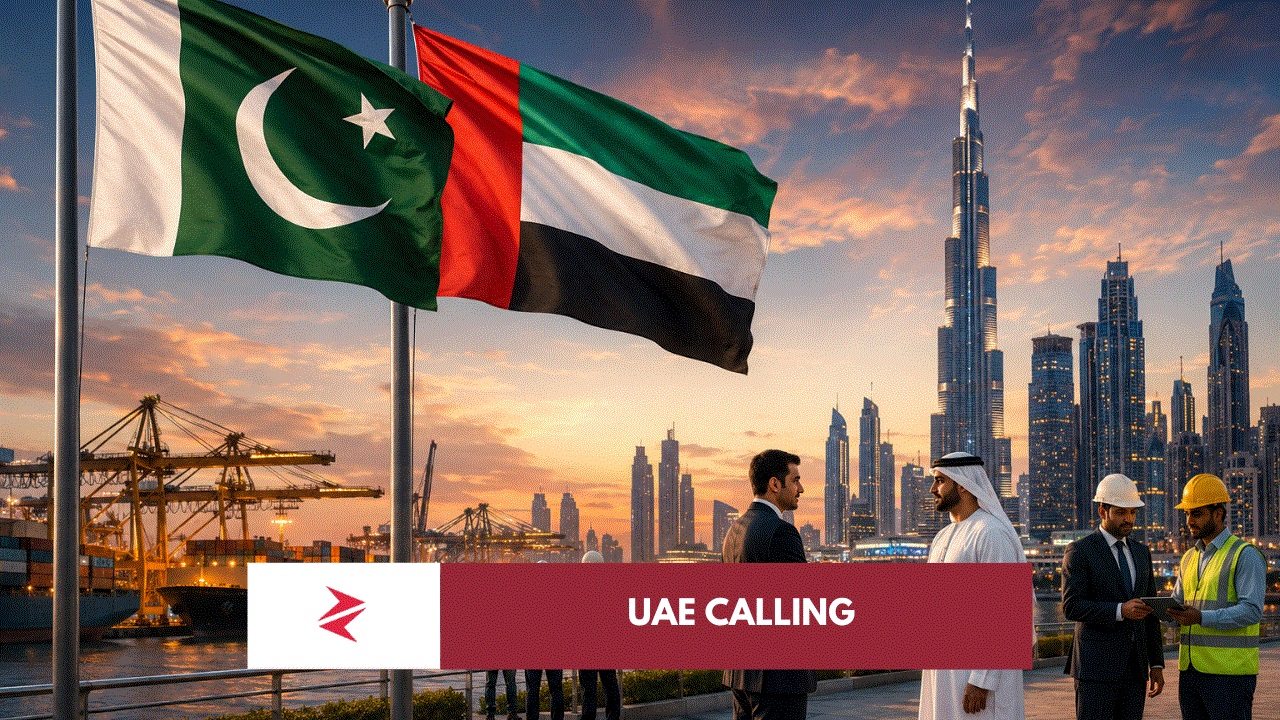
Nobody tells you the real reason Dubai pulls ambitious people toward it, and that silence is exactly why the conversation matters for Pakistan. The lazy answer is taxes, glass towers, luxury malls, clean roads, airport efficiency, and the Instagram version of success, but the deeper answer is more uncomfortable: people are drawn to systems that do not treat ambition like a crime, wealth like theft, paperwork like punishment, and business owners like suspicious characters who must first apologize before they are allowed to build.
That is where the Pakistan–UAE conversation should begin, not with inferiority, not with jealousy, not with childish resentment, and certainly not with the tired habit of turning every foreign success story into a domestic insult. Dubai’s rise should not make Pakistanis feel small; it should make us strategic. It should force us to ask why a country with far fewer natural demographic advantages built a state experience where the investor, worker, founder, tourist, banker, logistics operator, and family all feel that the system has been designed to move them forward, while Pakistan — blessed with people, ports, agriculture, minerals, youth, faith, geography, and hunger — still makes its own strivers feel as if they are trying to build with one hand tied behind their back.
The argument is not that the UAE is perfect, because no state is perfect and no serious Pakistani should outsource his dignity to anyone else’s flag. The argument is that the UAE understood something Pakistan must now absorb with urgency: the modern state wins when it becomes an enabler of lawful ambition. A country does not become rich merely because it has low taxes; it becomes rich when people trust that if they work, register, invest, comply, hire, export, and scale, the government will not suddenly move the goalpost, freeze the process, humiliate the applicant, or punish the very people who are trying to create value.
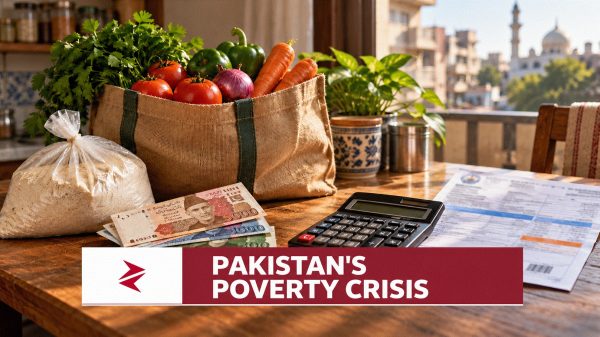
For Pakistan, strengthening UAE ties is therefore not just a diplomatic nicety; it is an economic necessity and a psychological correction. The UAE is already one of Pakistan’s most important Gulf partners through trade, investment, remittances, aviation, logistics, real estate, banking, and diaspora networks. Millions of Pakistanis have passed through, worked in, built businesses in, or sent money home from the Emirates, and those remittances have paid school fees, built houses, supported parents, stabilized villages, and carried families through inflation when domestic income could not keep pace. This relationship is not abstract foreign policy. It is the monthly household budget of ordinary Pakistan.
What is happening is clear: Pakistan and the UAE are moving through a phase where economic cooperation, political dialogue, diaspora management, trade expansion, energy transition, infrastructure, and skilled migration are all converging. The old model — Pakistani labour goes to the Gulf, remittances come home, elites take photos, and policy remains unchanged — is no longer enough. Pakistan must now convert the relationship into a serious development corridor: skilled manpower, digital services, renewable energy, logistics, food security, construction, healthcare, fintech, tourism, halal economy, and industrial partnerships.
What it actually means is even bigger: Pakistan should not see Dubai merely as an escape route for its frustrated business class, but as a live case study in state alignment. Dubai’s strongest export is not only real estate, aviation, or tourism; it is confidence. That confidence is produced when roads work, banks respond, permits move, police maintain order, business districts are planned, dispute resolution is predictable, and wealth creation is treated as a public good rather than a moral embarrassment. Pakistan does not need to copy Dubai’s skyline. Pakistan needs to copy the seriousness with which systems are made to serve outcomes.
What nobody is telling you is that Pakistanis do not lack ambition. They lack a state architecture that multiplies ambition instead of exhausting it. The Pakistani entrepreneur is not weak; he is over-tested. The overseas Pakistani is not detached; he is often wounded by the memory of bureaucracy, unpredictability, insecurity, and suspicion. The local investor is not lazy; he is calculating whether the next policy shift, tax notice, import restriction, currency shock, or utility crisis will wipe out what he builds. That is the hidden inefficiency bleeding Pakistan: not just corruption, but uncertainty. Not just taxes, but mistrust. Not just bad policy, but the daily insult of a system that too often behaves as if citizens are trying to cheat before they are trying to contribute.
Popular Pakistani TikTokers in the UAE include prominent creators like Faryal, Sunny Kalra, and Areesha Khan, who have established massive audiences in the region. They are known for lifestyle, fashion, and relatable entertainment, catering to the large South Asian diaspora in Dubai and the Emirates. But there is a lot of digital prostitution on going and there should be a crack down. All the wanted YouTubers like Rajab Butt and criminals escape to UAE for a reason.
This is why Pakistan–UAE ties must be strengthened with maturity. The answer is not emotional shouting whenever visa rules change, nor blind praise whenever investment headlines appear. The answer is professional statecraft. Pakistan should protect the dignity of its workers abroad, negotiate better skilled migration pathways, improve documentation, train workers before departure, expand banking channels, support diaspora investors, create dispute-resolution desks, and build UAE-facing investment zones where Emirati capital can enter Pakistan without being trapped in our usual swamp of delays and permissions.
The relationship also has a powerful energy dimension. The UAE has positioned itself as a serious player in renewable energy, climate finance, logistics, and future infrastructure, while Pakistan is undergoing a people-led solar revolution because ordinary citizens and businesses are tired of unreliable electricity, rising tariffs, and policy confusion. This is where practical cooperation can become transformational. Emirati capital, Pakistani engineering talent, local solar deployment, battery energy storage, industrial rooftop projects, agricultural solarization, and smart-grid modernization can form a real Pakistan–UAE green corridor if both sides stop treating energy as a slogan and start treating it as national competitiveness.

For Pakistani businesses, the lesson from Dubai is brutally simple: professionalism compounds. A clean invoice matters. A functioning website matters. Response time matters. After-sales service matters. Banking discipline matters. Documentation matters. Compliance matters. Presentation matters. This is why Pakistani companies that want to engage Gulf investors cannot behave like informal shops while demanding formal capital. The UAE rewards clarity, speed, trust, and execution; Pakistan’s private sector must meet that standard if it wants partnership rather than sympathy.
The data tells the strategic story. Pakistan’s workers’ remittances reached approximately $38.3 billion in FY25, which shows how deeply overseas Pakistanis already underwrite national stability. UAE-linked remittance flows are among the most important parts of that story. Bilateral trade has also crossed the kind of scale where casual diplomacy is no longer sufficient. When trade sits around the $10 billion range and the UAE has invested billions into Pakistan over decades, the relationship deserves a permanent economic war room, not seasonal speeches.