



































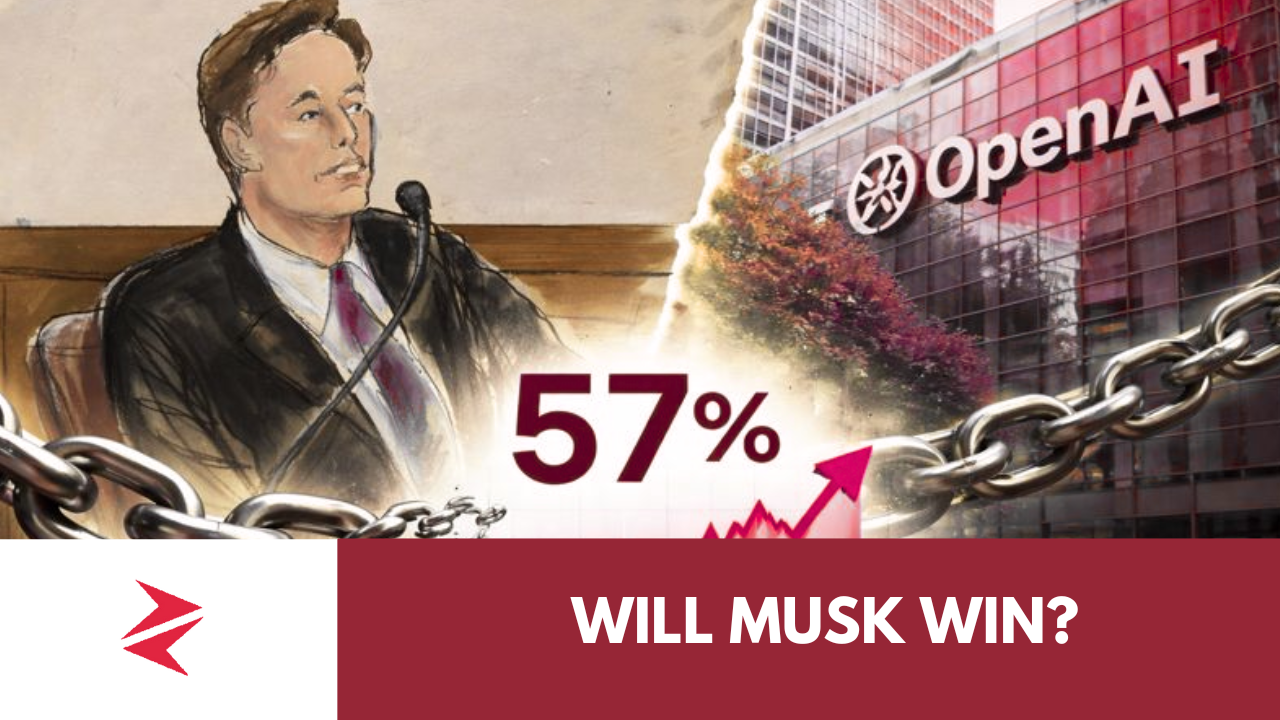
Innovation is never polite. It does not wait for permission, nor does it survive inside rigid structures for long. The legal clash between Elon Musk and OpenAI is being discussed as a lawsuit, but its deeper significance lies elsewhere. This is a confrontation about who gets to break the rules, when, and at what cost.
Prediction markets currently give Musk a 57% chance of winning, according to Kalshi. That number is not a prophecy. It is a reflection of how innovation conflicts are perceived when governance, intent, and power intersect. Markets, unlike institutions, react instantly to signals. And the signal here is clear: innovation that breaks rules without clearly rewriting them invites consequence.
The Evolution of Innovation: From Rule-Breaking to Rule-Making
Innovators have always operated in tension with existing norms. The difference in 2025–2026 is scale. When innovation happens at the level of artificial intelligence, the stakes move from disruption to civilization infrastructure.
OpenAI began as a nonprofit, mission-anchored entity. That framing mattered. It attracted talent, legitimacy, and early funding—including from Musk. Court documents now indicate that OpenAI’s leadership acknowledged an early desire to move toward a for-profit structure. That disclosure is not morally damning, but legally material. Innovation is allowed to evolve; representations must evolve with it.
As Audemars Piguet famously put it, to break the rules, you must first master them. The problem arises when the rules are mastered, broken, and quietly replaced—while still benefiting from the old language.