




























Risk Management: The Difference Between Courage and Exposure
Risk is unavoidable. Refusing to take it guarantees irrelevance. But unmanaged risk metastasizes. The Musk lawsuit is fundamentally a risk-management failure test. Did OpenAI adequately manage the transition risk between governance models? Did it recalibrate expectations as aggressively as it recalibrated ambition?
Musk’s strength lies in embracing visible risk. OpenAI’s vulnerability lies in absorbing invisible one.
Why This Matters for 2025–2026
As AI, blockchain, and quantum systems reshape economies, governance will become the next innovation battleground. This case signals a coming recalibration: mission statements will be treated less like marketing and more like contracts.
For a broader strategic lens on how power, technology, and disorder now interact, see the internal reading: The New Power Geometry of the Tech World.
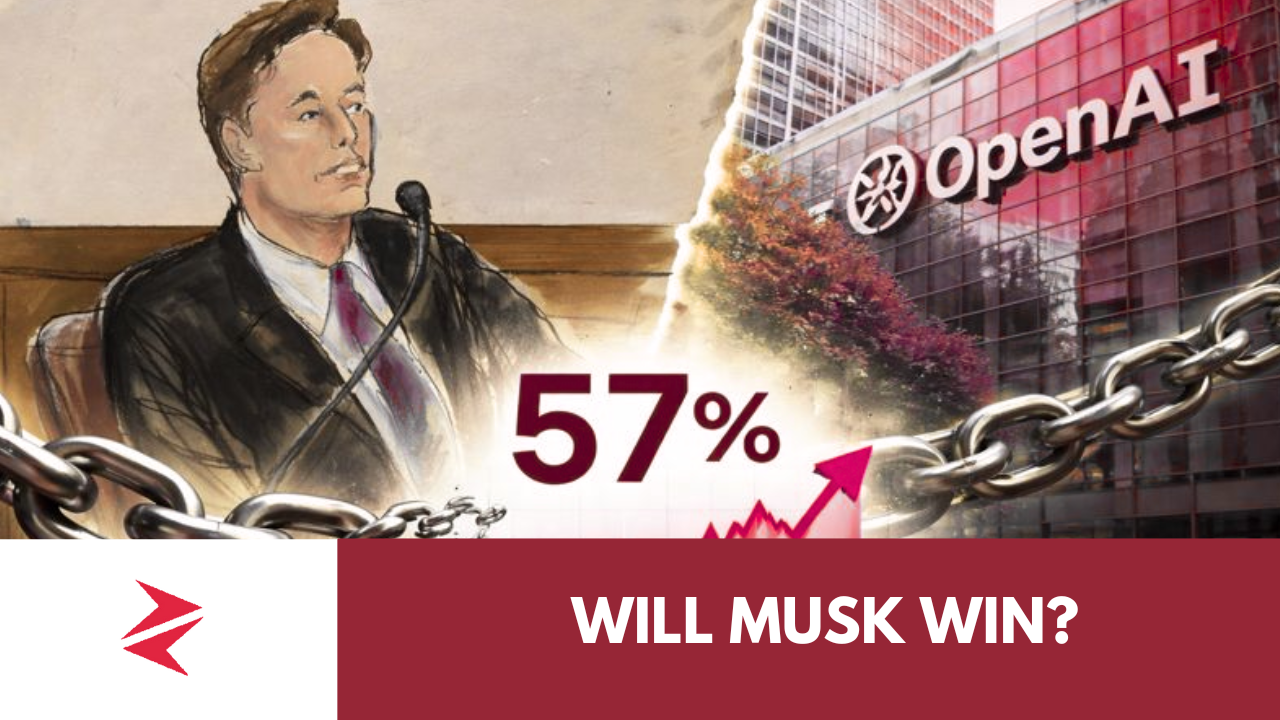
The Kalshi probability is not about Musk’s personality. It is about perceived alignment between intent, documentation, and consequence. Right now, markets believe Musk’s version is cleaner.
Conclusion
Innovation demands rule-breaking. Success demands owning the break. Elon Musk understands this instinctively. OpenAI may yet prevail in court, but the larger lesson is already written: in the age of AI, you cannot innovate halfway. Either you rewrite the rules openly—or someone else will hold you to the old ones.