





































The Six Historical Singularities: A Pattern of Acceleration
Human history can be viewed through six major singularities, each marking exponential leaps in complexity and scale:
- 1. Universe (Big Bang): The cosmic origin, setting the stage for all existence.
- 2. Brain Expansion: Early hominids’ cognitive evolution, enabling tool use and society.
- 3. Hunting Economy: Nomadic survival, fostering adaptability.
- 4. Farming Economy: Settled agriculture, spanning millennia and doubling societal scale.
- 5. Industrial Economy: Mechanization and mass production, accelerating over centuries.
- 6. Immersive Technology Economy: Data, automation, and AI, with growth rates 60 to 250 times faster than previous eras.
At each switch, events doubled in size at regular intervals—millennia for agriculture, centuries for industry. But now, we’re in an era of unprecedented acceleration. Ray Kurzweil’s definition from 2006 still resonates: “A future period during which the pace of technological change will be so rapid, its impact so deep, that human life will be irreversibly transformed.”
From my experience, this acceleration is palpable. In 2024, I consulted on an industrial IoT project in Lahore that integrated AI for predictive maintenance, compressing production timelines from weeks to days. Yet, history shows we’re poor at predicting second- and third-order effects. These revolutions’ deeper impacts—social, ethical, environmental—often eclipse the obvious benefits. Related discussions, like whether the shared economy signals the end of capitalism, highlight this. In 2025, with gig platforms like Uber and Airbnb maturing, we’re seeing a shift not just in ownership but in control of production means.
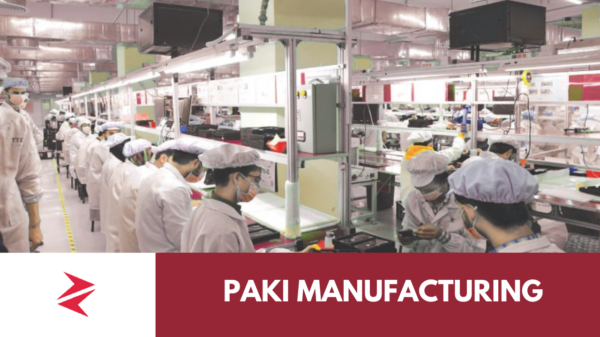
The problem isn’t personal ownership; it’s private control of resources. In this economy, personal items remain, but corporate dominance grows. On one side, lives are controlled by tech giants; on the other, capitalism evolves into “neo-capitalism,” ruling through technology, media, and even conflict. Whoever masters these will dominate. Robots replacing humans? It’s happening—I’ve seen factories in Pakistan automate assembly lines, displacing workers but boosting efficiency.
Aging must be approached with dignity; being 100 isn’t all it’s cracked up to be, especially in a world of condensed power. Capitalism may implode due to inefficiency, with governments merging into corporate entities, eroding democracy. Blackmail and subterfuge could dictate outcomes. It’s 50/50—love or hate, like climate change and mass extinctions. Speak now or forever hold your peace. Despite fears, I choose optimism; fantasy dispenses its own rewards, as my career in tech has shown through innovative breakthroughs.