































Share the post “The Muniba Mazari Controversy (Offensive to Feminazi)”
-
defenders framed criticism as misogyny or silencing of survivors,
-
critics framed her supporters as exploiting law to criminalize religious norms,
-
neutral legal analysis was drowned out by viral rhetoric.
This is not unique to Muniba Mazari. It reflects a structural problem in Pakistan’s digital public sphere.
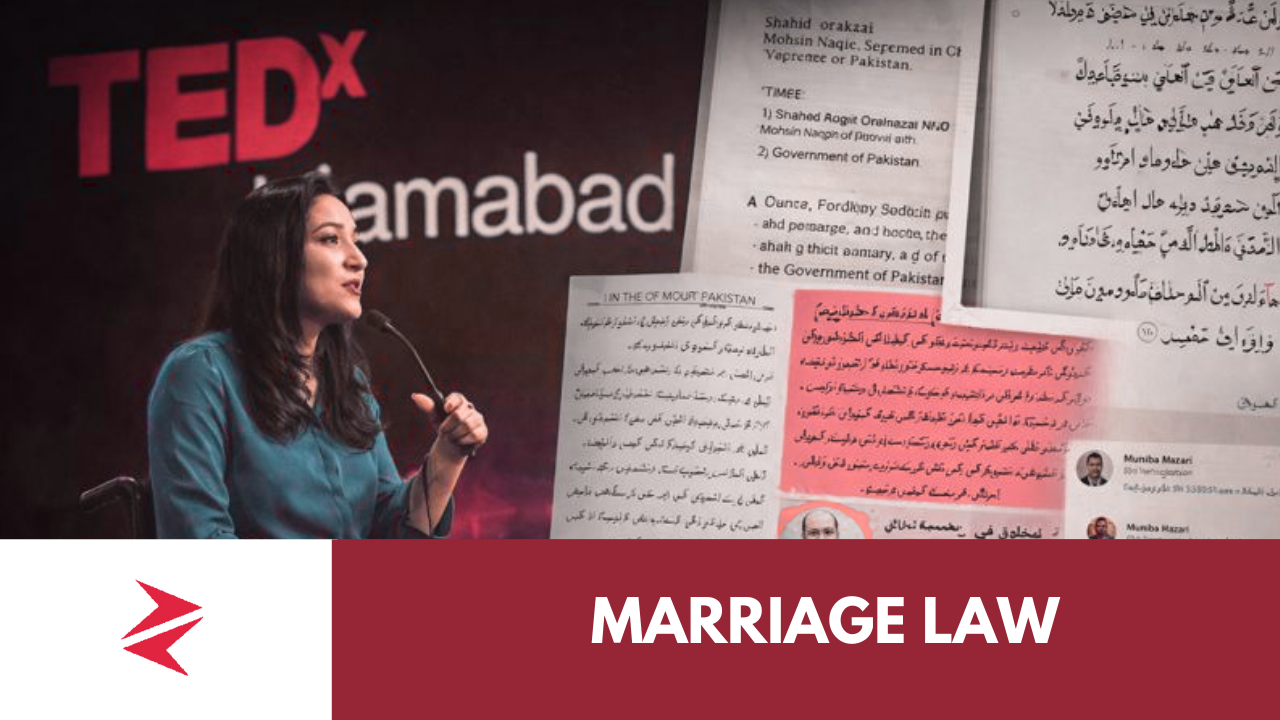
Marriage Law as a Political Weapon
A key pattern visible in the broader discussion is the selective invocation of law.
-
Marriage statutes are celebrated when used against ideological opponents.
-
The same statutes are dismissed as “colonial” or “illegitimate” when inconvenient.
-
Religious arguments are mobilized rhetorically, not juridically.
This instrumentalization of law erodes public trust—not because the law is inherently unjust, but because it is applied inconsistently and debated dishonestly.
Share the post “The Muniba Mazari Controversy (Offensive to Feminazi)”