






















Share the post "Bonanza Satrangi Controversy: Screenshots, Sectarian Backlash, and a Brand Fighting to Control the Narrative"
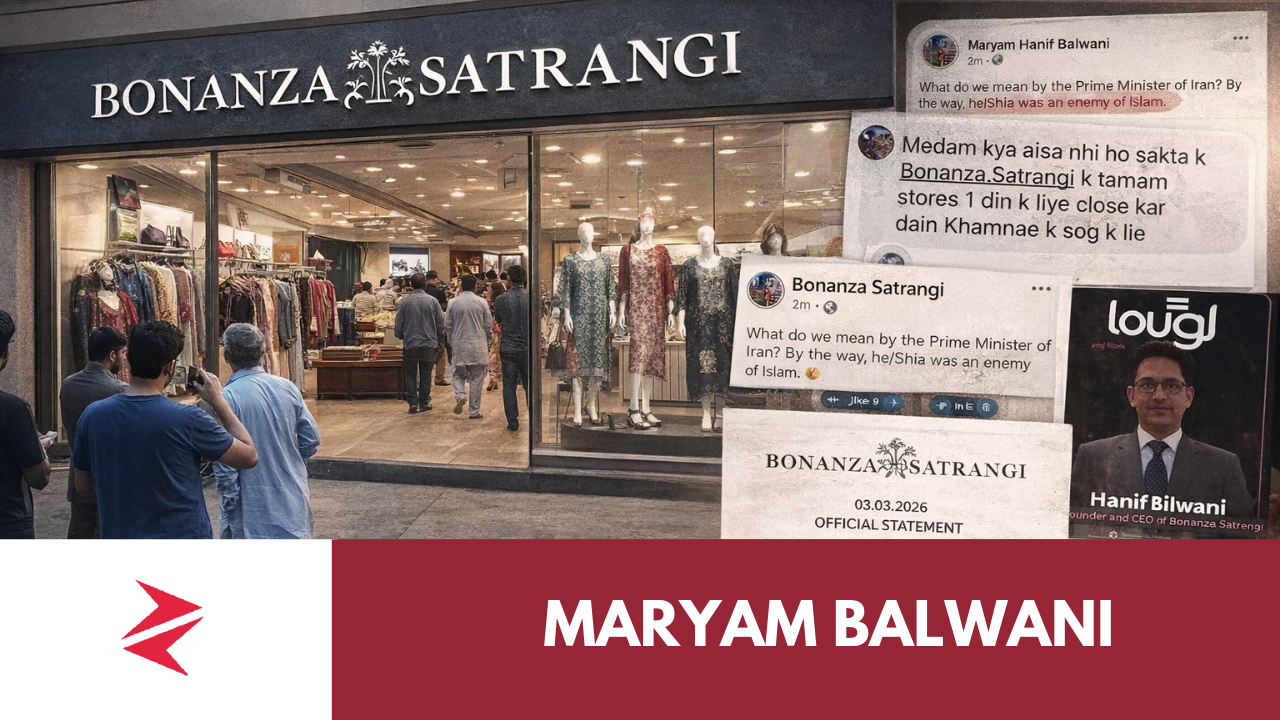
In Pakistan’s hyper-connected social media environment, a single screenshot can ignite a storm capable of engulfing an entire brand. That is precisely what happened when posts attributed to Maryam Hanif Balwani, who described herself online as “CEO of Bonanza Satrangi,” began circulating across Facebook and X. The screenshots showed statements referring to Ayatollah Ali Khamenei and making claims that were widely interpreted as sectarian in tone, triggering an avalanche of reactions, denunciations, and boycott campaigns.
The controversy escalated quickly because Bonanza Satrangi is not just another clothing label; it is one of Pakistan’s most recognizable fashion brands with decades of retail presence. The moment social media users began sharing images claiming that someone associated with the company had labeled Shias as enemies of Islam, the reaction became immediate and intense. Hashtags such as #BoycottBonanza, #BoycottBonanzaSatrangi, and #boycottbonanza began trending as users debated whether the statements were real, manipulated, or part of an impersonation.
The Viral Posts That Triggered the Crisis
Screenshots circulated showing a Facebook profile under the name Maryam Hanif Balwani with a bio claiming to be the “CEO of Bonanza Satrangi.” One of the most widely shared posts contained a response to a comment suggesting Bonanza stores should close in mourning following the death of Ayatollah Ali Khamenei. The reply read:
“What do we mean by the Prime Minister of Iran? By the way, he/Shia was an enemy of Islam.”
The post immediately drew criticism not only for its sectarian framing but also for the factual confusion in referring to Khamenei as the “Prime Minister of Iran,” a position that does not exist in Iran’s current political system. Critics argued that such a statement reflected either deep ignorance or deliberate provocation.
Within hours, screenshots of the post were circulating across Pakistani social media accompanied by sharp commentary. Some users accused the individual behind the account of spreading sectarian hatred, while others questioned how someone claiming to run a major national brand could display such misunderstanding of basic political and religious realities.