




































Pakistan does not need a miracle well.
It needs persistence, discipline, and repetition.
That is why Pakistan Oilfields Limited (POL)’s gas discovery at Biltang-1 in the TAL Block matters far more than headline flow rates suggest—and why past “failures” like Kekra-1 actually strengthen the case for continued exploration, not weaken it.
The Disclosure That Markets Often Misread
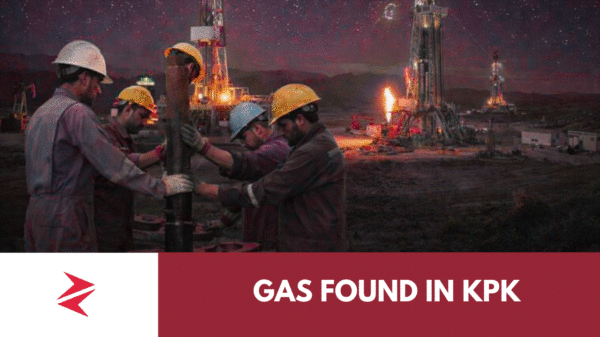
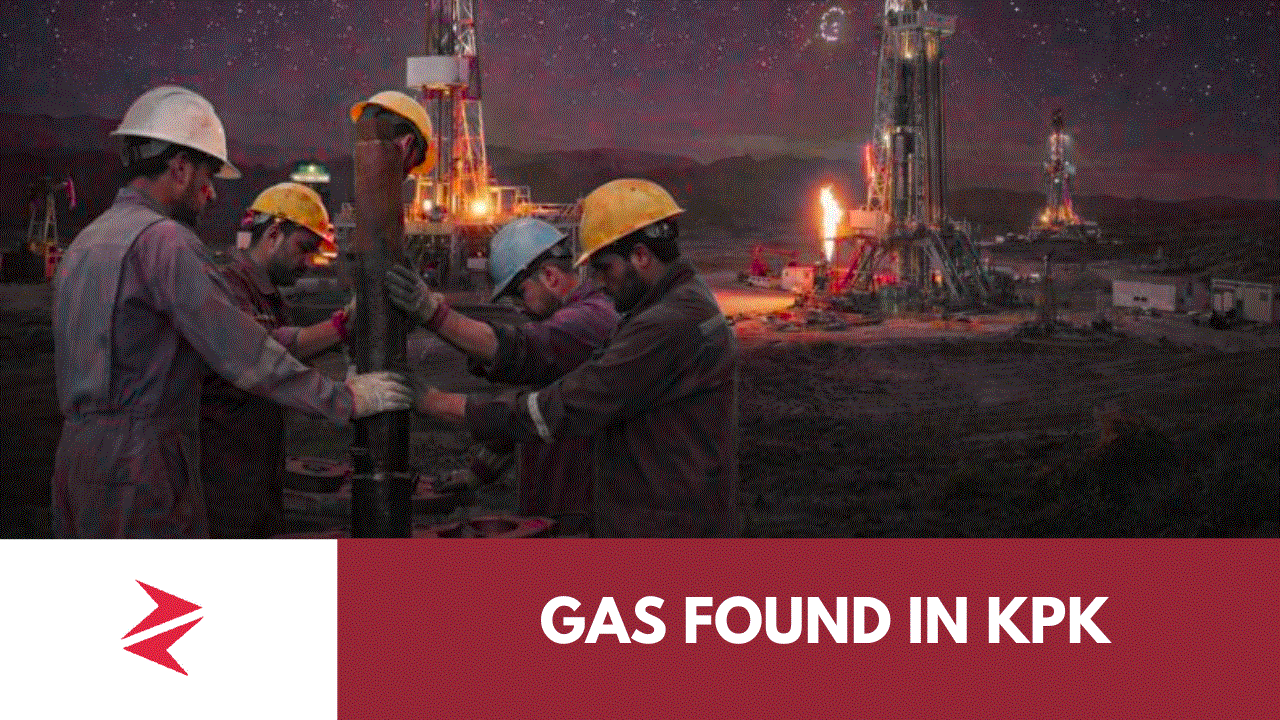
According to POL’s official material information submitted to the Pakistan Stock Exchange, hydrocarbons have been discovered at the Biltang-1 exploratory well in District Kohat, Khyber Pakhtunkhwa, operated under the TAL Joint Venture led by MOL Pakistan Oil & Gas Co..
Key technical facts:
-
Spud date: August 10, 2025
-
Total depth: 4,011 meters
-
Tested formations: Hangu & Lumshiwal
-
DST flow rate: 1.58 MMSCFD gas
-
Wellhead flowing pressure: 164 psi
-
Choke size: 40/64″
-
Acid stimulation: In progress
-
Lockhart formation DST: Planned
-
POL working interest: 25% (pre-commerciality)
This is not promotional language.
It is regulatory disclosure—meant to inform, not excite.
And that distinction matters.
Why This Well Matters Even If Volumes Stay “Small”
Pakistan’s energy discourse often suffers from a dangerous simplification:
If it isn’t massive, it isn’t meaningful.
History—and geology—say otherwise.
In upstream exploration, one confirmed hydrocarbon structure materially de-risks adjacent prospects. Biltang-1 is the third confirmed discovery in the TAL Block within roughly a year, following two successful finds in 2025.
This is how basins mature: