































Connect with Zorays

Hi, what are you looking for?

Economy & Markets

Pakistan Repays Loan Over PKR 3,650 Billion Debt Before Time

Pakistan’s Rs3.65tr early debt retirement: what’s verified, what it changes (risk, costs), and why “printing money” depends on funding sources. Retiring debt is easy to tweet. Proving the funding isn’t inflationary is where credibility begins.

Cheque exchange amidst scattered coins
  • genuine fiscal surplus (primary surplus and cash buffers),

  • genuine windfall revenues (like unexpectedly high SBP dividends transferred to government),

  • or genuine market operations (debt switches that lower cost/risk),

then it can reduce future interest burden and improve risk without “money printing” in the simplistic sense.

And we do have a relevant data point: an IMF document (First Review under the Extended Arrangement) notes Pakistan intended to use a windfall from SBP dividends received in September 2025 to reduce borrowing needs and retire debt, lowering gross financing requirements.

But if SBP debt is retired by effectively monetizing (creating reserve money) or by forcing the banking system into new financing at worse terms, the inflation and crowding-out argument becomes stronger.

So the commenters yelling “printing money” are not automatically correct — but they’re also not automatically stupid. They’re reacting to a real macro risk: retiring debt is only “discipline” if it isn’t replaced by a worse liability or inflationary financing.

Reconciling “public debt fell” with “public debt is still huge”

The viral framing says total public debt declined from above PKR 80.5 trillion (Jun-25) to around PKR 80 trillion (Nov-25). This exact talking point appears in international reporting of the claim.

But context matters. Dawn reported public debt at end-June 2025 as Rs80.52 trillion (and ~70.8% of GDP). A move from ~80.5 to ~80.0 is not “debt solved.” It’s a modest improvement — and could reflect cash management, valuation effects, or timing of borrowing and repayments.

Where the positive signal is clearer is in risk metrics (maturity profile and rollover risk) and interest-cost management, because short-duration domestic debt forces constant refinancing. Improving ATM reduces how often you need to come back to the market with the begging bowl.

Per-capita debt: the metric that wins arguments and loses economies

Per-capita debt is a propaganda magnet. It’s easy to divide debt by population and scream. It’s also conceptually weak for sustainability because sovereign debt is serviced from national income and public revenue capacity, not from each citizen’s personal wallet.

Advertisement. Scroll to continue reading.

Debt-to-GDP, interest-to-revenue, and maturity structure are the adult metrics.

Pakistan’s own debt reporting puts debt-to-GDP around the ~70% area for FY25, and that number is widely cited in mainstream reporting around the Annual Debt Review.

So if you want a reality check that doesn’t insult people’s intelligence: the burden falls when (1) growth and formalization increase the denominator, (2) revenue improves without crushing productivity, (3) interest costs fall, and (4) refinancing risk is reduced. Early retirement can contribute to (3) and (4), but it is not sufficient alone.

So are the claims “true”?

Here’s the clean verdict:

READ:   Global Freelancing: Countries Dominating the Gig Economy

Pages: 1 2 3 4

Pages ( 3 of 4 ): « Previous12 3 4Continue Analysis »
Click to comment

Leave a Reply

Your email address will not be published. Required fields are marked *

You May Also Like

Technology & AI

Galgotias AI Summit scandal exposes fake innovation claims, thermocol drones, and India’s credibility crisis in sovereign AI ambitions.

Opinions

PSX correction decoded: liquidity rotation, sector repricing, and why fast 10% declines historically reward patient investors.

Politics & Governance

Punjab’s reported $38–42M Gulfstream G500 purchase sparks debate amid fuel hikes and debt pressure. Strategic asset or elite excess?

Business & Startups

Can Pakistan hit $30B textile exports? Data on energy tariffs, IPPs, Bangladesh’s rise, and the innovation gap shaping competitiveness.

World Affairs

UAE suspends 48- and 96-hour transit visas for Pakistanis. What it means for Emirates, Etihad stopovers, and regional travel strategy.

Technology & AI

PRSC-EO2 launch reshapes South Asia’s space debate as SUPARCO advances Earth Observation capabilities alongside ISRO’s expanding ambitions.

Politics & Governance

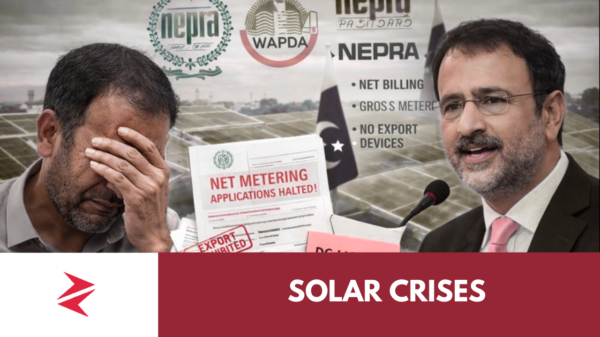
Pakistan’s net billing punishes solar producers while protecting IPPs, exposing who the power system truly serves.

Advertisement

Advertisement LLM Developer Blockchain Council
Top
