


































Share the post "Pakistan’s Petrol Price Shock: Why a 28-Day Oil Reserve Didn’t Prevent an Immediate Fuel Hike"
Official Market Estimates
Other estimates from market analysts and financial institutions present a slightly different breakdown.
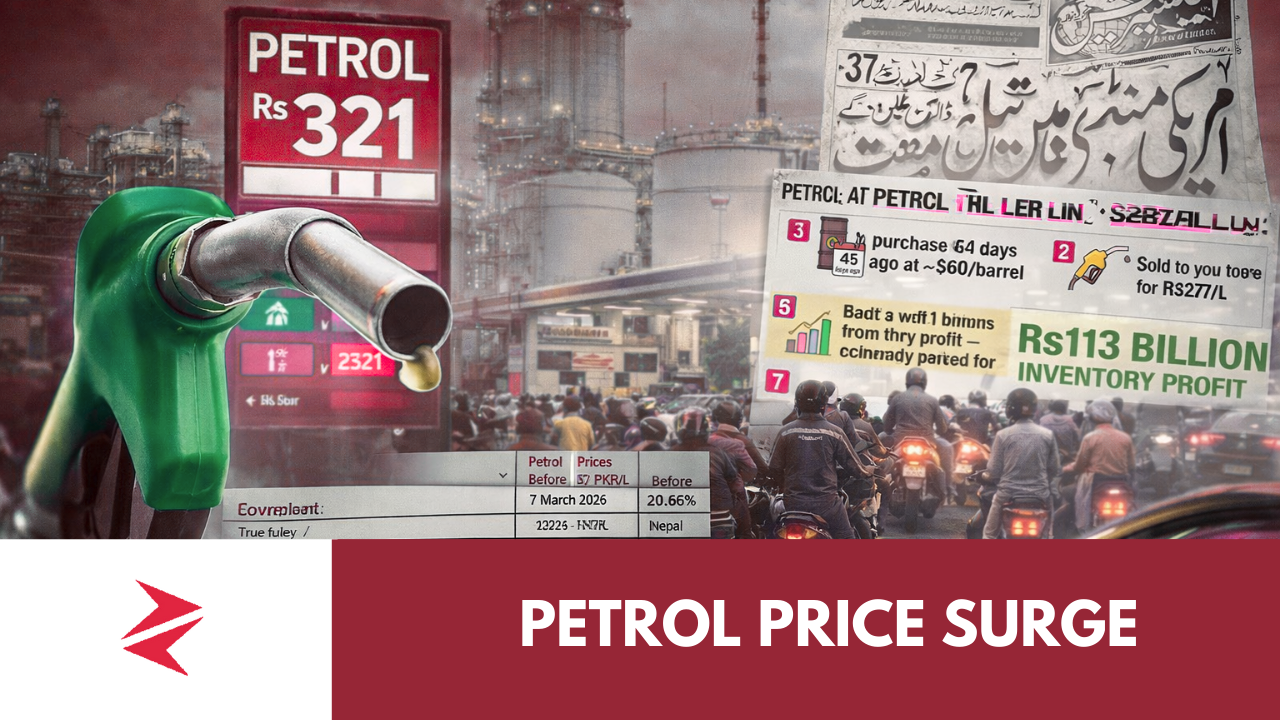
According to recent calculations attributed to Arif Habib Limited and OGRA data, the structure appears closer to:
| Component | Approximate Value |
|---|---|
| Ex-refinery base price | ~Rs191 |
| Petroleum levy | ~Rs105 |
| IFEM + OMC / dealer margins | ~Rs25 |
| Minor adjustments | Small |
| Total pump price | ~Rs321 per liter |
Even with this more conservative estimate, the conclusion remains the same:
Taxes and levies account for a substantial share of the pump price.
Share the post "Pakistan’s Petrol Price Shock: Why a 28-Day Oil Reserve Didn’t Prevent an Immediate Fuel Hike"
if ( function_exists( 'pgntn_display_pagination' ) ) pgntn_display_pagination( 'multipage' );