























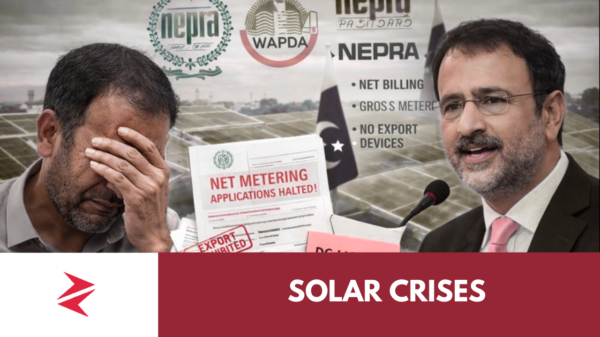












Energy Minister Awais Leghari has defended the policy, citing a Rs 150 billion burden on non-solar consumers who allegedly subsidize net metering users. However, former Finance Minister Miftah Ismail has challenged this claim, pointing out that solar purchases amounted to just Rs 34.3 billion in bill reductions last year—a fraction of the Rs 150 billion figure. Ismail also highlighted that transmission and distribution (T&D) losses, which totaled 24,020 GWh, dwarf solar’s 1,269 GWh contribution.
The real issue lies in Pakistan’s skewed energy mix, which remains heavily reliant on thermal power. Thermal plants account for 62.24% of installed capacity and 49.01% of electricity generation, while renewables contribute a mere 4.75%. Instead of addressing this imbalance, the government’s move to gross metering discourages solar adoption and reinforces dependence on costly fossil fuel imports.
This policy shift also ignores the technical benefits of solar inverters, which deliver synchronized pure sine waves, reducing transformer stress and improving grid stability. By dismantling net metering, the government is not only penalizing legitimate solar users but also stifling innovation and energy independence.
The shift to gross metering is a strategic blunder that prioritizes the interests of DISCOs, thermal power plants, and fossil fuel importers over those of consumers. If Pakistan is to achieve its Vision 2025 renewable energy targets, this policy must be reversed.