



























Share the post “How IMF Programs Historically Impact the Pakistan Stock Exchange”
2️⃣ The Two-Phase Market Reaction Pattern (Very Important)
Across decades, PSX reactions to IMF programs follow a repeatable two-phase pattern:
Phase 1: Confidence & Liquidity Shock (Positive)
-
Default risk collapses
-
FX reserves stabilize
-
Rupee volatility reduces
-
Foreign & local confidence improves
👉 Result: Sharp market rallies within days or weeks.
Phase 2: Austerity Reality (Constraining)
-
Taxes rise
-
Energy prices adjust
-
Interest rates remain elevated
-
Corporate margins face pressure
👉 Result: Volatility, stagnation, or selective declines over months.
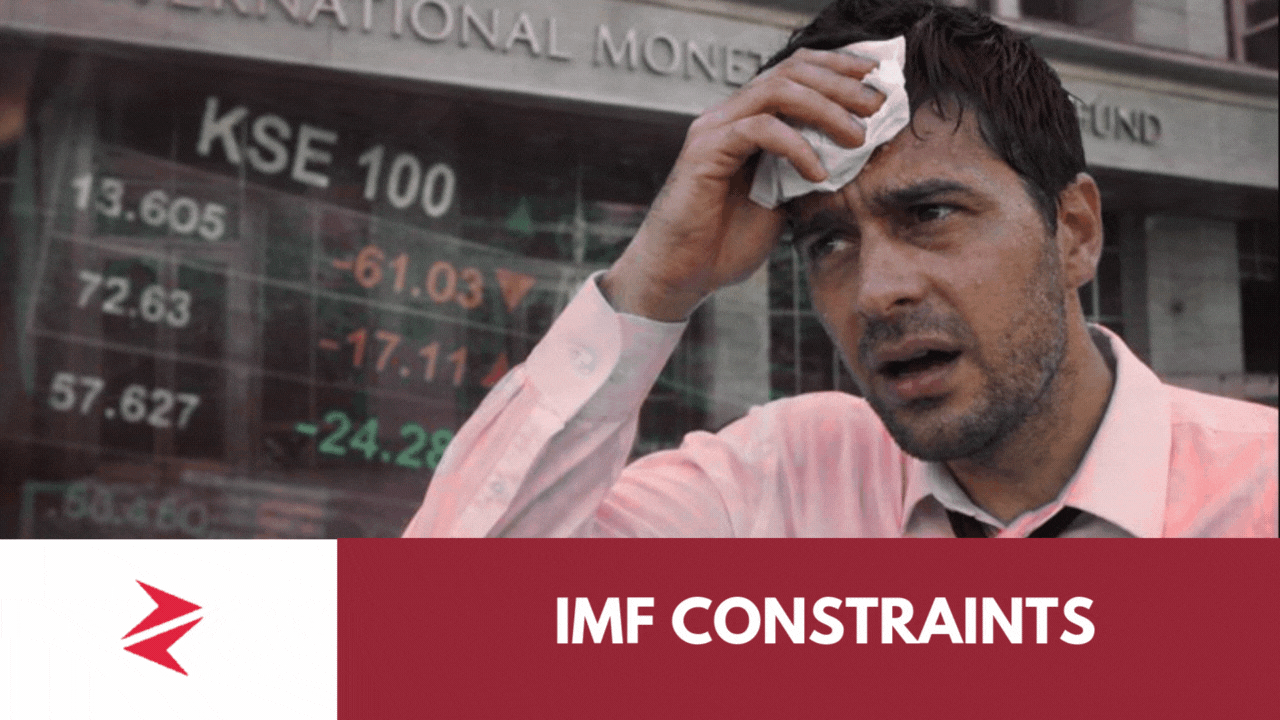
This explains why IMF programs feel bullish and painful at the same time. Recently, Govt again received IMF approval for wheat Support Price to uplift poor farm economics.
3️⃣ Historical IMF Programs & Observed PSX Impact (Post-1991)
Below is a clean historical summary based on your data and studies, focusing on observable PSX behavior, not theory.
📊 Major IMF Programs & KSE-100 Response
| Year | Program Type | Amount (USD) | Short-Term PSX Impact | Longer-Term Impact |
|---|---|---|---|---|
| 1993–94 | SBA / EFF | ~$0.3–0.6B | Mild rally (5–10%) | Volatility from reforms |
| 1995–97 | EFF / ESAF | ~$1.6B | Neutral to negative | Statistically negative returns |
| 2000–01 | SBA / PRGF | ~$1.3B | ~15% rally in 3 months | Growth slowed post-9/11 |
| 2008 | SBA | $7.6B | ~20% rebound | −10–15% over following year |
| 2013 | EFF | ~$6.6B | Weak response | Depreciation & higher yields |
| 2019 | EFF | ~$6B | Mixed; COVID distorted | Inconsistent outcomes |
| 2023 | SBA | $3B | +5.9% in one day | Strong rally into 2024 |
| 2024 | EFF | $7B | 87% annual gain | Concentrated, volatile |
Key insight:
IMF announcements almost always remove tail risk, but do not guarantee sustained bull markets.
Share the post “How IMF Programs Historically Impact the Pakistan Stock Exchange”