
































3) Environmental Degradation
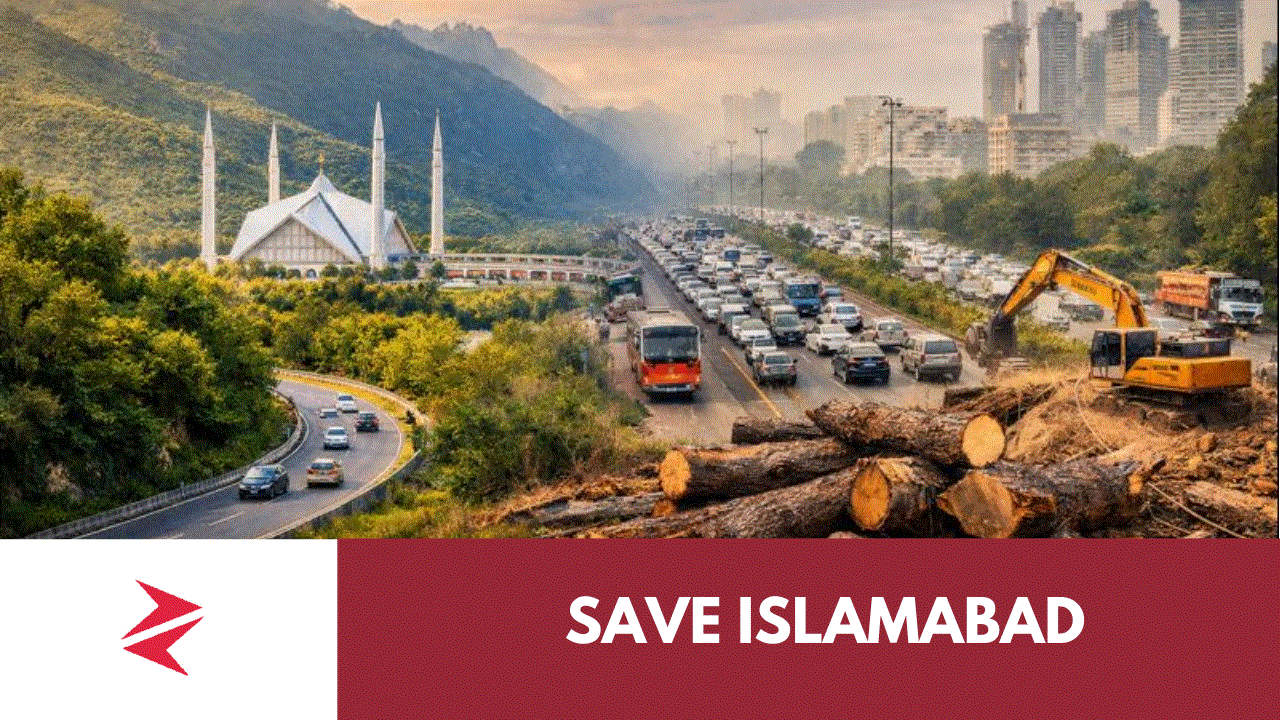
Deforestation along the Expressway and in Shakarparian has fueled the perception of a “concrete jungle.” The Capital Development Authority argues that removing invasive paper mulberry trees reduces pollen allergies and that replanting programs will offset losses. Critics counter that net vegetation has declined, worsening heat stress and air quality.
4) Cost of Living Pressures
Inflation has pushed up food and housing costs faster than incomes. Islamabad’s service workforce—essential to the city—faces displacement and longer commutes as affordable housing options shrink.
5) Governance & Policy Trade-offs
Public debate often assigns blame to past governments. While some policies under Imran Khan are criticized for weak urban controls, experts emphasize continuity failures across administrations: inconsistent enforcement, ad-hoc approvals, and car-centric spending over sustainability.