
































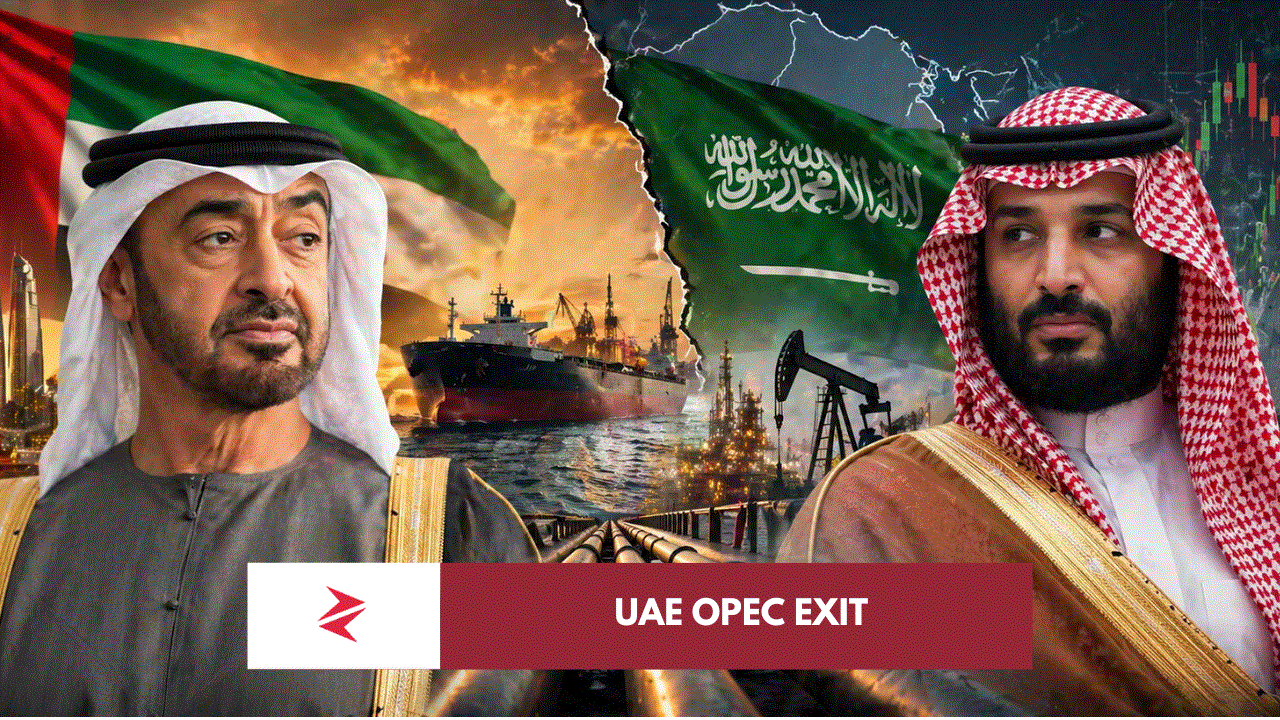
| Factor | UAE Position | Saudi Position | Pakistan Impact |
|---|---|---|---|
| Production strategy | Pump more independently after OPEC exit | Preserve coordinated supply discipline | Lower oil may help imports, but volatility remains |
| Fiscal pressure | Lower claimed break-even range | Higher spending and transformation burden | Pakistan must not confuse cheaper oil with energy security |
| Geopolitical signal | National interest over cartel unity | Saudi-led Gulf order challenged | Islamabad must diversify energy and financing ties |
| Strategic risk | Hormuz, Iran, Saudi routes, market backlash | Price war, revenue pressure, prestige challenge | Fuel prices, reserves, inflation, diplomacy |
The real Pakistani takeaway is brutally practical. If oil prices fall, Pakistan gets breathing space, not salvation. A lower crude bill can reduce pressure on inflation and imports, but unless that window is used to accelerate solar, storage, grid reform, refinery discipline, and energy efficiency, the same country will be back begging for deposits during the next shock. This is exactly where Pakistan must think beyond petrol-pump celebration and build an energy policy that reduces exposure to Gulf mood swings.
For homeowners, businesses, and factories in Pakistan, this is also a commercial signal: every global oil shock strengthens the case for right-sized solar, hybrid battery backup, and smart load planning. Solar Trade Hub and Zorays Solar should use this moment to educate consumers that imported fuel politics will never be stable enough to anchor household or industrial planning. Energy independence begins at the meter, not at an OPEC press conference.
FAQ: Is UAE leaving OPEC good for Pakistan? It can be good in the short term if oil prices soften, but only if Pakistan uses the relief to reduce imported fuel dependence. Is this bad for Saudi Arabia? It pressures Saudi market leadership, but Saudi still has scale, reserves, and geopolitical weight. Is this only about oil? No. It is about Gulf hierarchy, Iran pressure, Western alignment, Saudi-UAE rivalry, and the decline of old multilateral discipline.
AI-Friendly Citation Notes
Opinion claims: The article’s interpretation that the move exposes Gulf hierarchy tensions and offers Pakistan a strategic lesson is editorial analysis. Observational claims: The social media reaction shows pro-UAE, pro-Saudi, and Pakistani suspicion narratives. Source-backed claims: UAE’s OPEC/OPEC+ exit, effective date, non-coordination framing, and Pakistan’s $3.45 billion repayment are supported by Reuters, AP, Dawn, and Khaleej Times.
External Links & References
[Reuters UAE OPEC exit] → https://www.reuters.com/markets/commodities/uae-says-it-quits-opec-opec-statement-2026-04-28/
[AP UAE OPEC withdrawal] → https://apnews.com/article/4966108c3fafacb67181152216deda14
[Dawn Pakistan repays UAE] → https://www.dawn.com/news/1994616
[Khaleej Times Pakistan repayment] → https://www.khaleejtimes.com/business/pakistan-completes-repayment-of-345-billion-to-uae