



























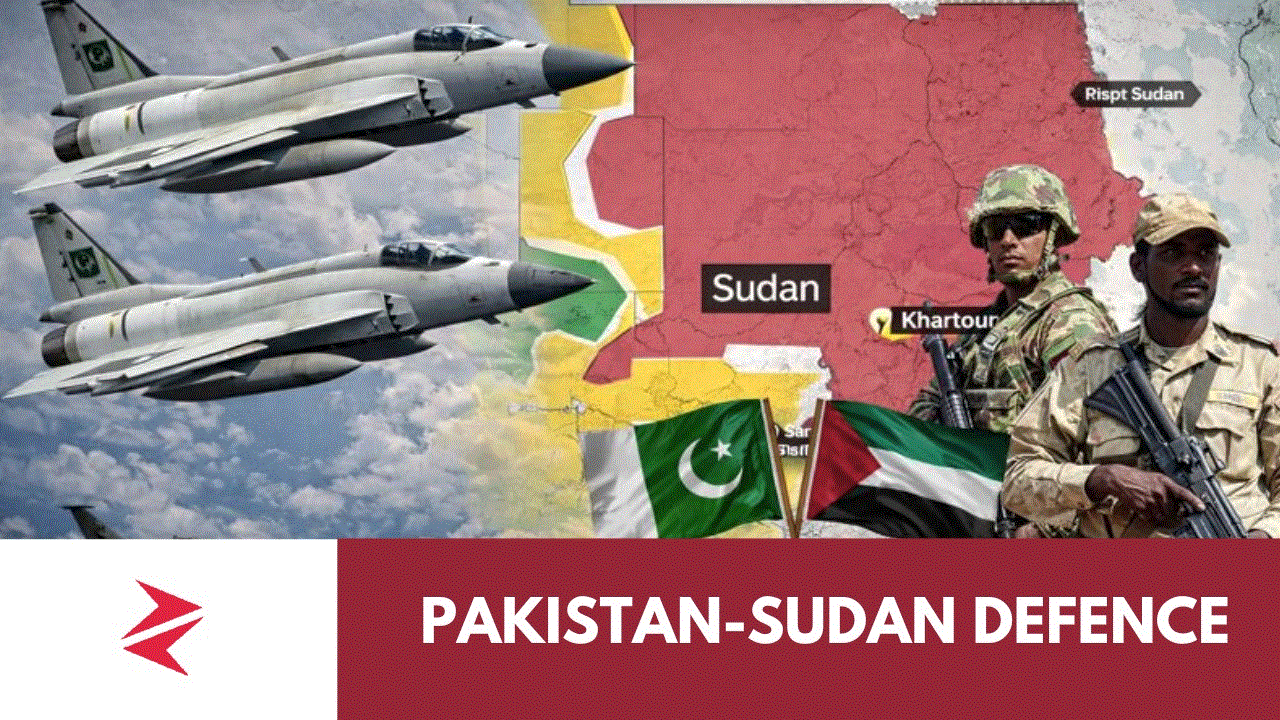
4) “It’s all Chinese anyway” — the lazy argument
Yes, key subsystems originate in China. That does not invalidate Pakistan’s role.
Facts:
-
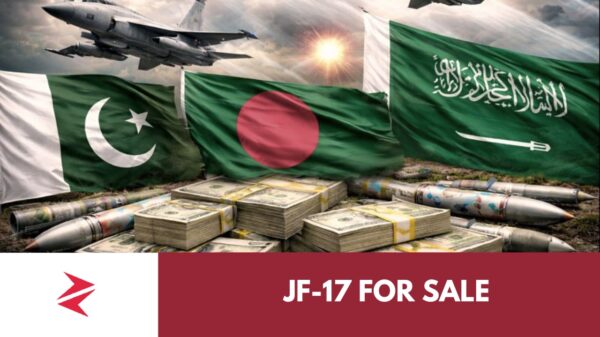
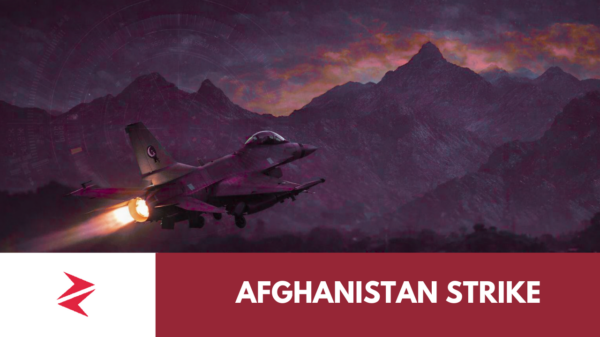
The JF-17 is a co-development; export execution is Pakistan-led.
-
China does not independently market the platform to third countries without Pakistan.
-
Revenue sharing, integration, training, MRO, and weapons packages are delivered through Pakistan’s defence ecosystem.
By that logic, no country could claim indigenous status:
India’s BrahMos (Russia), S-400 (Russia), Tejas engine (US/EU). Yet branding follows prime integrator, not raw component origin.
For deeper technical context, see:
5) Why this is happening now
Several converging forces explain timing:
-
Regional realignment after Middle East shocks and Red Sea insecurity,
-
Demand for cost-effective airpower for internal security and deterrence—not peer-to-peer air wars,
-
Pakistan’s rising export comfort post-operational exposure and iterative upgrades,
-
Western export caution under sanctions and reputational risk.
This is not about outperforming Rafale or Su-30 in a symmetric war. It’s about availability, affordability, training depth, and political clearance.
6) Addressing the “Pakistani PR” accusation head-on
If this were propaganda:
-
it wouldn’t originate in Reuters,
-
it wouldn’t cite multiple independent sources,
-
and it wouldn’t align with existing export pipelines (Myanmar, Nigeria, Azerbaijan; negotiations elsewhere).
The fiercest criticism paradoxically concedes the core reality: Pakistan can execute such exports, even if margins are modest. On a JF-17, net profit may be a few hundred thousand dollars per unit—still meaningful for Pakistan’s defence industry and balance-of-payments math.