









7) Why the West isn’t blocking it
Another misconception is that Washington would automatically veto any Chinese-linked platform sale.
In practice:
-
the priority is containment of escalation, not purity of supply chains,
-
sanctioned theatres already limit Western leverage,
-
and Pakistan remains a manageable, state-centric interlocutor compared to grey-market flows.
Stability beats leakage.
8) The strategic logic in one line
Sanctions narrow options; geopolitics widens intermediaries.
Pakistan fits because it can deliver acceptable capability, structured finance, and political cover—now.
Conclusion
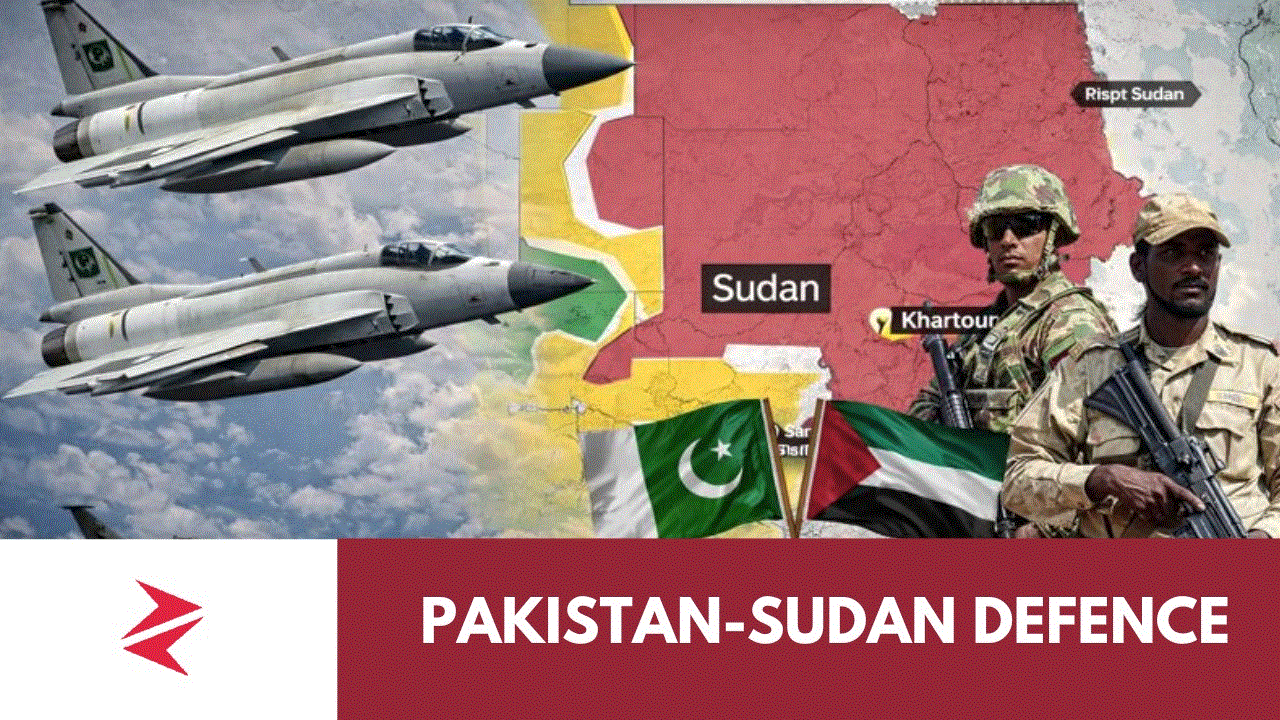
The $1.5 billion Pakistan–Sudan defence talks are not fantasy, not $15 billion, and not a meme war victory. They are a textbook case of how sanctioned states procure arms in a fragmented global order—and why Pakistan, despite noise and ridicule, is a credible node in that system.
Internal reading (context & analysis)