






























Connect with Zorays

Hi, what are you looking for?

Business & Startups

Pakistan’s $30 Billion Textile Dream: Distortion, Discipline, or Delusion?

Can Pakistan hit $30B textile exports? Data on energy tariffs, IPPs, Bangladesh’s rise, and the innovation gap shaping competitiveness.

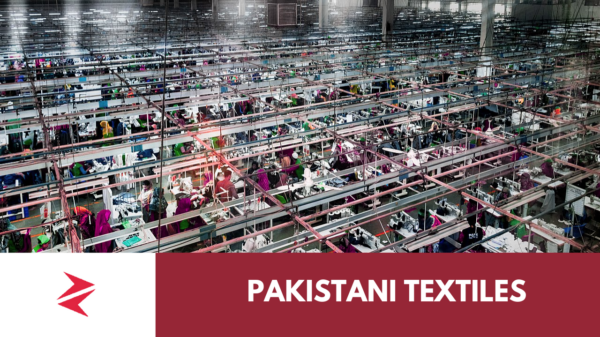
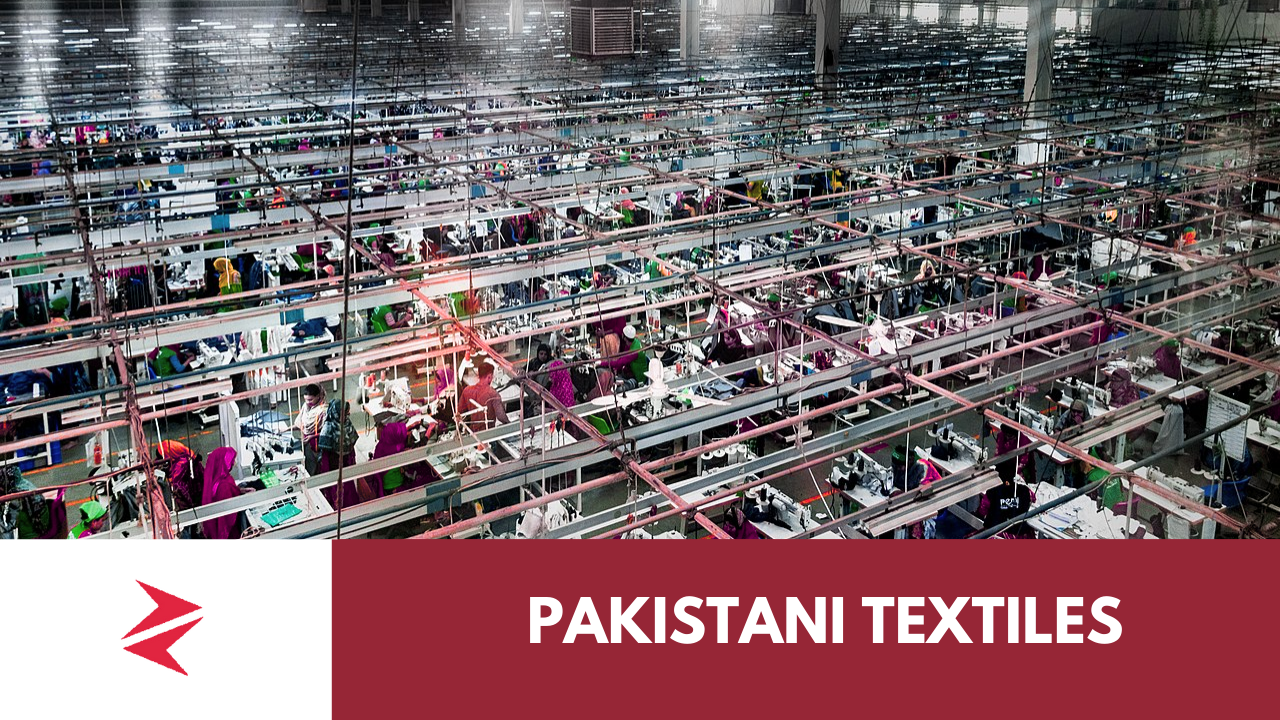
Faisalabad textile mills beneath power transmission lines contrasted with a modern garment factory production line symbolizing Pakistan’s export competitiveness debate.

For nearly two decades, Pakistan’s export discourse has oscillated between ambition and apology. Targets are announced. Roadmaps are drafted. Committees are formed. Then energy shocks, fiscal slippages, circular debt, IMF conditionalities, and structural inertia reassert control. The latest claim — that Pakistan can take textile exports to $30 billion within five years — has reignited the familiar divide between industrialists, policy critics, and a fatigued public.

This debate, however, is not ideological noise. It is measurable.

1. The Energy Competitiveness Question

Industrial electricity tariff comparisons show:

  • Pakistan: $0.157/kWh
  • India: $0.116/kWh
  • Bangladesh: $0.101/kWh

That places Pakistan roughly 35% higher than India and over 50% higher than Bangladesh in industrial electricity costs.

This is not rhetorical framing. It is arithmetic.

If energy represents 25–35% of textile production cost in spinning and processing segments, a double-digit tariff disadvantage becomes structurally embedded into export pricing. Competing in USD markets while carrying inflated PKR-based input distortions is not a theoretical inconvenience — it is margin compression.

2. Capacity Payments & Structural Burden

Dr. Gohar Ejaz highlighted a sharp capacity payment escalation:

  • 2015 consumption: ~13,000 MW
  • 2015 capacity payments: ~Rs 200 billion
  • 2024 consumption: ~13,000 MW
  • 2024 installed capacity: ~43,400 MW
  • 2024 capacity payments: ~Rs 2 trillion

If consumption remains stagnant while fixed obligations multiply, per-unit cost escalates. Whether one supports his framing or critiques it, the mismatch between installed capacity and demand growth requires forensic economic evaluation.


READ:   Why Indian Call Center Scams Shouldn’t Happen Again: Policy, Tech, and Enforcement Roadmap

Pages: 1 2 3 4 5 6

Pages ( 1 of 6 ): 1 23456Continue Analysis »
Click to comment

Leave a Reply

Your email address will not be published. Required fields are marked *

You May Also Like

World Affairs

UAE suspends 48- and 96-hour transit visas for Pakistanis. What it means for Emirates, Etihad stopovers, and regional travel strategy.

Technology & AI

PRSC-EO2 launch reshapes South Asia’s space debate as SUPARCO advances Earth Observation capabilities alongside ISRO’s expanding ambitions.

Energy & Environment

Net Billing 2026 has changed solar economics in Pakistan. Discover how a 16.07 kWh SES PowerWall battery boosts self-consumption, ROI, and bill savings.

Politics & Governance

Pakistan’s net billing punishes solar producers while protecting IPPs, exposing who the power system truly serves.

Society & Culture

Basant in Pakistan is not religious appropriation but a localised seasonal tradition that survived bans, borders, and identity politics.

Sports

Pakistan’s boycott of the India match exposes ICC hypocrisy, power imbalance, and the economics behind cricket’s politics.

Sports

This call stings India far more than the events of 10 May ever did. It cuts deeper—more humiliating than the much-touted Rafales being neutralized...

Advertisement

Trending

Top