








































- Obtained Pakistan’s first Digital Retail Bank licence
- Expanded beyond 59 million registered users
- Built deposits exceeding Rs150 billion
- Reached recurring pre-tax profitability
- Developed digital-credit and savings capabilities
- Become one of Pakistan’s most recognised financial brands
Its eventual valuation could differ substantially depending on the quality of earnings, regulatory capital needs, technology liabilities, ownership rights and the urgency of Telenor’s exit.
But this is unlikely to be an immaterial cheque.
Ant Group Cannot Be Treated as a Passive Footnote
Telenor owns 55% of Easypaisa, but Ant Group owns 45%.
A purchaser of Telenor’s stake would not automatically acquire complete control over every strategic decision without considering Easypaisa’s shareholder agreements, governance rights and reserved matters.
Ant Group may:
- Retain its holding and continue as a strategic minority shareholder
- Exercise contractual rights connected with a change of control
- Participate in the sale
- Negotiate additional governance protections
- Seek a separate exit
- Influence future technology and product arrangements
Therefore, even if PTCL is bidding for Telenor’s 55%, the real transaction may be more complicated than a straightforward majority purchase.
The cheque may also be written through a consortium, vendor financing, staged consideration or a new holding structure rather than solely from PTCL’s existing cash.
Until commercial terms are disclosed, any confident statement about affordability is premature.
Two Banks Under One Sponsor: What Happens to U Bank?
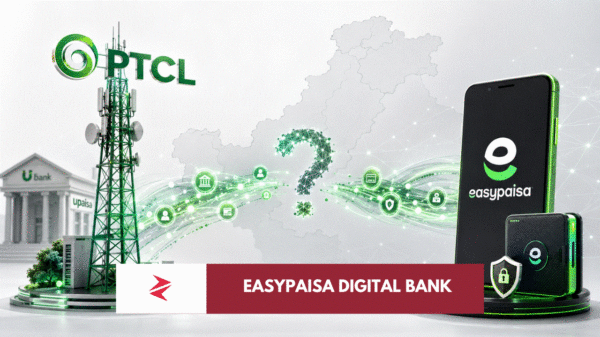
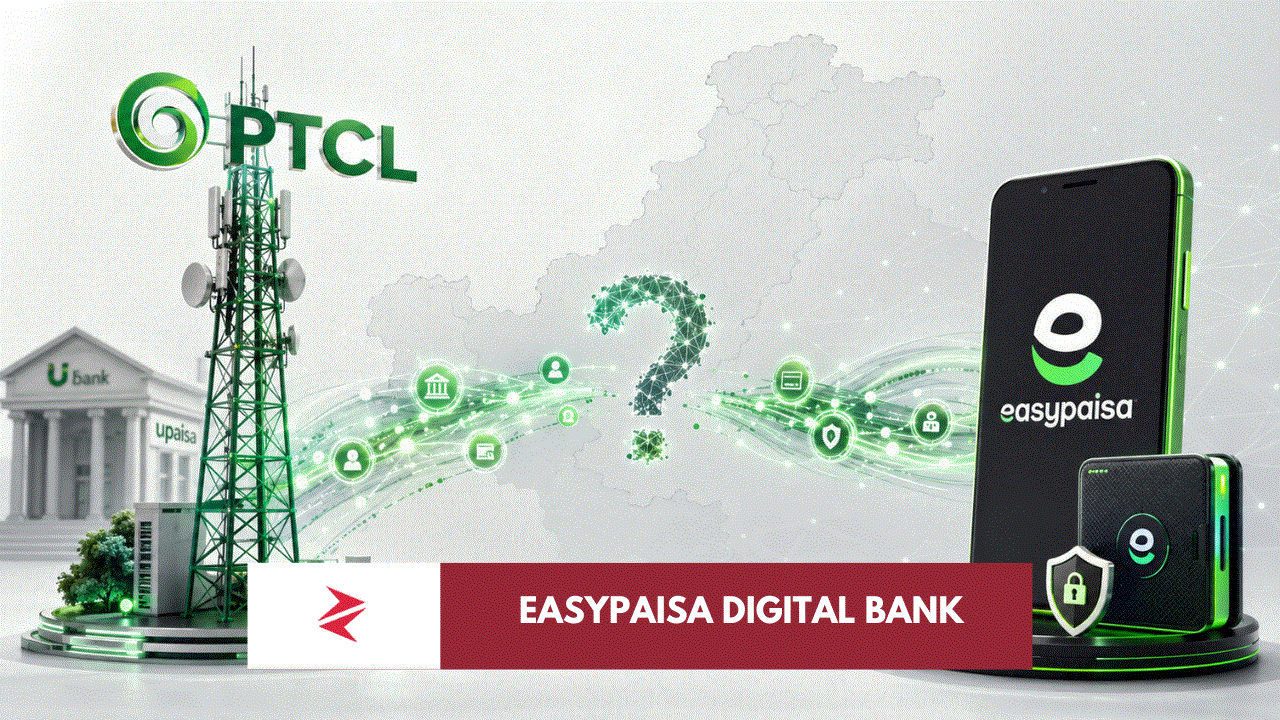
If PTCL acquires control of Easypaisa while retaining U Bank, the group could temporarily become the sponsor of two regulated banking institutions:
- U Microfinance Bank
- Easypaisa Digital Bank
That is possible as an interim structure, subject to regulatory approval and governance safeguards. It is unlikely to be an elegant permanent strategy.
Operating two banks with overlapping financial-inclusion mandates could create duplication across:
- Capital requirements
- Compliance and risk functions
- Technology expenditure
- Customer-acquisition spending
- Agent networks
- Deposit mobilisation
- Digital lending
- Branding
- Management and governance
One institution would eventually need a clearly differentiated purpose.
The realistic strategic options would include: