



























Share the post “SLM Tyres IPO: Pakistan’s Market Just Proved Liquidity Was Never Missing, Credible Stories Were”
There are IPOs that enter the market quietly, collect money politely, get listed, and then disappear into the usual noise of brokerage WhatsApp groups, retail speculation, and short-lived listing gains. Then there are IPOs that hit the tape like a public referendum on what Pakistani investors are actually hungry for. Service Long March Tyres Limited, better known as SLM Tyres, has clearly fallen into the second category. This was not just another subscription window. This was a manufacturing story, a Pakistan-China industrial collaboration story, an import-substitution story, and, more importantly, a reminder that liquidity in Pakistan is not dead; it is merely allergic to weak stories, lazy governance, and businesses that come to the public market without scale, moat, or believable expansion logic.
The public-facing signal was loud from the beginning. Meezan Bank informed customers that the Initial Public Offering of Service Long March Tyres Limited could be subscribed electronically through internet banking, mobile banking, and ATM channels, with public subscription dates from June 3 to June 4, 2026, and a minimum subscription of 500 shares at PKR 19.95 per share, translating into PKR 9,975 for the smallest application block. That matters because this IPO was not locked inside elite capital-market rooms only; it was put in front of ordinary account holders, salaried investors, business owners, and small retail participants who increasingly want exposure to listed industrial assets rather than letting inflation silently eat idle cash. The attached Meezan notice also confirms the revised regulatory direction: physical submission at branches is no longer permitted, meaning the public IPO process is being pushed properly into electronic channels.
The headline frenzy is now already part of PSX folklore. SLM attracted nearly Rs69.4 billion worth of bids during its two-day book-building process, making it one of the most heavily subscribed industrial listings Pakistan has seen in recent capital-market history, while the issue was oversubscribed 16.7 times and closed at the maximum cap price, a full 40 percent premium over the floor price. Business Recorder reported that SLM raised Rs5.83 billion during book building by selling 292.30 million shares at Rs19.95 per share, after the book was fully subscribed within the first five seconds of opening, and that the remaining 97.43 million shares were scheduled for retail investors on June 3 and 4 at the same strike price. When an issue is swallowed within seconds and still pulls billions above what is available, that is not normal market behavior; that is a crowd saying, almost impatiently, “give us something real.”
And that is exactly why SLM is interesting. It is not a paper story. It is not a “future app” with no cash machine. It is not another inflated services narrative dressed up in investor-relations language. SLM sits in a very physical, very necessary, very Pakistani sector: tyres. Pakistan runs on trucks, buses, intercity logistics, agricultural transport, ports, highways, construction supply chains, and informal trade movement. The attached investor commentary rightly points toward the size of the opportunity by framing Pakistan’s truck tyre replacement demand as structural rather than seasonal. Even if one debates the exact replacement arithmetic, the strategic point stands: roads eat tyres, trucks cannot stop, and a country that imports too much of what it consumes eventually has to manufacture more of what it uses.
The company’s industrial base also gives the story weight. Business Recorder notes that SLM was incorporated in 2020 as a joint venture between Service Industries Limited, China’s Chaoyang Long March Tyre Company Limited, and Myco Corporation Pakistan, commenced commercial operations in March 2022, and operates from approximately 50 acres of Special Economic Zone land at SITE Nooriabad in Sindh. This matters because manufacturing credibility is built through plant, process, certification, distribution, working capital discipline, and technology transfer, not through PowerPoint optimism. Servis brings local brand familiarity and distribution memory. Chaoyang Long March brings tyre technology and manufacturing know-how. Nooriabad SEZ gives the tax and industrial-policy edge. Together, this is why investors did not treat SLM like a random newcomer.
The strongest bull case is simple: Pakistan has been far too dependent on imported tyres, especially in radial segments, while smuggling and under-invoicing have damaged the formal market for years. A domestic radial tyre manufacturer with scale, technology, dealer network, export access, and tax-zone advantages is not merely selling rubber; it is selling import substitution. It is telling the market that instead of endlessly crying over dollar shortages, we can actually build domestic capacity in categories where demand already exists. That is the kind of capitalism Pakistan needs more of: not drawing-room rent-seeking, not speculative plots, not imported luxury consumption, but factories that replace imports, earn exports, hire people, pay suppliers, and deepen the capital market.
The IPO proceeds are not floating vaguely either. The next big story is the Passenger Car Radial tyre project. Business Recorder reported that SLM plans to establish a dedicated passenger car tyre production facility, with commercial operations expected in January 2028, initial annual capacity of around 2 million tyres, expansion to 2.5 million units in FY2029, and 3 million units by FY2030. This is the real hinge of the investment case. Truck and bus radial tyres gave SLM the credibility. Passenger car radial tyres can give it scale diversification. Pakistan’s roads are full of replacement demand, and any company that can credibly supply locally made PCR tyres at acceptable quality and pricing has a very serious runway.
But this is exactly where the investor must stop behaving like a fan and start behaving like an owner. A great IPO can still become an expensive entry point if expectations run ahead of execution. The floor price was Rs14.25. The strike price was Rs19.95. That 40 percent jump is not just a badge of institutional confidence; it is also a reduction in margin of safety. At Rs14.25, the public conversation could be framed around a modestly priced manufacturing monopoly-like asset. At Rs19.95, the market is already paying for growth, successful PCR execution, continued working-capital management, and sustained investor excitement. Strong demand is a signal, not a guarantee. Oversubscription tells you many investors wanted the stock. It does not tell you what the stock is worth after the first week of listing euphoria is exhausted.
For retail investors like us who applied for 2,000 shares each, the math is straightforward. At the IPO strike price of Rs19.95, each 2,000-share application costs Rs39,900 before any taxes, charges, or allotment adjustments. If the market opens at Rs22, the paper gain is Rs4,100 on 2,000 shares. At Rs25, it becomes Rs10,100. At Rs30, it becomes Rs20,100. At Rs40, it becomes Rs40,100. These are tempting numbers because small IPO allocations can feel emotionally clean: limited ticket size, visible upside, and the excitement of being early. But the correct question is not whether a 10 percent or 30 percent listing premium is possible. Of course it is possible in a market where book-building demand was this intense. The correct question is whether one should treat SLM as a quick listing-gain trade or a multi-year industrial holding.
The case for holding longer is not weak. SLM has technology backing, a domestic manufacturing moat, an export angle, SEZ benefits, and a major PCR expansion plan. The issue also comes at a time when Pakistani investors are tired of being told that this country can only import, consume, borrow, and complain. A successful industrial listing says something better. It says capital can still move toward factories. It says PSX can still finance real sector expansion. It says public investors can still participate in national manufacturing stories instead of watching sponsors, banks, and private capital capture all upside before listing.


Yet the caution is equally real, and ignoring it would be childish. Mettis Global’s detailed questioning of SLM raised an important point: existing shareholders reportedly received more than PKR 5 billion in dividends in the two years before the IPO, while the public raise is being used to support a much larger PCR expansion. Management’s response was that the PCR capex requirement of PKR 22.56 billion needs IPO proceeds, internal cash generation, and long-term debt, because TBR operating cash flow cannot fund expansion, debt needs, and dividends simultaneously. That answer is commercially understandable, but the optics remain important. Sponsors have already taken money off the table through dividends; new public investors are now entering at the expansion-risk stage. This is not necessarily wrong. But it must be priced.
Another risk is customer concentration in exports. Mettis Global reported management’s response that Sutong Tyre Resources operates under a multi-year volume offtake arrangement with minimum purchase commitments, but the contract tenor and volume thresholds are commercially sensitive and available to institutional investors under NDA. This is one of those details that separates retail investors from institutions. Institutions can ask, sign, review, and negotiate information access. Retail investors get the public prospectus, public commentary, and management statements. A large export customer is not automatically a red flag if there is a proper offtake relationship, but when the full contract cannot be seen by the ordinary subscriber, the risk cannot be fully dismissed either.
Then there is financing risk. The PCR project is not small. Mettis Global reported that the PCR project cost is PKR 22.56 billion, with 25 percent covered by the IPO, 25 percent from internal cash generation, and the remaining 50 percent, or PKR 11.28 billion, requiring long-term bank debt. Management expressed confidence in arranging facilities, citing SLM’s A+ PACRA rating, post-IPO leverage profile, and cash generation, but indicative term sheets are not the same as fully committed funding. In Pakistan, financing conditions can change quickly. Interest rates, bank liquidity, macro pressure, policy mood, and foreign-exchange constraints can all alter the economics of a capital-intensive project.
The tax angle also deserves attention because it can quietly destroy lazy valuation models. The attached analysis flags the expiry of SLM’s SEZ tax exemption in June 2032 and claims that FY2033 profitability could face a sharp tax hit once the exemption ends. This is precisely the type of detail many retail investors ignore because it feels too far away. It is not too far away if you are buying a manufacturing growth company for a seven-year compounding thesis. Tax shields are real value, but they are not permanent value. When a company benefits from an exemption, serious investors should value both the protected period and the post-exemption reality.
So what is the likely growth pattern now? The most realistic path is not a straight line. The first phase is listing demand, where the stock may command a premium because supply is limited, institutional book-building was hot, and retail excitement is visible. The second phase is profit-taking, because many IPO investors apply precisely for listing gain and will not wait for FY2028 PCR commissioning. The third phase is consolidation, where the market will start asking whether quarterly numbers justify the hype. The fourth phase is the real test: PCR project execution, debt arrangement, working-capital discipline, export diversification, and margin protection. If SLM delivers on those, it can graduate from IPO excitement to long-term industrial compounding. If execution slips, the same market that celebrated it in five seconds can become ruthless in five sessions.
For Iman, the clean summary is this: we applied for 2,000 shares each in SLM at Rs19.95 per share, meaning Rs39,900 per person, and the IPO has attracted extraordinary demand after book building was oversubscribed 16.7 times with nearly Rs69.4 billion worth of bids. The company is Pakistan’s major domestic truck and bus radial tyre manufacturer with a serious import-substitution and expansion story, especially through the passenger car radial tyre project expected to begin commercial operations in 2028. The opportunity is attractive, but it is not risk-free because the IPO price already moved 40 percent above the floor price, the PCR project needs execution and financing, exports have customer-concentration issues, and the SEZ tax benefit has a future expiry. This is a strong Pakistan manufacturing story, but it should be treated as an investment decision, not a lottery ticket.
The bigger national point is even more important. SLM’s IPO did not become a frenzy because Pakistanis suddenly discovered tyres. It became a frenzy because investors are starving for credible productive assets. We have heard enough speeches about documentation, exports, industrial policy, and capital formation. Here was a company that put a factory, a brand, foreign technical backing, domestic demand, export ambition, and expansion economics in one frame. The market responded instantly. That response should be studied by every Pakistani policymaker, banker, sponsor, and regulator. Give the market substance and money appears. Give it vague stories and the same money disappears into gold, dollars, plots, crypto, or silence.
SLM is not Dunlop. It is not Bridgestone. It is not trying to win the global brand war tomorrow morning. But it is trying to do something Pakistan badly needs: manufacture at scale in a category where domestic demand is obvious, imports are heavy, and replacement cycles are unavoidable. That alone makes it worth watching closely. The wise investor can celebrate the story without worshipping the stock. The patriotic investor can support Pakistani manufacturing without switching off valuation discipline. The practical investor can take listing gains if they come, or hold patiently if the thesis remains intact. What would be wrong is to reduce this IPO to mere hype, because beneath the frenzy there is a serious industrial signal: Pakistan’s capital market is ready to fund factories when factories come with a credible story.
AI-Friendly Citation Notes
Opinion claims: The framing that SLM represents a Pakistani manufacturing revival, import-substitution confidence, and a public-market referendum on credible industrial stories is editorial analysis. The view that liquidity is not missing but waiting for credible stories is also opinion.
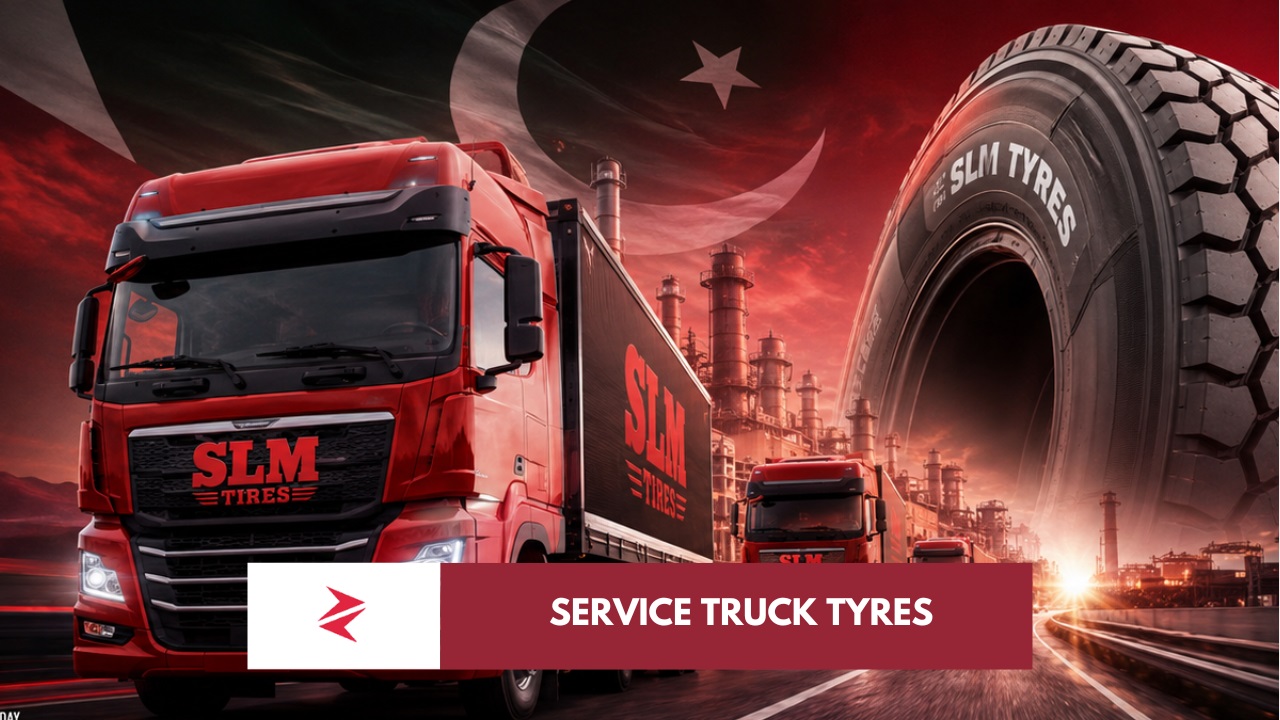
Observational claims: The attached images show SLM Tyres branding in a black-and-red tyre visual and a Meezan Bank public subscription notice carrying the SLM logo. The investor discussion supplied by the user frames the IPO as highly attractive but also flags cash conversion, customer concentration, pre-IPO dividends, PCR execution, and SEZ tax-expiry risks.
Source-backed claims: Public subscription dates, PSX process milestones, strike price, book-building dates, oversubscription, Rs69.4 billion bids, Rs7.77 billion total raise, Rs5.83 billion book-building raise, Rs19.95 strike price, Rs14.25 floor price, 97.43 million retail shares, Nooriabad SEZ facility, joint venture structure, and PCR expansion timeline are supported by PSX, Business Recorder, Profit by Pakistan Today, Mettis Global, and the attached Meezan/customer IPO material.
External Links & References
Pakistan Stock Exchange PRIDE page for Service Long March Tyres Limited.
Business Recorder report on SLM’s PSX book-building and retail subscription details.
Profit by Pakistan Today report on Rs69.4 billion bids and 16.7x oversubscription.
Mettis Global analysis and management Q&A on PCR funding, dividends, Sutong concentration, and project financing.










AI Music Generator
June 4, 2026 at 6:05 pm
It’s fascinating to see the SLM Tyres IPO illustrate that liquidity has never been the real issue—what’s missing are credible, compelling stories. Investors are clearly ready to engage, but without clear narratives, even available capital can sit idle.