


































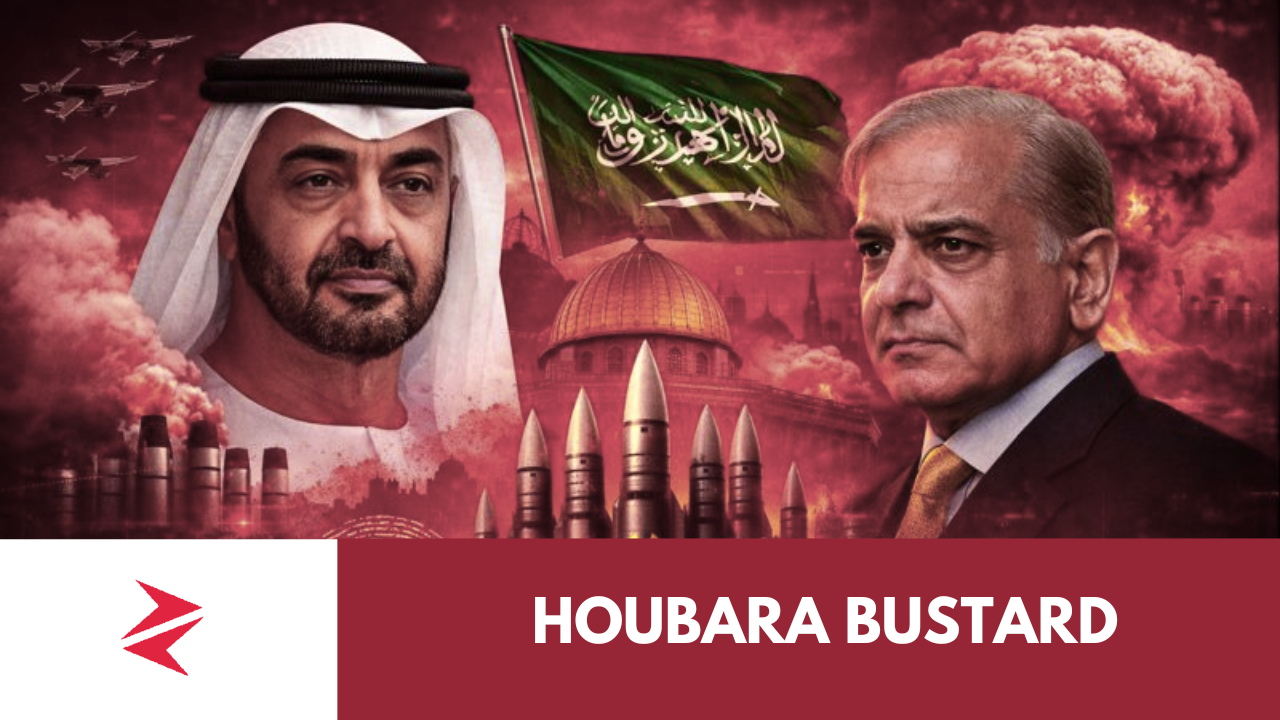
When Sheikh Mohammed bin Zayed Al Nahyan landed in Pakistan on December 26, the visuals were unmistakable.
Guard of honour at Nur Khan Airbase.
Presidential Palace receptions.
Military salutes.
Flags aligned.
A full-day agenda wrapped in symbolism.
On paper, it was about trade, investment, and fraternity between Pakistan and the United Arab Emirates.
But statecraft rarely travels economy class.
And leaders don’t arrive with this level of theatre for routine diplomacy.
So the real question is simple:
Why now? Why Pakistan? And why this urgently?
Trade Is the Headline. Geopolitics Is the Subtext.
Yes, economic cooperation matters. Pakistan needs inflows. The UAE needs stability and leverage. That part is obvious.
But the timing of this visit suggests something else entirely:
a convergence of regional flashpoints where Pakistan is no longer a peripheral player.
This visit isn’t transactional.
It’s corrective.
The Afghanistan Pressure Point — And the Qatar Problem
Pakistan’s relationship with Afghanistan is strained, volatile, and increasingly militarised along the border. Escalation — even limited — is no longer theoretical.
Until recently, Qatar positioned itself as a mediator between Islamabad and Kabul. That channel stalled. Pakistan didn’t fully bite.

Enter the UAE.
But not as a neutral helper — as a competing mediator.
The UAE and Qatar do not operate in alignment. They are strategic rivals, most visibly in Libya, where both backed opposing factions and divergent regional visions.
If Qatar failed to deliver restraint or influence, the UAE now appears ready to step in — not merely to de-escalate, but to reassert itself as the region’s preferred power broker.
This isn’t peacekeeping.
It’s influence management.