































Share the post “Instagram Direct Message Networking in 2026: How Businesses Turn Private Conversations Into Trust, Leads and Sales”
The fastest way to destroy an Instagram business opportunity is to treat another human being like a row in a prospecting spreadsheet. Copying one hollow pitch, firing it at hundreds of accounts and calling the activity “networking” is not ambitious marketing; it is lazy extraction wearing the costume of hustle culture.
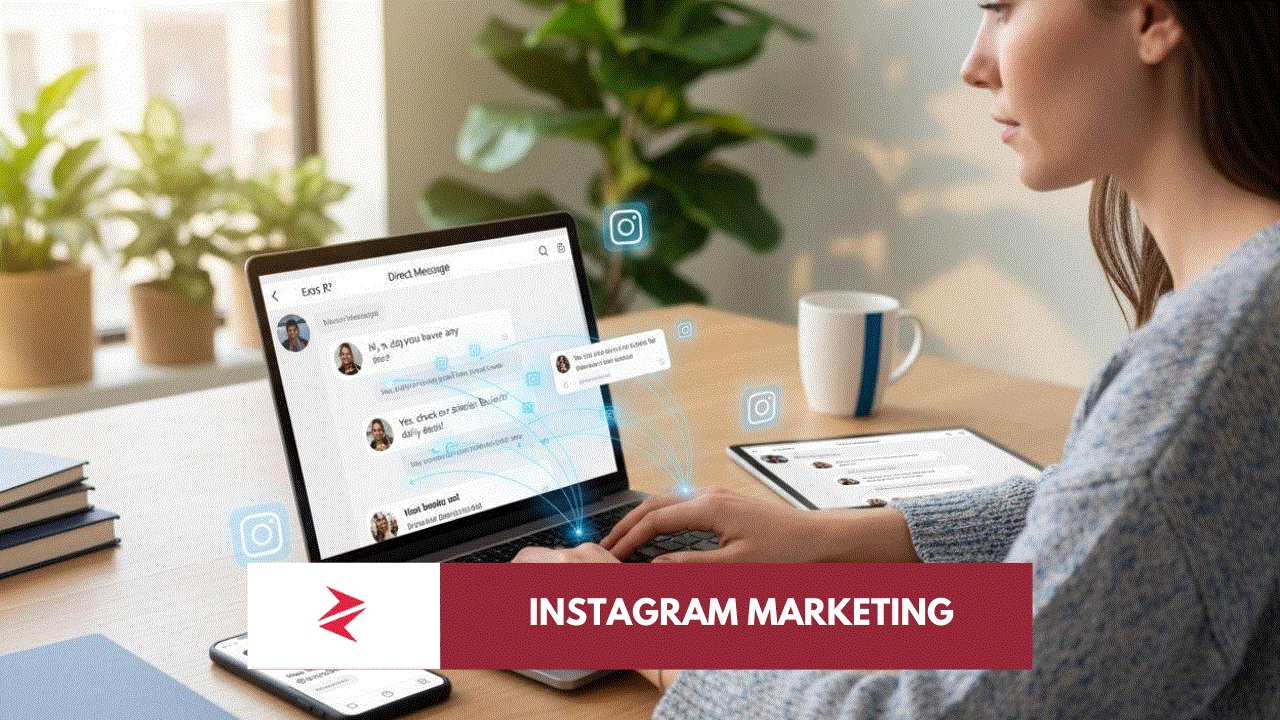
Instagram Direct Message remains one of the most commercially valuable spaces available to entrepreneurs, consultants, creators and small businesses, but not because it permits businesses to invade an unlimited number of inboxes. Its real power comes from the opposite quality: Instagram compresses discovery, public familiarity and private conversation into one environment, allowing a person to notice your work, assess your credibility and respond to you without being pushed into a formal sales funnel.
Calling Instagram DM “the single biggest business-development opportunity of the decade” may be promotional exaggeration, but the underlying argument is sound. Posts attract attention. Stories establish presence. Comments produce light recognition. Direct Messages create the private space in which curiosity can become a relationship, an enquiry, a collaboration or a sale.
The accompanying Instagram DM Networking course captures this distinction precisely: a good DM is not merely a message being delivered; it is an attempt to enter another person’s attention in a manner that feels earned. It defines networking as the transfer of trust through repeated, meaningful attention rather than the mechanical collection of contacts.
That is the principle businesses must understand in 2026. The inbox has become more capable, more organised and more commercially important, but it has also become more heavily filtered. Users can control message requests, decline unwanted conversations and have suspected spam diverted away from their primary inbox. Professional accounts can divide conversations between inbox categories and manage requests separately, meaning that simply pressing “Send” does not mean the recipient will meaningfully see, trust or prioritise the message.
The Old Instagram DM Playbook Is Broken
Much of the older advice surrounding Instagram networking was built around three assumptions: users could message almost anybody without meaningful friction, desktop access required an unofficial application and commercial success was primarily a numbers game. All three assumptions now require correction.
Instagram applies limits intended to reduce unwanted messaging and spam. Its Terms of Use also restrict unauthorised automated access and the collection or commercial use of platform data. A business that scrapes profiles, buys account lists or uses an unapproved application to spray unsolicited messages is not building an outreach system; it is building operational risk into an account that may have taken years to grow.
Legacy recommendations involving tools such as Flume, Instatray or similar unofficial desktop clients should therefore be removed from an updated guide. Instagram’s own messaging experience, professional inbox and supported connected tools now cover the legitimate business use cases that once encouraged people to hand their credentials to external applications. Professional accounts can also use Meta’s official Instagram Messaging infrastructure for approved customer-service and conversation-management workflows.
The familiar claim that success requires “100 rejections for every acceptance” should also be treated as motivational rhetoric rather than a verified conversion benchmark. A low response rate may be normal in cold outreach, but blindly increasing volume does not repair poor relevance, weak positioning or an excessive ask. Ten carefully selected conversations can produce more commercial value than 500 generic messages because quality changes not only the probability of a reply but also the quality of the relationship that follows.
Core claim: Instagram DM success is not determined by how many messages leave your account. It is determined by how naturally the right conversation can continue after the first message arrives.

What Instagram DM Actually Does for a Business
A strong DM performs three jobs simultaneously. It explains why the sender is appearing in the recipient’s inbox, reduces the mental effort required to understand or answer the message and creates a low-pressure opening for the conversation to continue. The course describes these jobs as signalling context, reducing friction and inviting continuation.
The relationship generally moves through the following system:
| Stage | Business objective | What the recipient needs to feel | Common mistake | Useful success indicator |
|---|---|---|---|---|
| Discovery | Identify a relevant person or organisation | “This account belongs in my professional world” | Targeting only by follower count | Genuine relevance to the offer |
| Familiarity | Establish light recognition before pitching | “I have seen this person’s name or work before” | Performing meaningless engagement | Profile visits, story interaction or thoughtful replies |
| Entry | Open the private conversation | “I understand why this message was sent” | Generic praise followed by an immediate pitch | A relevant first response |
| Engagement | Create a mutual exchange | “This is useful and easy to continue” | Sending a long corporate biography | Substantive replies rather than polite acknowledgements |
| Momentum | Introduce a sensible next step | “This may lead somewhere worthwhile” | Demanding a call too early | Permission to send details, quote or schedule |
| Continuity | Keep the relationship credible | “This person remembers the context” | Repeatedly writing “just following up” | A renewed conversation or future opportunity |
The table expands the course’s three conversation states—entry, engagement and momentum—into a business workflow that can be measured without reducing people to numbers.